Every major Tibetan festival, the lunar-calendar rule that fixes it, the Western month it usually falls in, and the one time of year worth planning around carefully.
Quick answer: Tibetan festivals follow a lunar calendar, so their Western dates move every year. As a rough map: Losar falls in February or early March, Saga Dawa Duchen in late May or June, the Gyantse horse races in summer, Shoton in Lhasa in mid to late August, Lhabab Duchen in November, and Ganden Ngamchoe in December. The one to plan around most carefully is Losar, because the weeks after it are when Tibet is most often closed to foreign visitors.
A festival can turn a good trip into an unforgettable one. It can also fill every hotel in Lhasa, close roads for a morning, and — in one specific case — collide with the annual period when foreign travellers are not permitted on the plateau at all. This calendar is here so you can aim for the first outcome and avoid the last.
For what each of the three biggest festivals actually feels like, read the festivals guide. This page is the timetable.
Why the dates move
Tibet keeps a lunisolar calendar. Months follow the moon, an occasional extra month keeps the seasons aligned, and days are sometimes doubled or skipped for astrological reasons. The result is that a festival fixed to, say, the fifteenth day of the fourth Tibetan month lands on a different Western date every year, and can drift by several weeks across a decade.
So the table below gives you the Tibetan-calendar rule, which never changes, alongside the Gregorian window it usually falls in. For a specific year, ask us and we will confirm the exact date before you book flights.
The calendar at a glance
| Festival | Tibetan calendar date | Usually falls | Where to see it |
|---|---|---|---|
| Losar — Tibetan New Year | 1st day, 1st month | Feb – early Mar | Homes and monasteries everywhere; Lhasa |
| Monlam Chenmo — Great Prayer Festival | Early–mid 1st month | Feb – Mar | Lhasa, Labrang, Kumbum |
| Chunga Choepa — Butter Lamp Festival | 15th day, 1st month | Feb – Mar | Lhasa, Barkhor |
| Saga Dawa Duchen | 15th day, 4th month | Late May – Jun | Lhasa kora; Mount Kailash |
| Gyantse Horse Racing (Dhamar) | 4th month | Jun – Jul | Gyantse |
| Nagqu Horse Racing | Fixed to summer | Early–mid Aug | Nagqu, northern grasslands |
| Shoton — Yogurt Festival | 30th day, 6th month | Mid – late Aug | Drepung, Sera, Norbulingka, Lhasa |
| Bathing Festival (Karma Rishi) | Late 7th month | Late Aug – early Sep | Rivers near Lhasa and Shigatse |
| Ongkor — Harvest Festival | Before the barley harvest | Aug – Sep | Farming villages, Yarlung valley |
| Lhabab Duchen | 22nd day, 9th month | Nov | Monasteries everywhere |
| Palden Lhamo | 15th day, 10th month | Nov – Dec | Jokhang, Lhasa |
| Ganden Ngamchoe | 25th day, 10th month | Dec | Gelug monasteries; Lhasa rooftops |
The four worth building a trip around
Saga Dawa Duchen marks the Buddha's birth, enlightenment and passing on a single day, and it is the most charged moment in the Tibetan year. In Lhasa the koras fill from before dawn. At Mount Kailash, the raising of the great Tarboche flagpole draws pilgrims from across the plateau, and it is by some distance the most powerful time to walk the Kailash kora — which also makes it the hardest time to get a permit and a bed, so we start those trips months out.
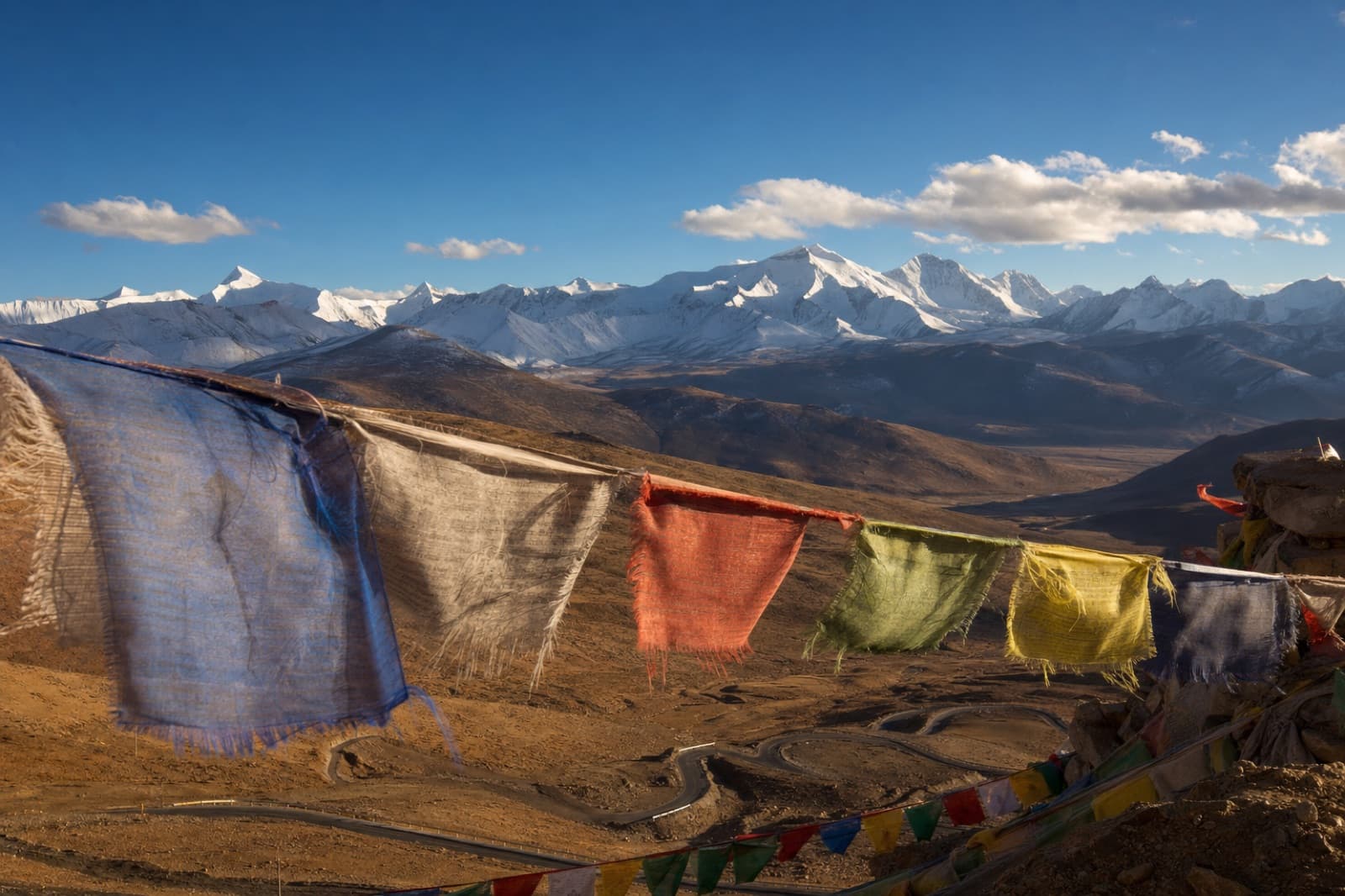
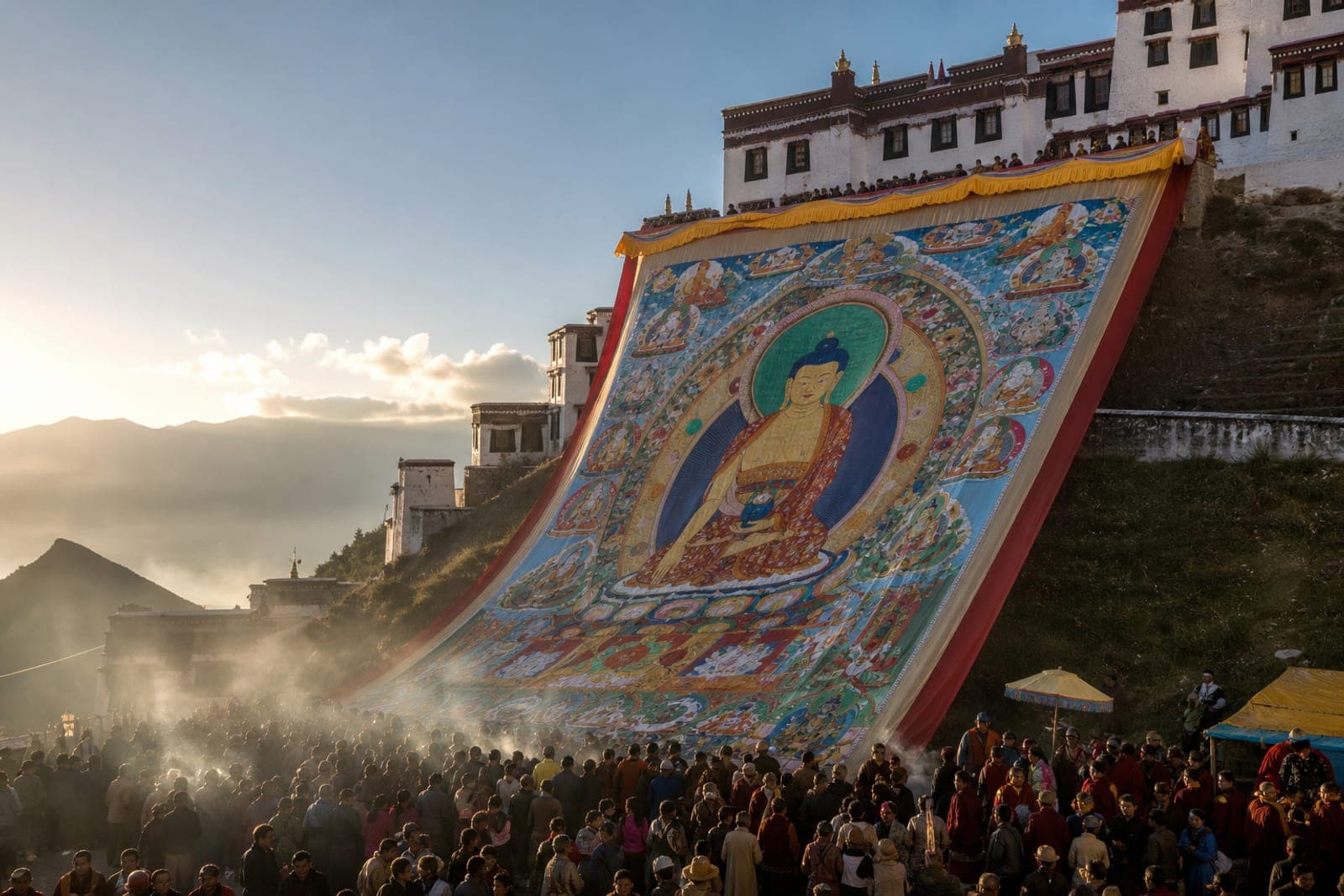
Shoton is the summer highlight and the most accessible for a first visit. It opens at first light at Drepung Monastery, when an enormous embroidered thangka is unrolled down the hillside and the crowd surges forward through incense smoke. The following days move to Norbulingka for Tibetan opera, picnics and yogurt. Lhasa is at its busiest and its best.
Losar is Tibet's New Year — three days of family ritual, monastery ceremonies and, at Sera and Drepung, masked cham dances. It is wonderful and it comes with a caveat, below.
Gyantse's horse festival is the least touristed of the four. Riders compete in racing and archery over several days on the plain below the Dzong, and the atmosphere is closer to a county fair than a spectacle staged for visitors.
The Losar caveat — read this before booking February
In most recent years the Tibet Autonomous Region has been closed to foreign travellers for a period spanning late February and much of March, with permits suspended and reopening announced only a few weeks ahead. That window frequently overlaps Losar and the Monlam prayer festival that follows it.
The consequence is straightforward: a February or March trip built specifically around Losar carries real risk of not happening at all. Some years it is fine, some years it is not, and no operator knows the answer in advance no matter what their marketing says. If Losar matters to you, plan it as a possibility with a flexible booking, not as a fixed commitment — and see Tibet travel restrictions for how the closures actually work.
Every other festival in the table above sits comfortably inside the open season.
Planning around a festival
- Book early. Saga Dawa and Shoton both compress demand into a few days. Hotels in Lhasa and, for Saga Dawa, the guesthouses around Kailash, fill first.
- Add a buffer day. Ceremonies begin at dawn, run late, and do not follow published schedules. A festival worth flying for is worth an extra night.
- Expect changes on the ground. Roads close, routes reroute, and start times shift. Your guide will know by the evening before; nobody knows a month ahead.
- Watch your altitude plan. Shoton and Saga Dawa both involve long days on foot at 3,650 metres or higher. Arriving two days before, not the morning of, is the difference between joining in and watching from a bench. See the acclimatisation plan.
- Photograph with permission. Festivals are religious observances first. Ask before pointing a camera at a person, and never at a ritual you have been asked to stay back from.
Timing a tour to a festival. For Saga Dawa at Mount Kailash, the trip to time is our 16-day Everest, Kailash kora & Guge tour; the festival fills Darchen with pilgrims, so book it many months ahead. For Shoton in Lhasa, the 9-day Shoton Festival & Everest tour is timed to the festival, with one departure a year, usually in August. Our departures page shows which group dates are already fixed.
If you tell us which year you are travelling, we will confirm the exact festival dates and tell you honestly whether the trip you have in mind is realistic around them. Start there.
From the page to the plateau
See Tibet with someone who can explain it
Our trips are led by licensed local Tibetan guides who can tell you what you are looking at, whether in a monastery, on a pilgrim circuit or out on the grassland. These are the two trips most travellers start with.
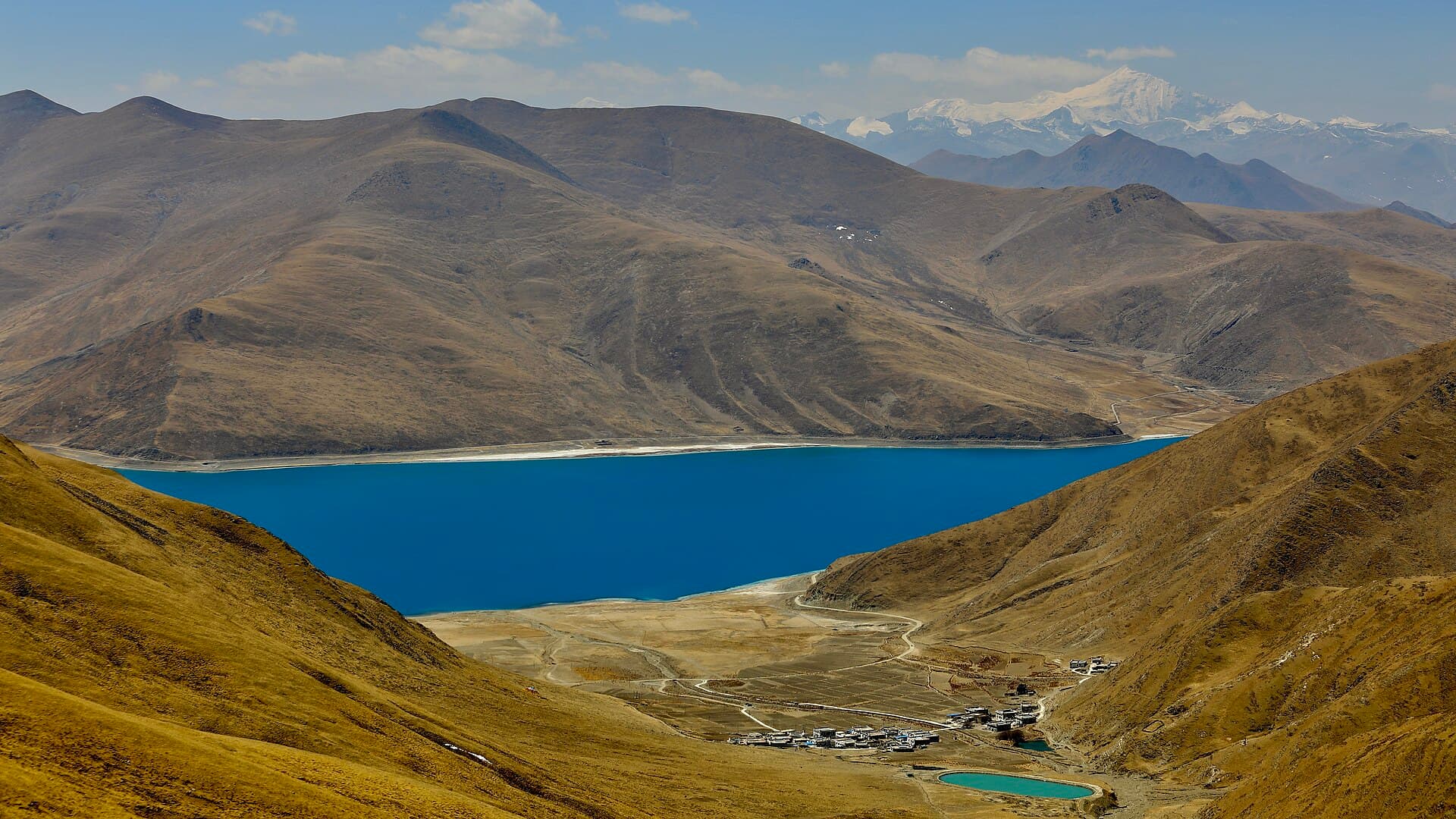
Lhasa & Yamdrok (5 Days)
Lhasa · Yamdrok Lake · Xiazhulin Temple · Lhasa
Five days based in Lhasa: a hands-on morning of Tibetan crafts, the debating monks at Sera, the Potala Palace and the Jokhang, then a day out over the Kamba La to Yamdrok Lake and Xiazhulin Temple. Our shortest Tibet trip, run as a shared group on fixed dates.
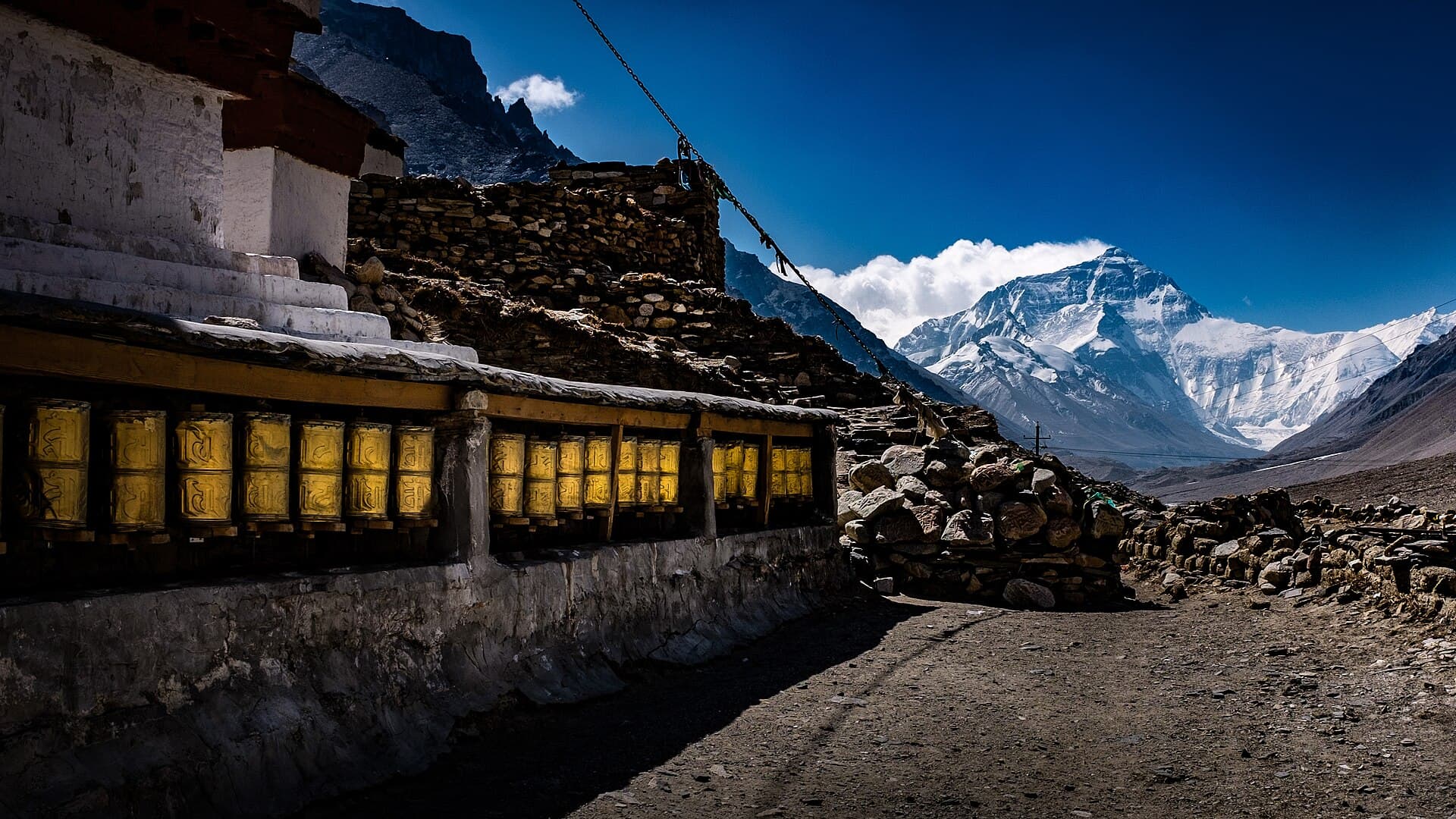
Everest & Namtso (9 Days)
Lhasa · Yamdrok Lake · Karola Glacier · Shigatse · Rongbuk · Everest Base Camp · Shigatse · Lhasa · Namtso · Lhasa
Nine days that add Namtso to the road to Everest: Sera's debating monks, the Potala and the Jokhang in Lhasa; Yamdrok Lake and, beyond it, the Karola Glacier on the drive west; a night at Everest Base Camp; Tashilhunpo; and a final day trip to Namtso once you're acclimatised. Shared group, fixed departures.
FAQs
Shoton begins on the thirtieth day of the sixth Tibetan month, which usually falls in mid to late August. It opens at first light at Drepung Monastery with the unrolling of a giant thangka, then moves to Norbulingka for several days of Tibetan opera and picnics.