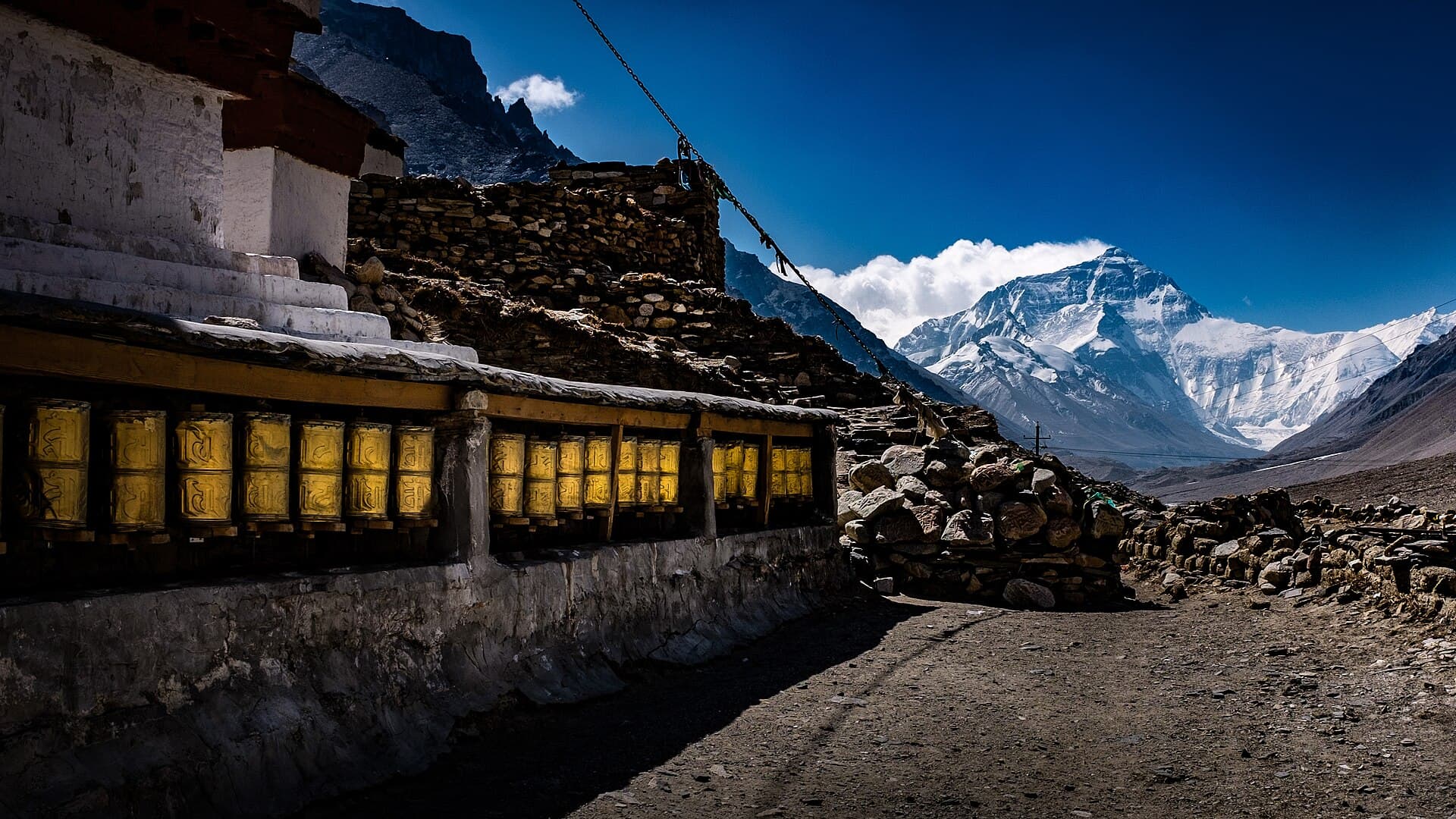
9-Day Lhasa, Everest Base Camp & Namtso Lake Group Tour
Lhasa · Yamdrok Lake · Karola Glacier · Shigatse · Rongbuk · Everest Base Camp · Shigatse · Lhasa · Namtso · Lhasa
The Route
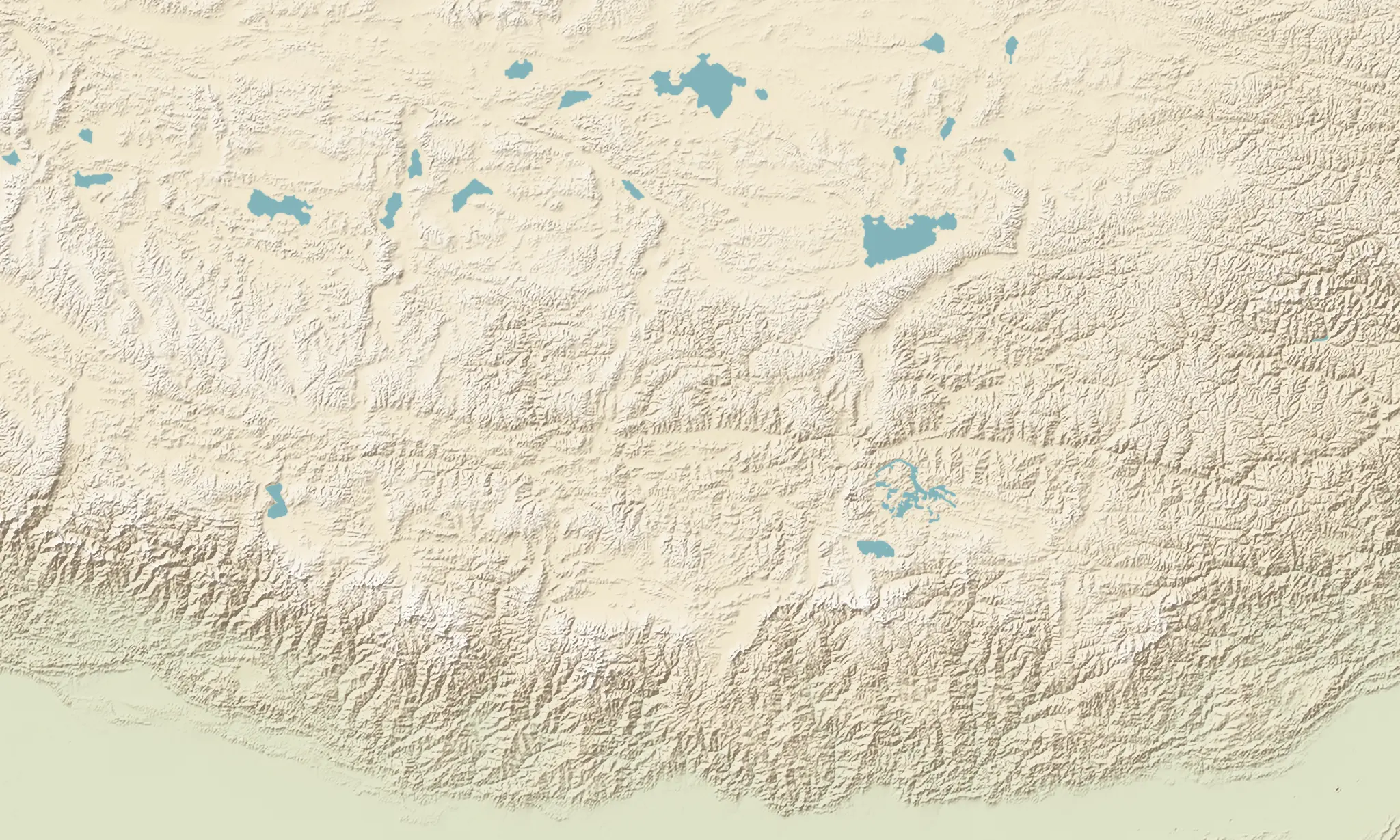
Everest Base Camp, then Namtso
Nine days covers the whole road to Everest and adds a second sacred lake at the end. You start with three nights in Lhasa: a day of hands-on crafts and Sera Monastery's debating monks, then the Potala Palace and the Jokhang. Next comes the drive west to Shigatse, past Yamdrok Lake and beneath the Karola Glacier, then up over the Gawu La for a night at Everest Base Camp (5,200 m), with Rongbuk Monastery on the way, and back via the Gyatso La and Tashilhunpo.
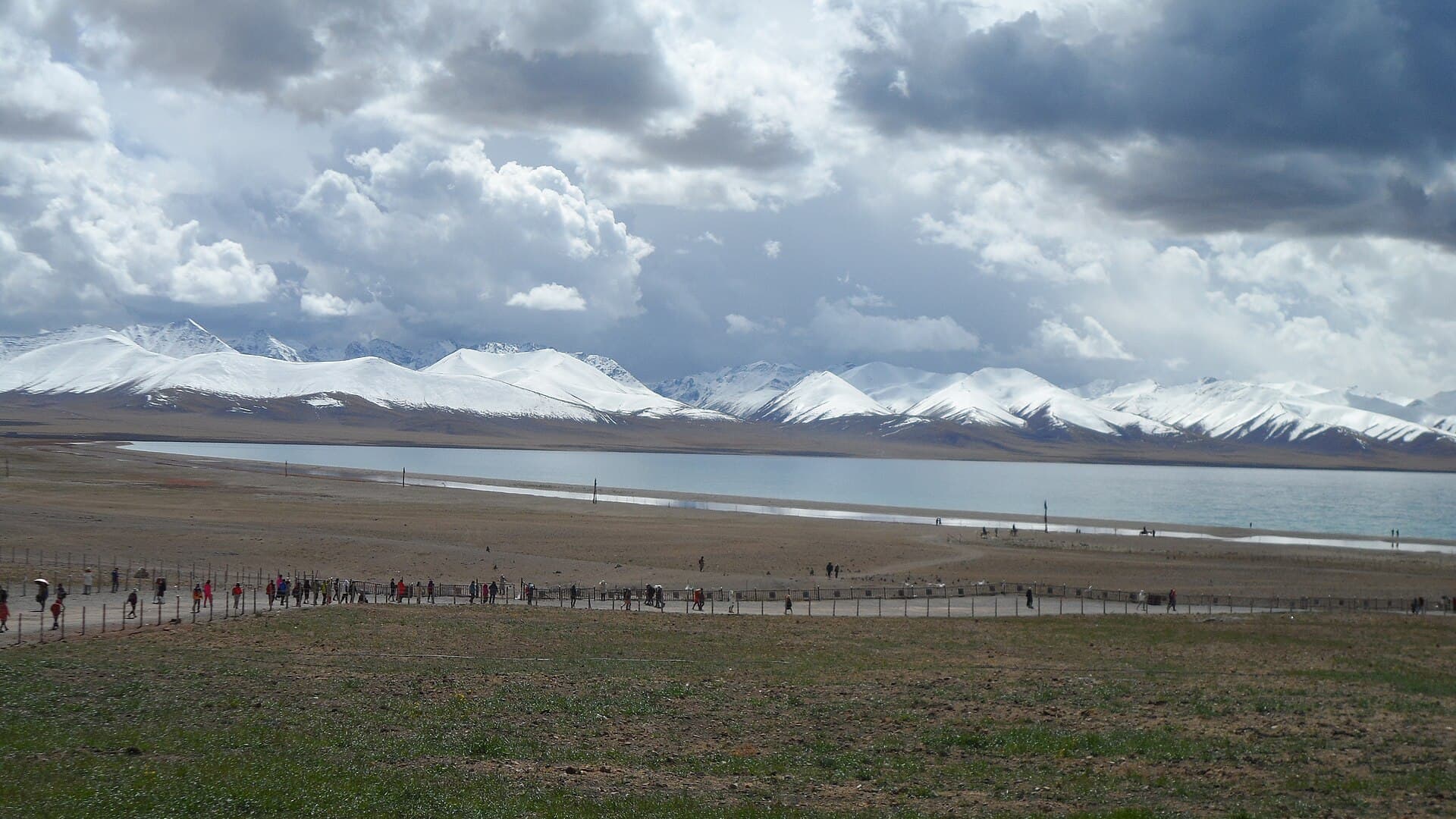
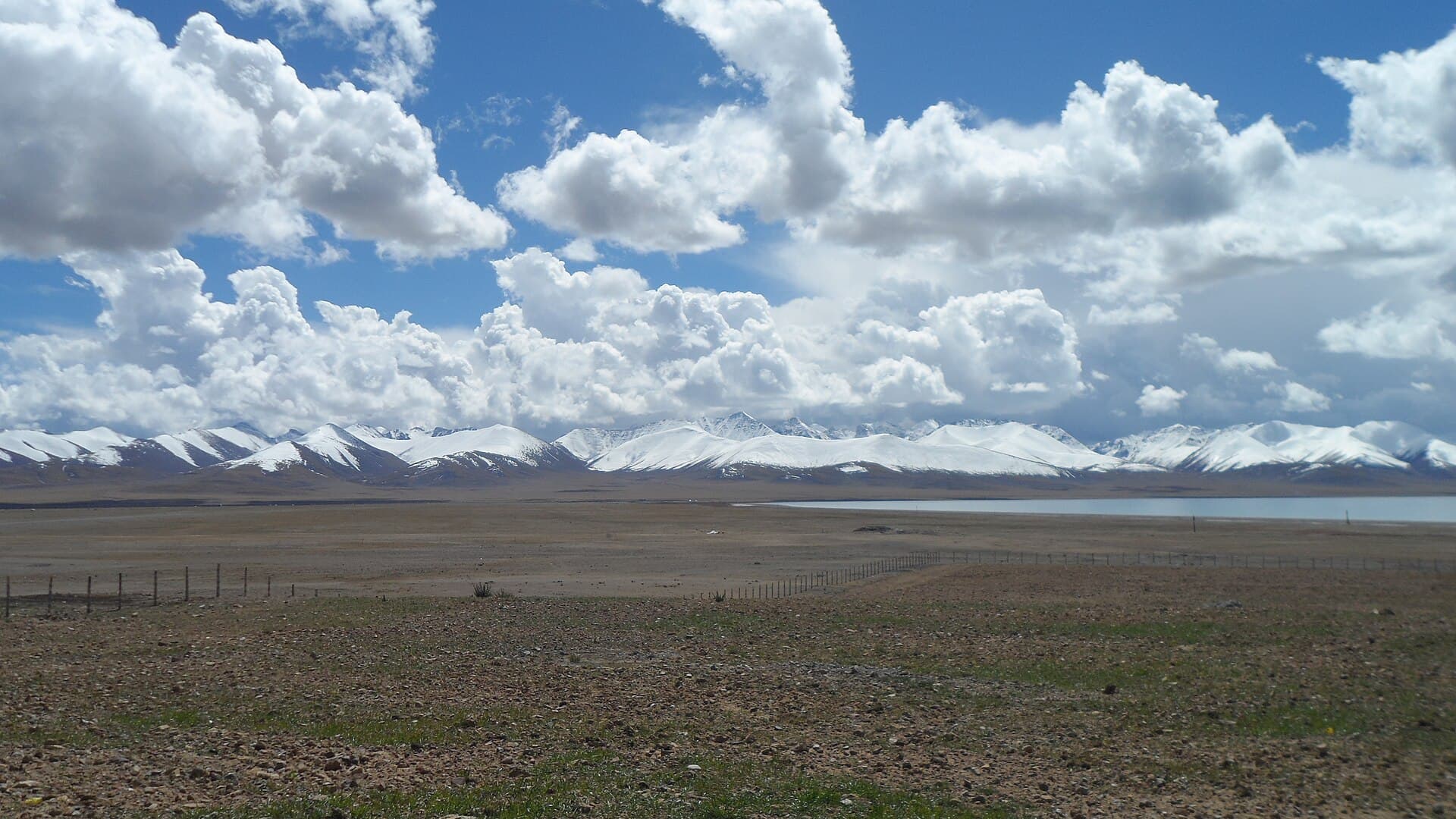
Day eight is what sets this trip apart from our 8-day one: a long day out to Namtso, the lake at 4,718 m on the grasslands north of Lhasa, below the snow peaks of the Nyenchen Tanglha range. Putting it last is deliberate. After a week above 3,600 m and a night at base camp, the Laken La (5,190 m) on the way there comes when you're well acclimatised, not on your second day in Tibet. In winter, snow sometimes closes the road, and the day then goes to Ganden or Tsurphu Monastery instead; our guide to Yamdrok and Namtso has more on both lakes.
It's a trip of long drives — 270 to 450 km on each road day, five to eight hours behind the wheel with stops — and one basic night: the tents at base camp share their toilets and have no oxygen supply, and in winter, when the camp shuts, the Everest night moves to a guesthouse in Everest Town.
Departures are shared groups on fixed dates, capped at 12 people, and a licensed Lhasa agency runs them; you'll often travel with Chinese holidaymakers as well as visitors from abroad. A guide who speaks English (and Chinese too, for mixed groups) comes with you in a licensed tourist vehicle, though either may change during a join-in tour. In Lhasa and Shigatse the hotels are 4-star, with oxygen supply. For Everest views, spring and autumn are clearest; summer greens the Namtso grasslands, and winter is the cheapest season, with some risk of snow on the Namtso road.
Trip Highlights
- ◆A day trip to Namtso (4,718 m) at the end, when a week at altitude has you acclimatised
- ◆A walk on Namtso's Tashi Dor peninsula, with small monasteries and odd rock formations
- ◆Two sacred lakes: Yamdrok from the Kamba La on day four, Namtso on day eight
- ◆A night at Everest Base Camp (5,200 m), the last 50 km by eco-bus
- ◆Four 8,000 m peaks — Everest, Cho Oyu, Lhotse and Makalu — from the Gyatso La
- ◆Sera Monastery's afternoon debate and a hands-on Tibetan crafts workshop in Lhasa
- ◆The Potala Palace and Jokhang in Lhasa, and Tashilhunpo in Shigatse
Upcoming Departures
Fixed group dates from the calendar of the Lhasa agency that runs this route. Tell us which one you want and we'll usually confirm availability within 24 hours. Private departures can run on any date you choose.
- Nov 24 – Dec 2, 2026$1,1209 DaysOpen – enquireRequest this date →
- Dec 1 – Dec 9, 2026$1,1209 DaysOpen – enquireRequest this date →
- Dec 8 – Dec 16, 2026$1,1209 DaysOpen – enquireRequest this date →
- Dec 15 – Dec 23, 2026$1,1209 DaysOpen – enquireRequest this date →
- Dec 22 – Dec 30, 2026$1,1209 DaysOpen – enquireRequest this date →
- Dec 29 – Jan 6, 2027$1,1209 DaysOpen – enquireRequest this date →
- Jan 5 – Jan 13, 2027$1,1209 DaysOpen – enquireRequest this date →
- Jan 12 – Jan 20, 2027$1,1209 DaysOpen – enquireRequest this date →
| Departure | Days | From (pp) | Status | |
|---|---|---|---|---|
| Nov 24 – Dec 2, 2026 | 9 | $1,120 | Open – enquire | Request this date → |
| Dec 1 – Dec 9, 2026 | 9 | $1,120 | Open – enquire | Request this date → |
| Dec 8 – Dec 16, 2026 | 9 | $1,120 | Open – enquire | Request this date → |
| Dec 15 – Dec 23, 2026 | 9 | $1,120 | Open – enquire | Request this date → |
| Dec 22 – Dec 30, 2026 | 9 | $1,120 | Open – enquire | Request this date → |
| Dec 29 – Jan 6, 2027 | 9 | $1,120 | Open – enquire | Request this date → |
| Jan 5 – Jan 13, 2027 | 9 | $1,120 | Open – enquire | Request this date → |
| Jan 12 – Jan 20, 2027 | 9 | $1,120 | Open – enquire | Request this date → |
Day-by-Day Itinerary
Arrive in Lhasa and rest
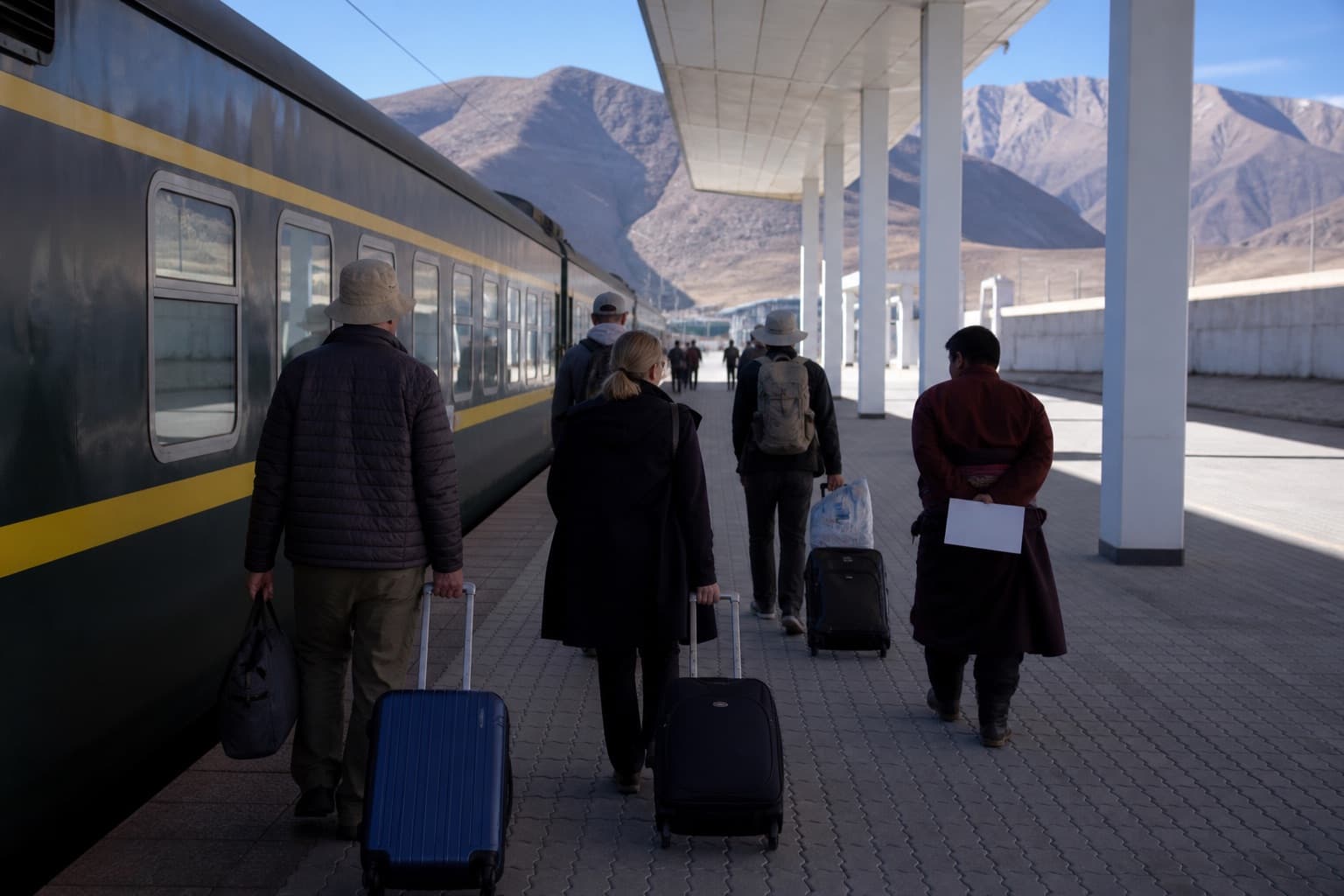
Lhasa sits at 3,650 m, and nine days at altitude should begin with an easy afternoon. You're collected from the railway station or from Gonggar airport, 60 to 90 minutes from the city by road, and taken to check in at your hotel. Keep exertion to a minimum today, drink more water than feels necessary and leave alcohol alone; local advice is also not to shower on your first night, since catching a chill at altitude is easy. Before 22:00 your guide phones or texts the next morning's start time.
Overnight: Lhasa
Incense, woodblocks and the debate at Sera
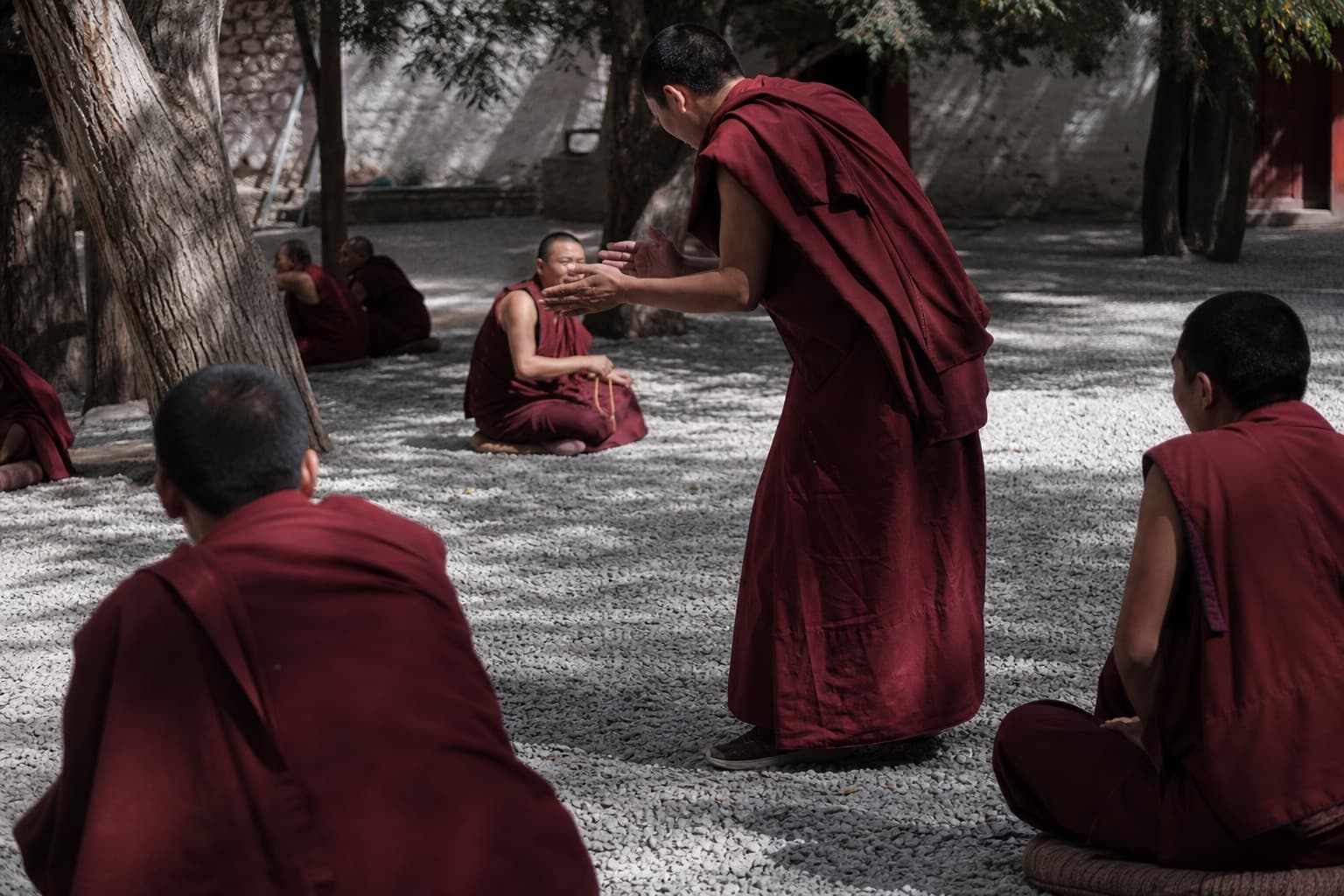
A day of Tibetan culture before the long drives. At a handicraft centre you watch an artisan make incense from aromatic woods and herbs and then try it yourself, pull a print from a carved woodblock, and come away with your own name in Tibetan letters. Later comes Sera Monastery, which with Drepung and Ganden makes up Lhasa's three great Gelug monasteries. Inside, pilgrims lean into a small shrine to touch their heads to the base of Hayagriva, the horse-headed protector; out in the debating courtyard, from around 15:00, monks test each other on doctrine with a clap at every point. There's no debate on Sundays.
Meals: Breakfast·Overnight: Lhasa
Lhasa's landmarks: the Potala and the Jokhang
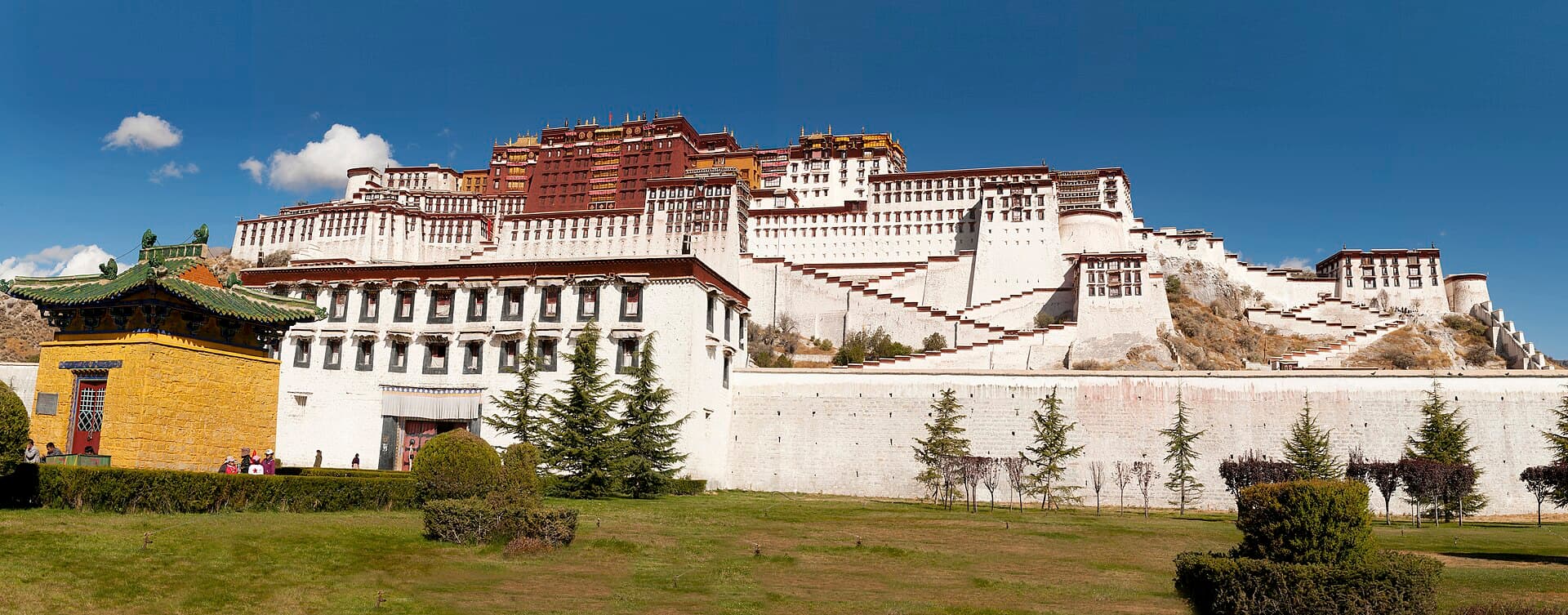
Today is for the two buildings at the heart of Lhasa. The Potala admits visitors on timed, named tickets: the palace decides the slot, the visit lasts up to an hour, and in busy months a group may be split to go in at different times or with different guides. It is shut on Mondays; if that's when this day would fall, the Lhasa days are reordered. The Jokhang follows. Pilgrims prostrate full-length at its entrance, and from its upper floor you look down on the Barkhor, the circuit they walk around the temple, lined with tea houses and stalls. Lunch or dinner today, included, features Tibetan or Nepali dishes.
Meals: Breakfast, specialty meal·Overnight: Lhasa
West to Shigatse via Yamdrok Lake and Karola Glacier
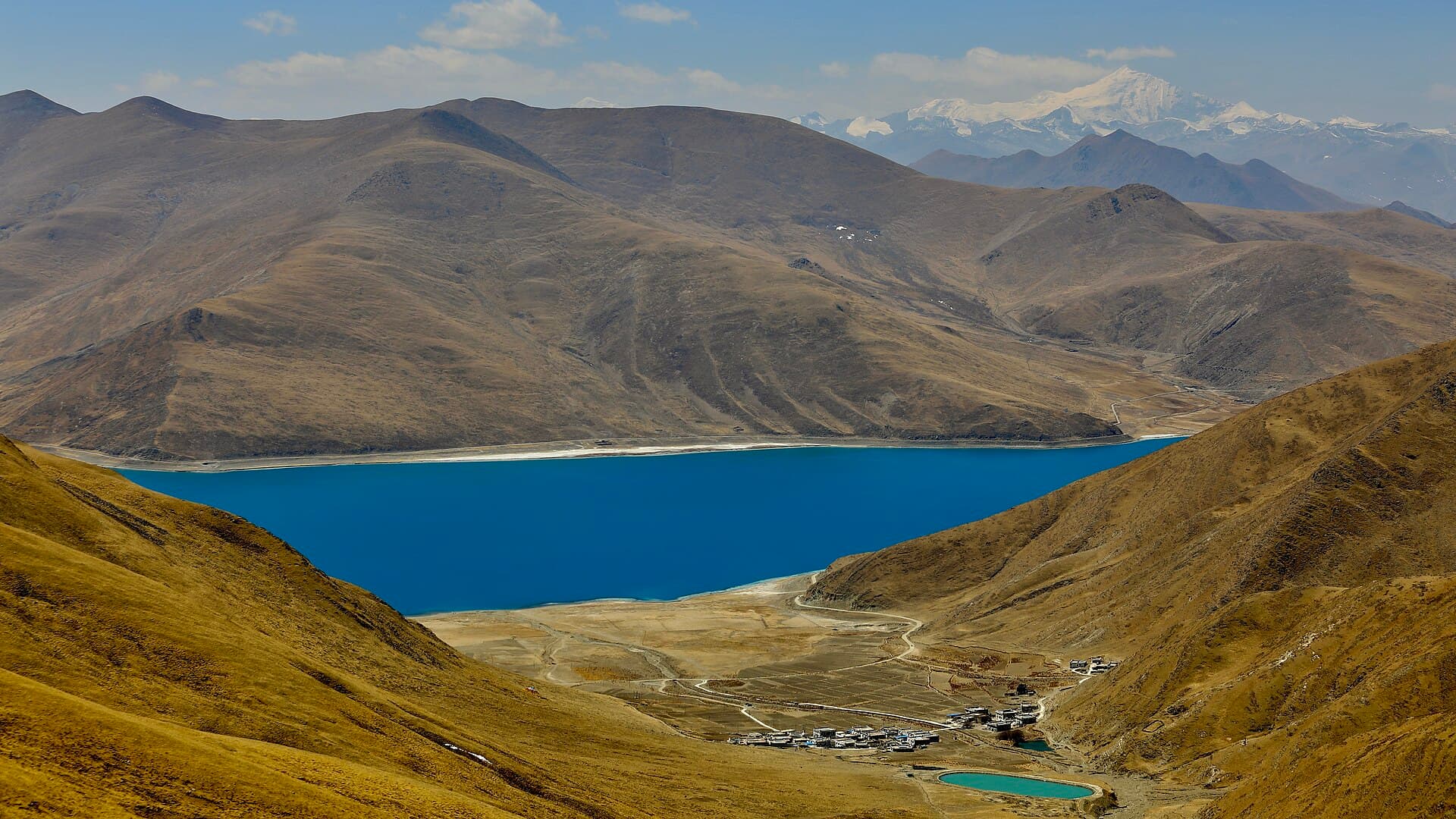
The road leaves the Lhasa valley and climbs; by evening you've covered about 370 km, roughly seven hours of driving plus stops. From the Kamba La (4,790 m) you look down on Yamdrok Lake, a sacred lake lying at 4,441 m, where locals offer photos with yaks and mastiffs for a fee — agree the price first. The included lunch, a mini hot pot, is served at a restaurant above the water. The Karola Glacier, a location for the film Red River Valley, ends close to the roadside, and later the farmland around Gyantse, yellow with rapeseed in summer, leads on to Shigatse (3,850 m). Foreign travellers register there; your guide handles it.
Meals: Breakfast, Lunch·Overnight: Shigatse
Gawu La viewpoint, Rongbuk and a night at base camp
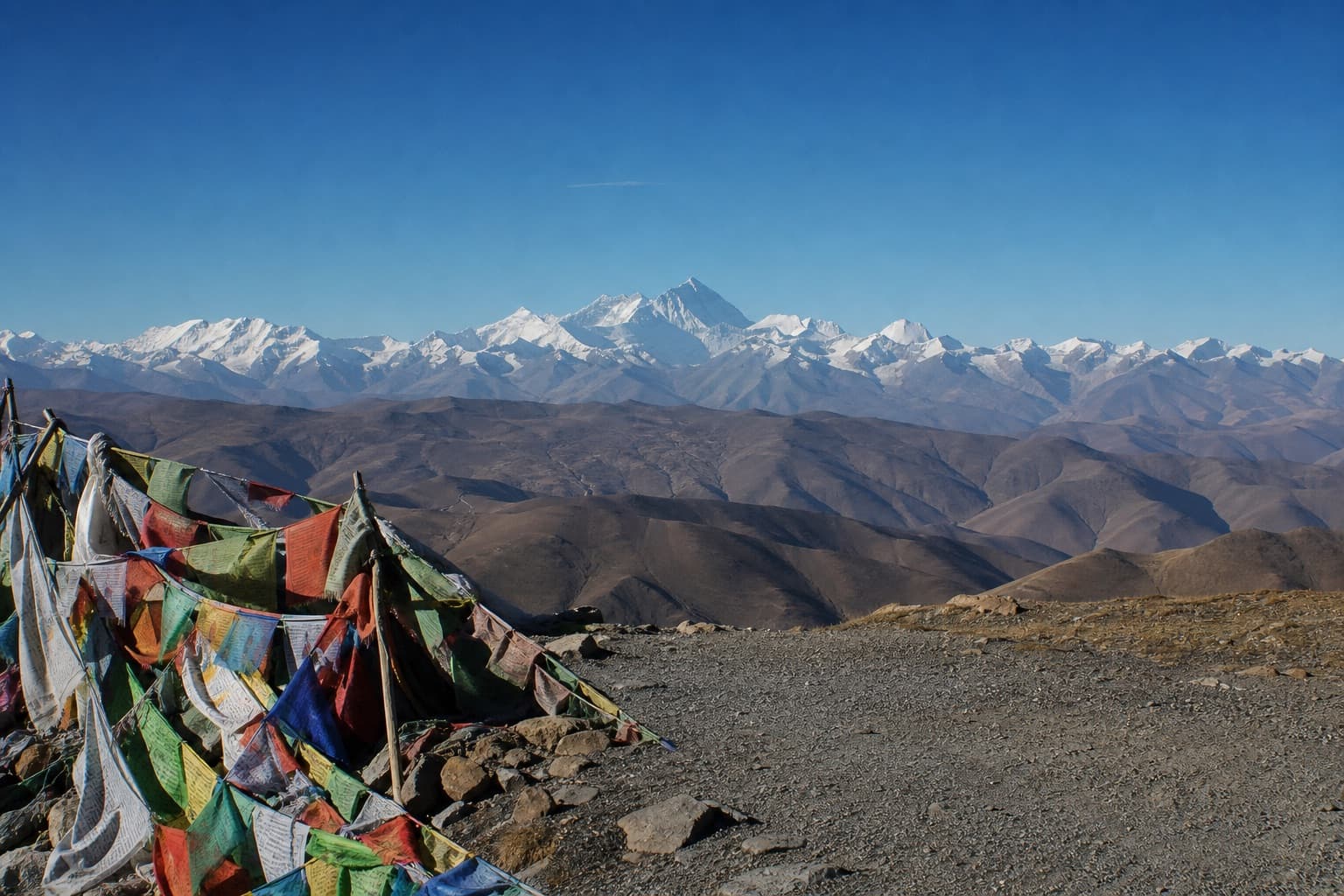
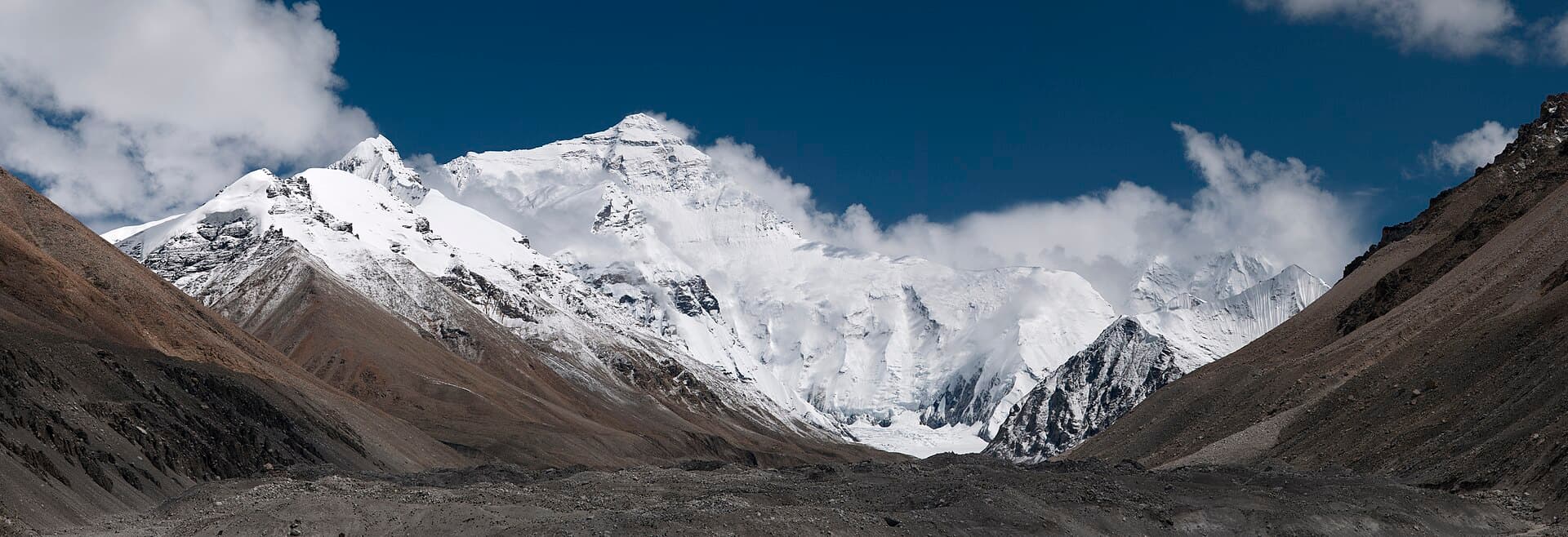
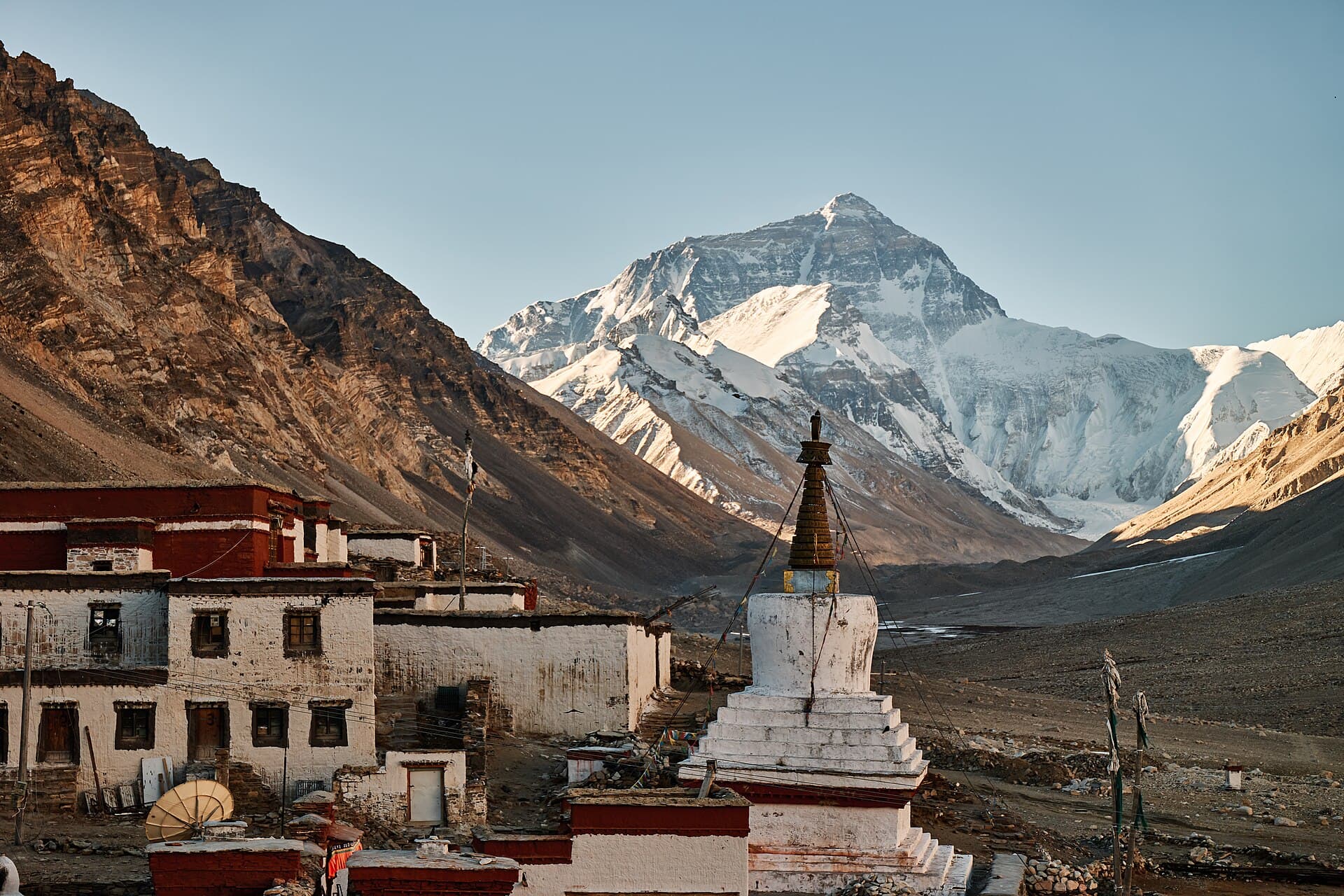
From Shigatse it's about 350 km, seven hours, to the foot of Everest. The Gawu La (5,198 m), reached by 108 hairpins, is the first great viewpoint: in clear weather five summits above 8,000 m line the southern skyline, from Makalu and Lhotse past Everest to Cho Oyu and Shishapangma. At Everest Town (Tashizom) you swap the group vehicle for the eco-bus for the last 50 km, so keep warm clothes and essentials with you. Rongbuk Monastery (5,154 m) has old meditation caves linked to Padmasambhava and a clear view of the north face; base camp (5,200 m) lies 19 km from the summit. Nights can fall to between 0 and 8°C even in summer, and the camp rents out down jackets.
Meals: Breakfast·Overnight: Everest Base Camp tent camp (winter: Everest Town guesthouse)
Everest at dawn, the Gyatso La and back to Shigatse
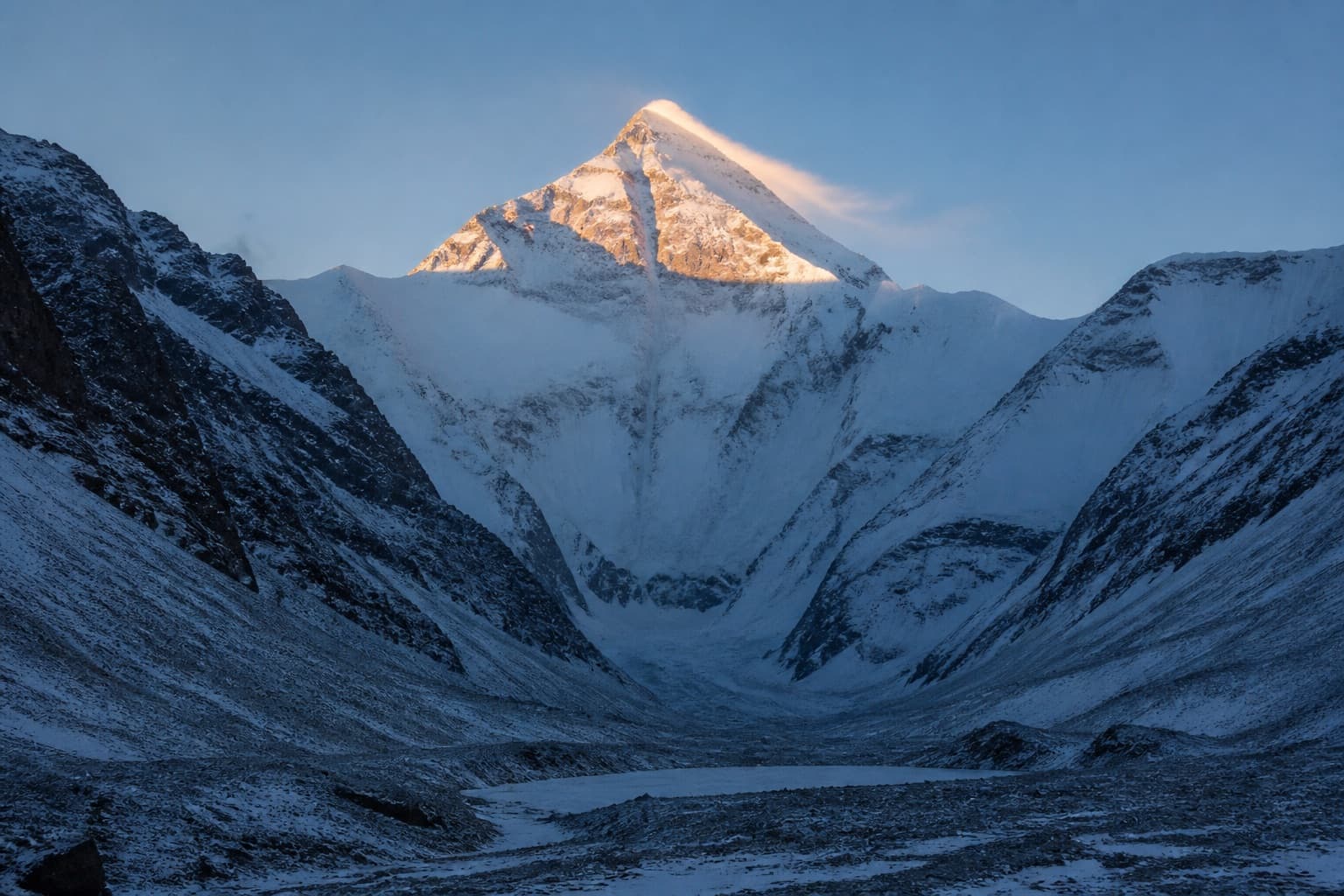
Mornings at base camp are unhurried. If the weather is kind, get up before sunrise and walk a few minutes to the viewing point to watch the summit catch the first light; if not, take a slow walk around the camp before breakfast. Then it's the eco-bus to Everest Town and about 350 km, seven hours, back to Shigatse. At the Gyatso La (5,248 m), where a large sign marks the Everest nature reserve and prayer flags crack in the wind, four of the world's 8,000 m peaks — Makalu, Lhotse, Everest and Cho Oyu — are visible from a single pass. In Shigatse there's hot water and a proper bed again.
Meals: Breakfast·Overnight: Shigatse
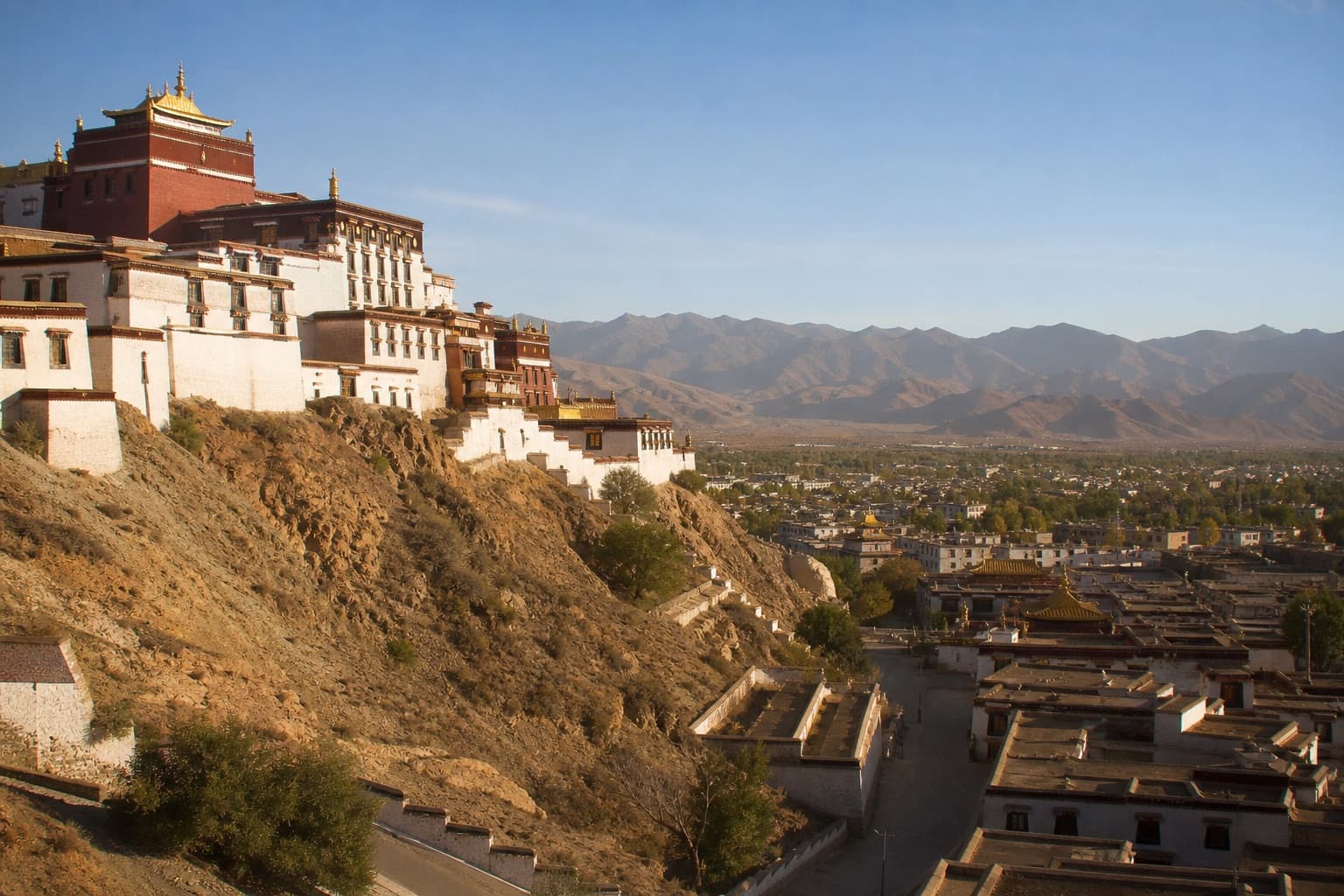
Tashilhunpo in Shigatse, then east to Lhasa
Tashilhunpo is the largest monastery of the Tsang region and has been home to the Panchen Lamas since the fourth of the line. Founded in 1447, it once counted more than 3,000 rooms and 5,000 monks. Spend some time in the Maitreya chapel: the eyebrows of its giant statue of the Buddha of the future alone are set with over 1,400 diamonds and pearls. The 270 km drive east to Lhasa takes about five hours. Occasionally, without dropping any sightseeing, the local agency sends the group from Shigatse to Damxung (Dangxiong), on the road to Namtso, for the night instead, and you visit the lake from there the next day.
Meals: Breakfast·Overnight: Lhasa
Day trip over the Laken La to Namtso
A long day: about 450 km and seven to eight hours on the road, there and back. North of Lhasa you drive through herding country with yaks and sheep and, with luck, kiang (Tibetan wild asses), pikas, hares or foxes, beneath the snow peaks of the Nyenchen Tanglha range (7,162 m). Over the Laken La (5,190 m), Namtso (4,718 m) spreads out ahead, one of Tibet's sacred lakes and China's second-largest saltwater lake, its colour shifting between deep blue and turquoise. You walk on the Tashi Dor peninsula among small monasteries and strange rock formations, then drive back to Lhasa. If snow closes the road in winter, the day changes; see the FAQ.
Meals: Breakfast·Overnight: Lhasa
Last morning and departure
Breakfast, then the shared run to the railway station or out to Gonggar airport. Trains are covered whatever the time; flights qualify for the free drop-off if they leave between 08:30 and 22:30, and with the airport about an hour away, anything after 10:00 leaves time to spare. Pass your ticket details to your guide so the agency can put you in a vehicle with people leaving at a similar time; foreign visitors must be seen off by a licensed guide. Staying on in Lhasa? Then the transfer becomes a private one, at extra cost.
Meals: Breakfast
What's Included
- ✓Alien's Travel Permit, Tibet Travel Permit and, if needed, the military permit — all arranged by the local agency
- ✓Your English-speaking licensed guide, giving commentary in both languages, English and Chinese, when the group is mixed
- ✓Shared licensed tourist vehicle and driver, 7–26 seats by group size; when fewer than four are sightseeing in Lhasa, the guide takes you by taxi and the fares are covered
- ✓Eight nights twin-share: five in Lhasa and two in Shigatse at 4-star hotels with oxygen supply, plus one in the base-camp tents at Everest (an Everest Town guesthouse in winter)
- ✓All breakfasts; in Lhasa, one Tibetan or Nepali specialty meal; and at Yamdrok Lake, a mini hot-pot lunch with a view of the water
- ✓Entrance tickets: Potala Palace (audio-guide hire included), Jokhang Temple, Sera Monastery, the Tibetan culture experience, Yamdrok Lake, Karola Glacier, Rongbuk Monastery, Tashilhunpo, and Everest Base Camp and Namtso, both including the eco-bus
- ✓Shared airport and station transfers at no charge on the start and finish days — any train, or flights that land 08:00–22:00 or take off 08:30–22:30
- ✓Oxygen and water: a portable oxygen bottle per person, a 6.8-litre emergency tank kept in the vehicle, and a daily allowance of two small bottles of water (300 ml) per person
- ✓Three insurance policies: personal accident while travelling, passenger cover in the vehicle, and the agency's liability insurance
Not Included
- —Getting to and from Lhasa by air or rail (we can book it for you at extra cost)
- —Chinese visa
- —Meals other than breakfasts and the two specialty meals
- —Single-room supplement from $320 per person (varies by season) — rooms are twin-share by default
- —Tipping: the local custom is CNY 60 a day per traveller, split between guide and driver
- —Drinks, snacks, laundry, down-jacket rental at base camp and other personal costs
- —Costs caused by events beyond the agency's control, such as road closures or cancelled flights; also extra nights, and transfers at times the free service doesn't cover
Accommodation
Five nights in Lhasa (three at the start, two at the end) and two in Shigatse are at 4-star hotels with oxygen supply, breakfast included, in standard twin rooms that have their own bathrooms. The local agency assigns the hotels, and it can't take requests for a particular one or accept a hotel you've booked yourself. The Everest night is in the base-camp tents: since the camp was rebuilt in 2025 it has twin rooms and a dining tent, but it is still basic, its toilets are communal and it has no oxygen supply. In winter, when it closes, the group moves to an Everest Town guesthouse, where bathrooms are private. Occasionally the night before Namtso is spent in Damxung rather than Lhasa. Bring one suitcase (26 inches at most) and a small backpack; any extra luggage can wait at your Lhasa hotel.
Departures & Pricing
| Season | Per person |
|---|---|
| Winter (Nov 1 – end of Feb) | $1,120 |
| Spring & autumn (Mar 1 – Jun 25, Sep 1 – 26, Oct 7 – 31; Chinese New Year departures) | $1,270 |
| Summer & holiday weeks (Jun 26 – Aug 31, Sep 27 – Oct 6; May Day departures) | $1,440 |
per person, twin-share. Fixed small-group departures run on set dates — tell us your month and we'll confirm the next available group.
Frequently Asked Questions
Yes — you simply join the group as one of its members. Accommodation is booked as twin rooms, and since the local agency can't guarantee to pair you with another traveller, you pay for a single room. In total that's USD 1,440 between 1 November and the end of February, USD 1,710 in the spring and autumn months, and USD 1,990 from late June to late August or during the May Day and National Day holiday weeks.
Gallery
You May Also Like
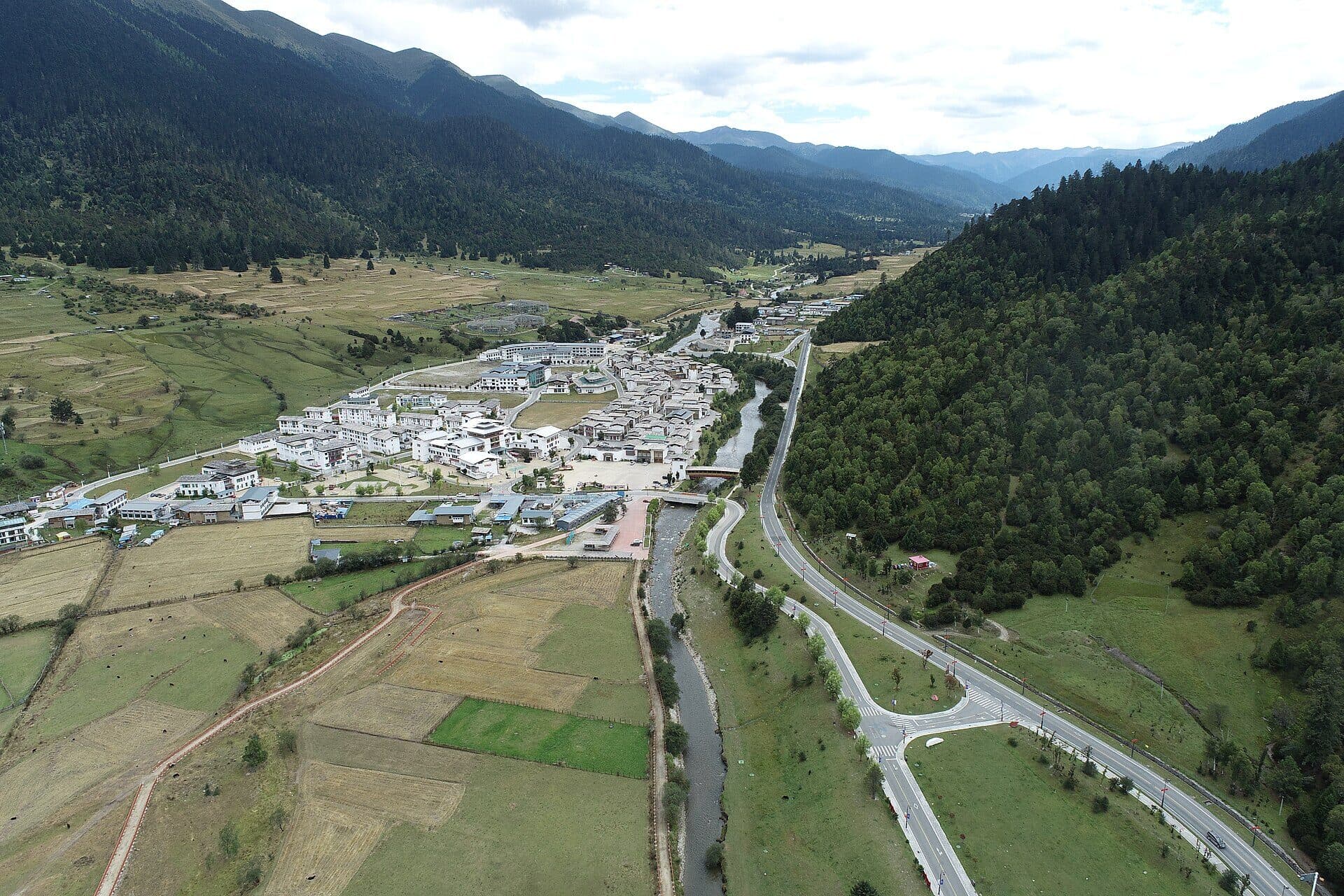
Nyingchi to Namtso (12 Days)
Lhasa · Kadinggou · Nyingchi · Sejila Pass · Lulang · Basum Tso · Lhasa · Yamdrok Lake · Karola Glacier · Shigatse · Rongbuk · Everest Base Camp · Shigatse · Lhasa · Namtso · Lhasa
Our most complete trip in central and eastern Tibet: Nyingchi's forests and Basum Tso, three days in Lhasa, Yamdrok Lake and Shigatse, a night at Everest Base Camp, then a day trip to Namtso with ten nights at altitude behind you. A shared group on fixed dates.
Lhasa & Everest (8 Days)
Lhasa · Yamdrok Lake · Karola Glacier · Shigatse · Rongbuk · Everest Base Camp · Shigatse · Lhasa
Eight days from Lhasa to Everest's north face and back: three nights in Lhasa for a Tibetan crafts workshop, Sera Monastery's debate, the Potala and the Jokhang, then Yamdrok Lake, the Karola Glacier, Shigatse, a night at base camp and Tashilhunpo. It runs as a shared group with fixed departures.
Lhasa & Everest (7 Days)
Lhasa · Yamdrok Lake · Karola Glacier · Shigatse · Rongbuk · Everest Base Camp · Shigatse · Lhasa
Lhasa to the foot of Everest in a week: two days in Lhasa to adjust to the altitude, Yamdrok Lake and the Karola Glacier on the road west, a night below the north face, and Tashilhunpo on the way back. A shared group that leaves on fixed dates.