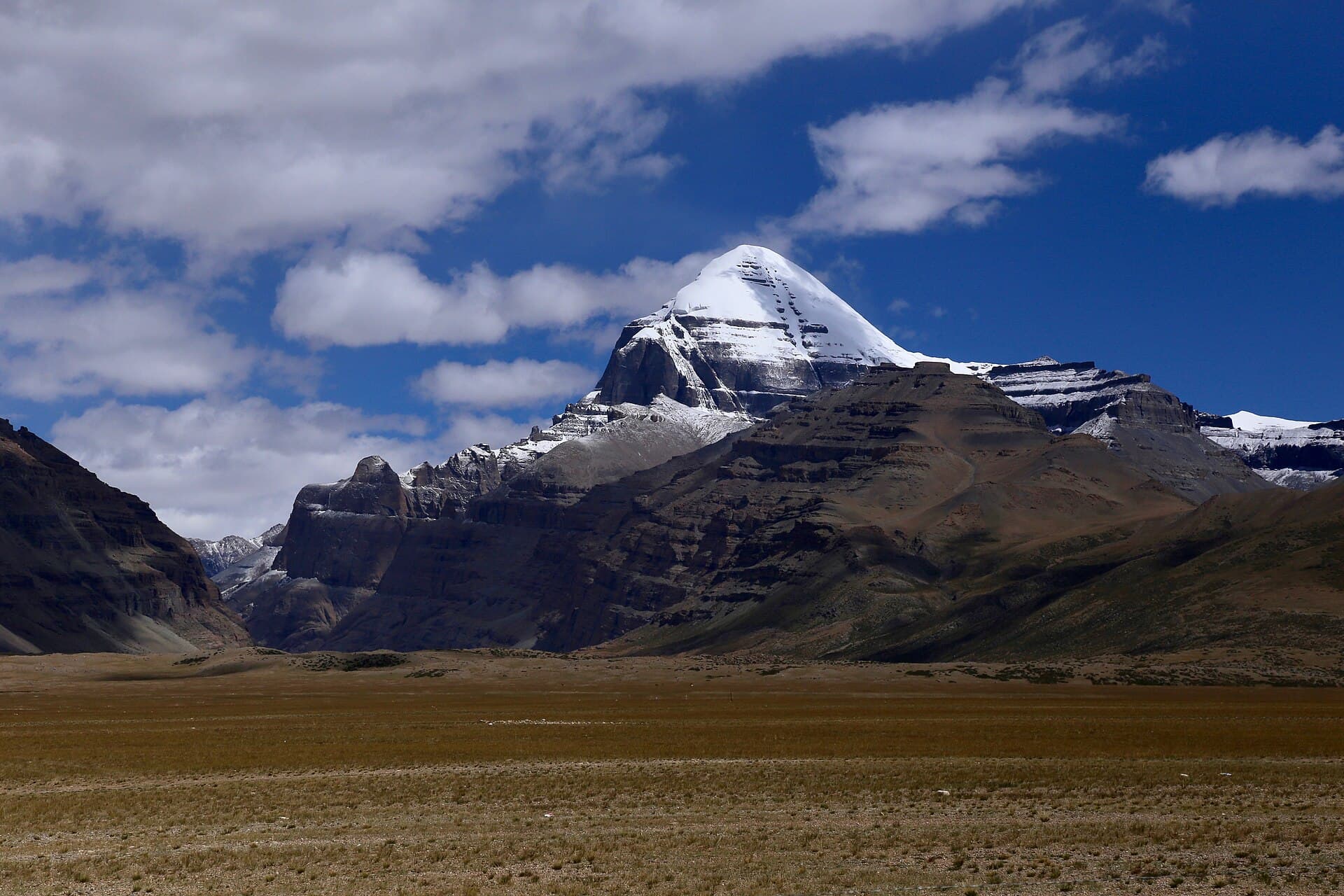
16-Day Everest, Mount Kailash Kora & Guge Kingdom Group Tour
Lhasa · Yamdrok Lake · Karola Glacier · Shigatse · Everest Base Camp · Lake Manasarovar · Darchen · Mount Kailash kora · Zanda · Guge Kingdom · Sakya · Shigatse · Lhasa
The Route
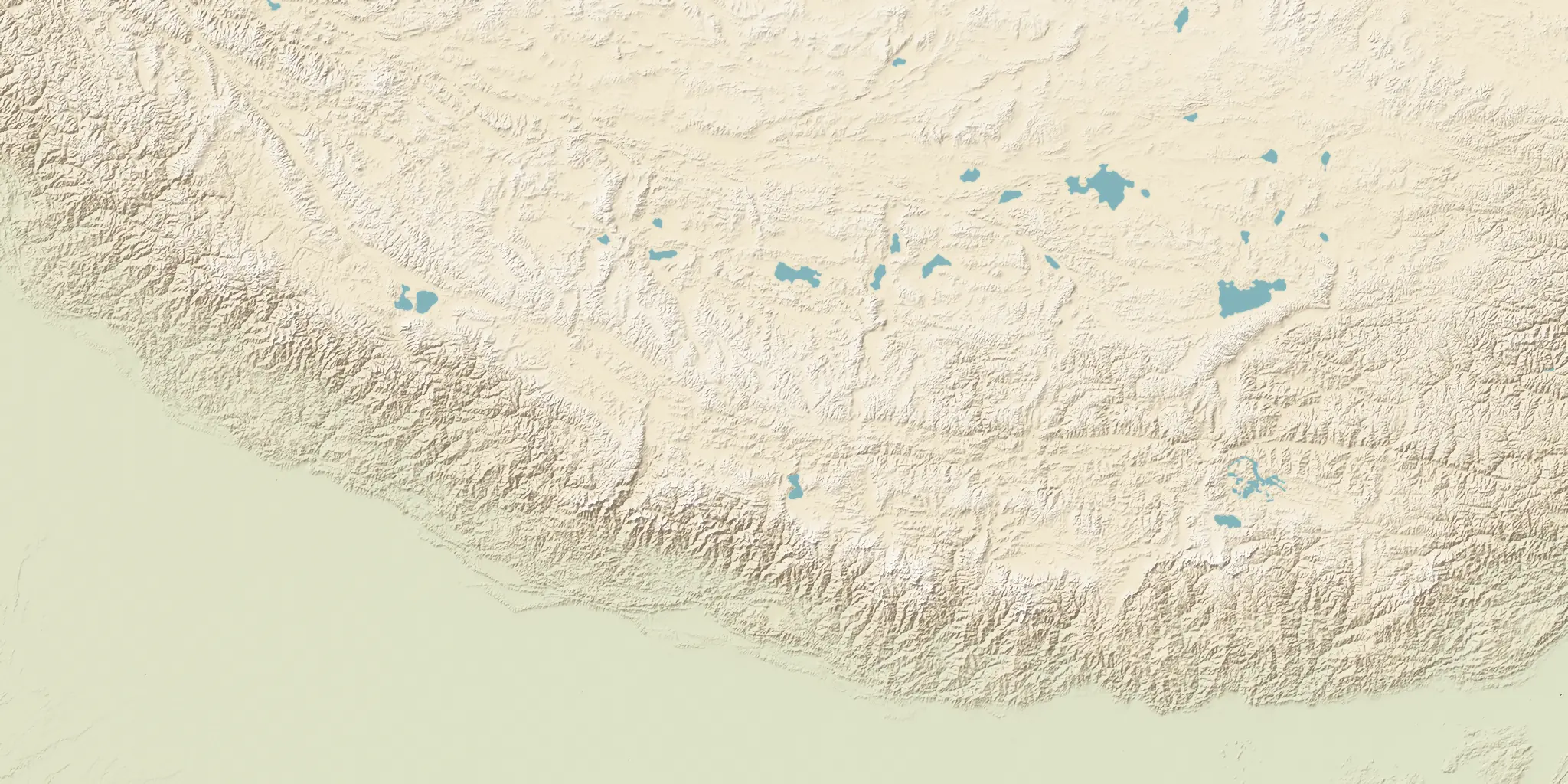
Everest, Mount Kailash and Guge in sixteen days
This is the long loop through western Tibet: Lhasa, a night at Everest Base Camp, the three-day pilgrim circuit around Mount Kailash, the ruined Guge capital in the canyons of Zanda, and a return by way of Sakya and Tashilhunpo. The order is built around the altitude. You spend three nights in Lhasa at 3,650 m, sleep at base camp (5,200 m) below Everest's north face on day five and reach Darchen, at the foot of Kailash, on day seven, so by the time the kora starts you have slept above 4,500 m for three nights.
The kora is the heart of the trip, and it is a real trek: about 40 km on foot over three days, with eco-buses for the first and last few kilometres. Day two crosses the Drolma La at 5,630 m and takes ten to eleven hours. The two nights on the trail are in basic guesthouses with shared rooms and toilets, and neither includes breakfast. Horses, yaks and porters can be hired locally, and anyone who would rather not walk can wait in Darchen. Our Mount Kailash pilgrimage guide covers kit and preparation.
After the kora come the Guge Kingdom ruins, Tholing Monastery and the eroded Zanda Earth Forest; our Guge Kingdom guide has the history. Your vehicle is shared with travellers on our 13-day trip that leaves Tibet at the Nepal border, so days 13 and 14 follow one of two routings, across the Sangsang grassland to Sakya or down the Gyirong Valley, depending on who is on board. Both reach Sakya Monastery and then Tashilhunpo on the way back to Lhasa.
The trip runs as a shared group on fixed dates from mid-April to the end of October. Each departure carries up to 12 people, frequently international and Chinese travellers together, and an English-speaking licensed guide stays with you from start to finish, switching to both languages on mixed departures. Nights in Lhasa and Shigatse are in 4-star hotels equipped with oxygen; further west the hotels are simpler, and only those in Darchen have oxygen. There are no winter departures: spring and autumn bring the clearest skies, while July and August are greener and cloudier.
Trip Highlights
- ◆The three-day kora around Mount Kailash, crossing the Drolma La at 5,630 m
- ◆A night at Everest Base Camp after the Gawu La view of five 8,000 m peaks
- ◆Lake Manasarovar, with Kailash's snow cone rising beyond it, on the road to Darchen
- ◆The Guge Kingdom's ruined citadel, Tholing Monastery and the Zanda Earth Forest
- ◆Sakya Monastery's great wall of scriptures, and the Panchen Lamas' Tashilhunpo in Shigatse
- ◆Three nights in Lhasa for the Potala, the Jokhang and the monks' debate at Sera
Upcoming Departures
Fixed group dates from the calendar of the Lhasa agency that runs this route. Tell us which one you want and we'll usually confirm availability within 24 hours. Private departures can run on any date you choose.
- Apr 26 – May 11, 2027$1,69016 DaysOpen – enquireRequest this date →
- May 14 – May 29, 2027$1,58016 DaysOpen – enquireRequest this date →
- May 28 – Jun 12, 2027$1,58016 DaysOpen – enquireRequest this date →
- Jun 11 – Jun 26, 2027$1,69016 DaysOpen – enquireRequest this date →
- Jun 26 – Jul 11, 2027$1,77016 DaysOpen – enquireRequest this date →
- Jul 11 – Jul 26, 2027$1,77016 DaysOpen – enquireRequest this date →
- Jul 26 – Aug 10, 2027$1,77016 DaysOpen – enquireRequest this date →
- Aug 11 – Aug 26, 2027$1,77016 DaysOpen – enquireRequest this date →
| Departure | Days | From (pp) | Status | |
|---|---|---|---|---|
| Apr 26 – May 11, 2027 | 16 | $1,690 | Open – enquire | Request this date → |
| May 14 – May 29, 2027 | 16 | $1,580 | Open – enquire | Request this date → |
| May 28 – Jun 12, 2027 | 16 | $1,580 | Open – enquire | Request this date → |
| Jun 11 – Jun 26, 2027 | 16 | $1,690 | Open – enquire | Request this date → |
| Jun 26 – Jul 11, 2027 | 16 | $1,770 | Open – enquire | Request this date → |
| Jul 11 – Jul 26, 2027 | 16 | $1,770 | Open – enquire | Request this date → |
| Jul 26 – Aug 10, 2027 | 16 | $1,770 | Open – enquire | Request this date → |
| Aug 11 – Aug 26, 2027 | 16 | $1,770 | Open – enquire | Request this date → |
Day-by-Day Itinerary
Arrival in Lhasa
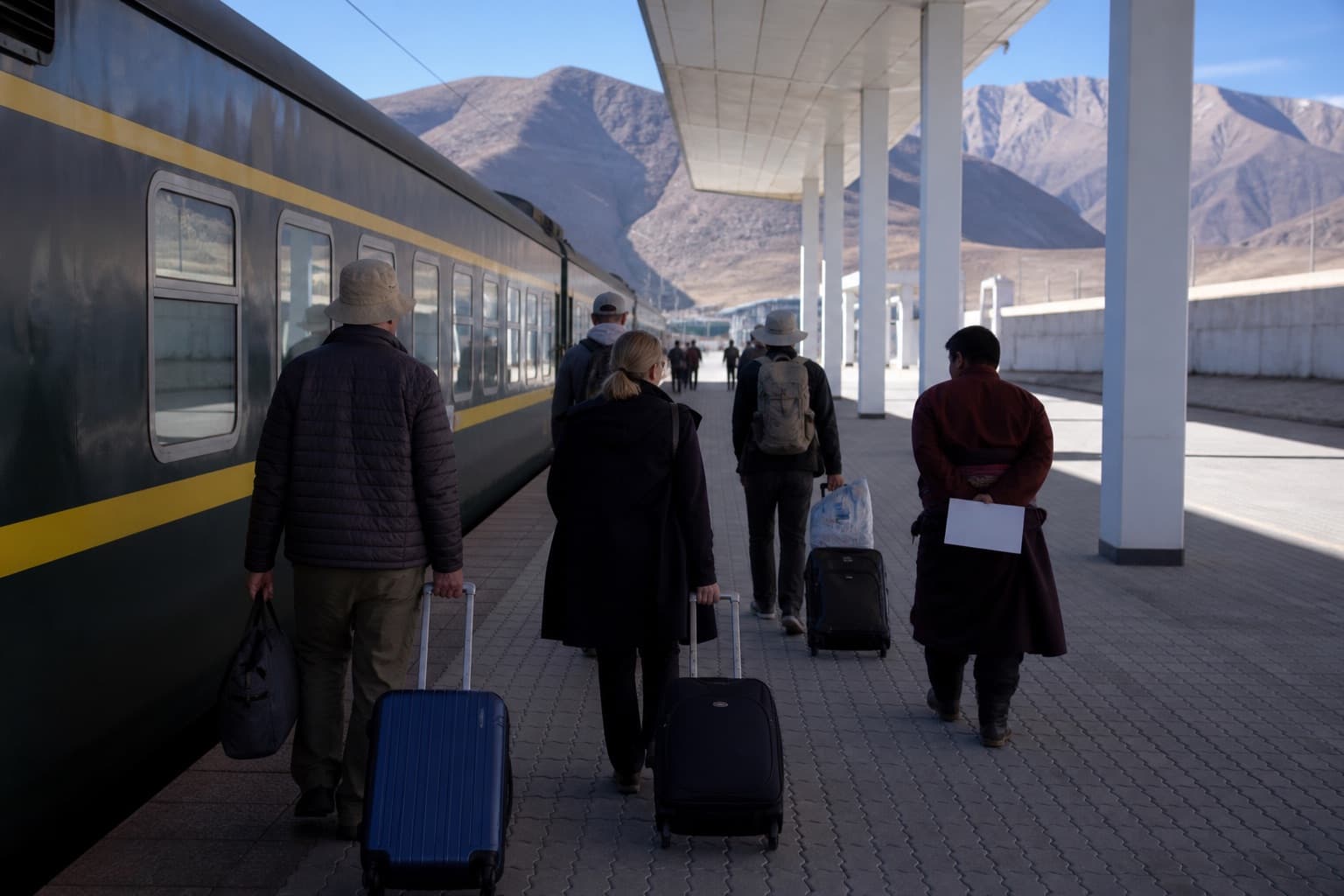
Your guide meets you at Lhasa railway station or at Gonggar airport, about an hour south-east of the city, with a white khata scarf, and takes you to your hotel; regulations require foreign travellers to arrive and leave with a licensed guide. The rest of the day is yours, and resting is the whole point: Lhasa sits at 3,650 m, and this trip goes far higher. Drink plenty of water, avoid alcohol and heavy meals, and leave your shower until the morning. Before 22:00 your guide will call or message with the next day's meeting time.
Overnight: Lhasa
Tibetan crafts and the Sera debate
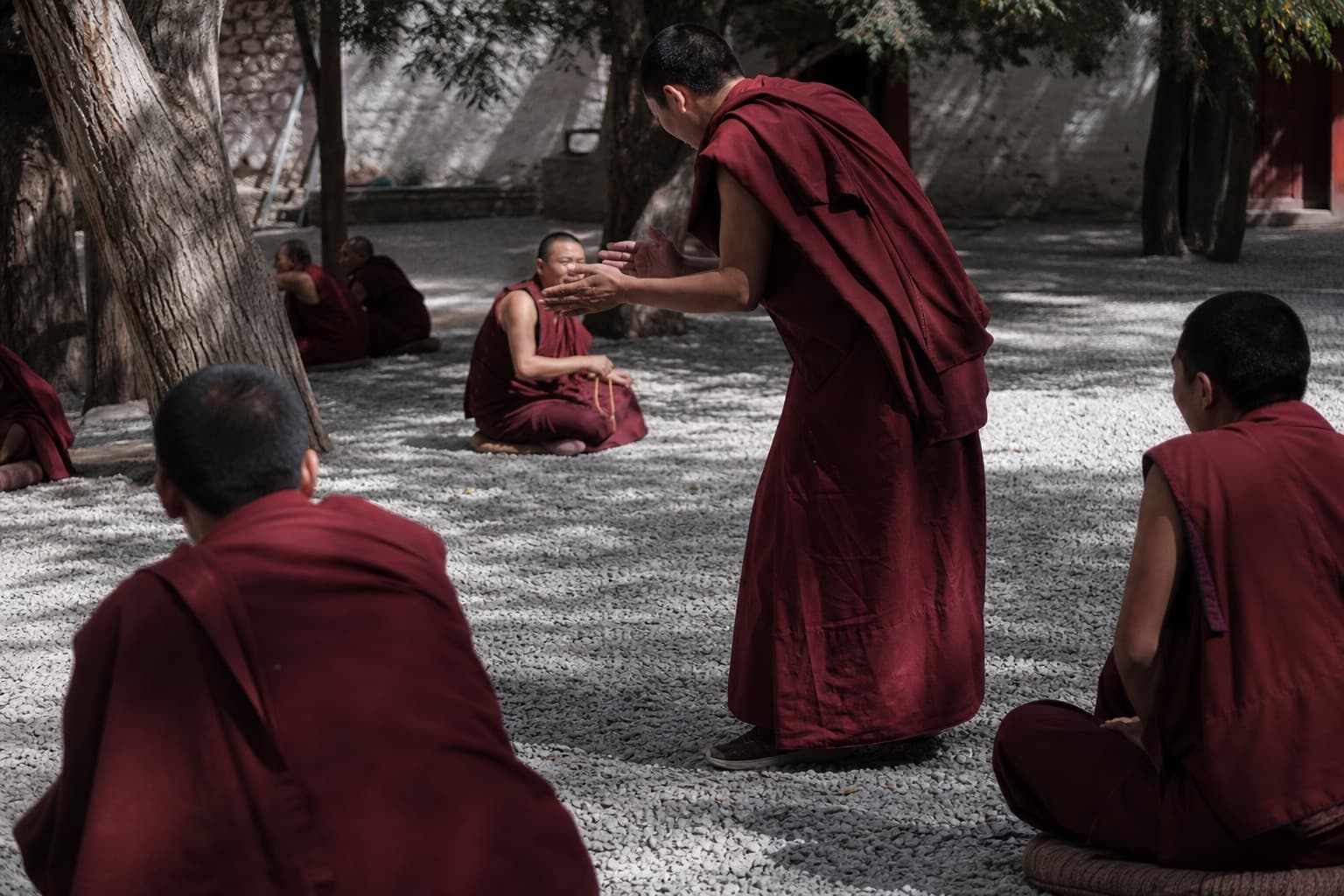
An easy first day out. At a traditional handicraft centre you blend Tibetan incense by hand, ink a carved woodblock to make a print, and have a teacher write your name or a blessing in Tibetan script — keepsakes you made yourself. Then a 7 km hop to Sera, among the great Gelug monasteries of Lhasa, where from about 15:00 monks gather in a courtyard to debate Buddhist philosophy, driving home each point with a loud clap. There is no debate on Sundays, and a ceremony can cancel it on other days too; you still visit the halls and chapels.
Meals: Breakfast·Overnight: Lhasa
Lhasa's landmarks: Potala, Jokhang, Barkhor
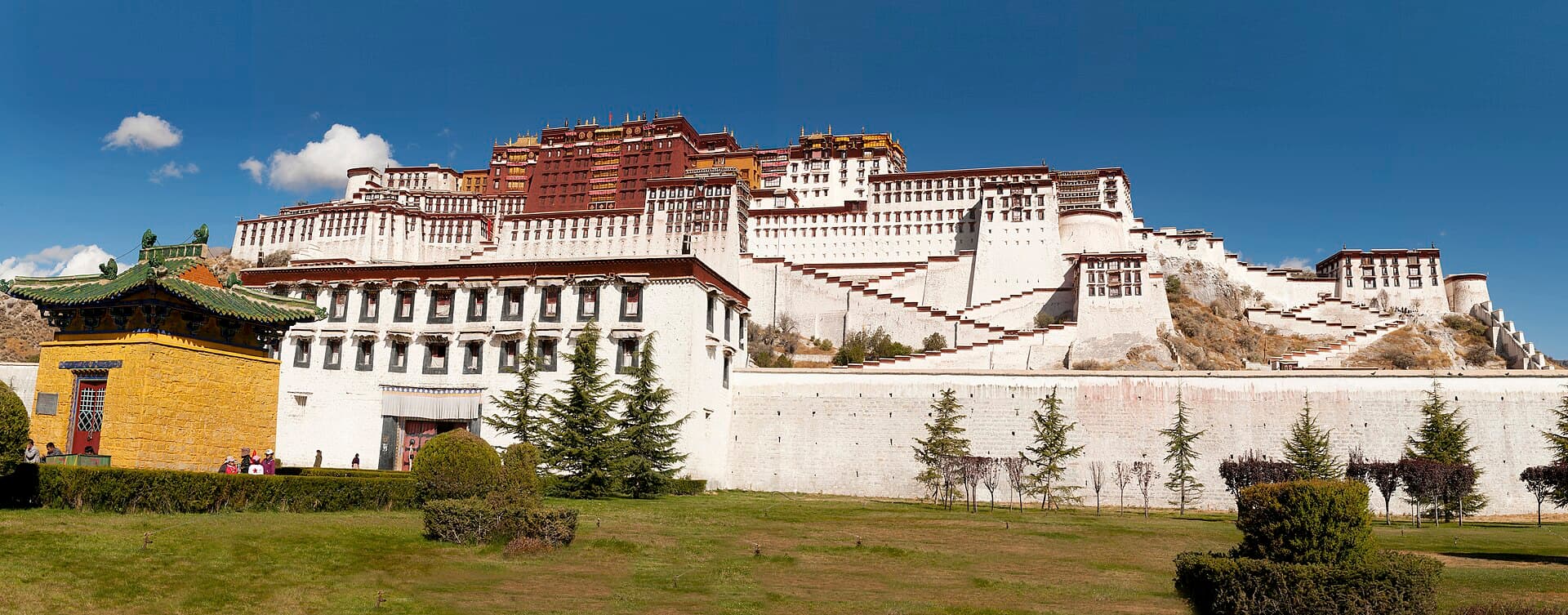
Lhasa's landmark day begins at the Potala, the Dalai Lamas' winter palace until 1959. Have your passport ready: tickets are reserved in your name, the palace allocates the entry time, and you get one hour inside, with cameras put away. In busy months you may go in as several smaller parties with different slots. Afterwards you visit the Jokhang, Tibet's holiest temple, booked a day ahead, then walk the Barkhor with the pilgrims who circle it. Today's included specialty meal is Tibetan or Nepali food. The Potala doesn't open on Mondays, so the Lhasa programme is rearranged when needed.
Meals: Breakfast, specialty meal·Overnight: Lhasa
Kamba La, Yamdrok Lake and Karola to Shigatse
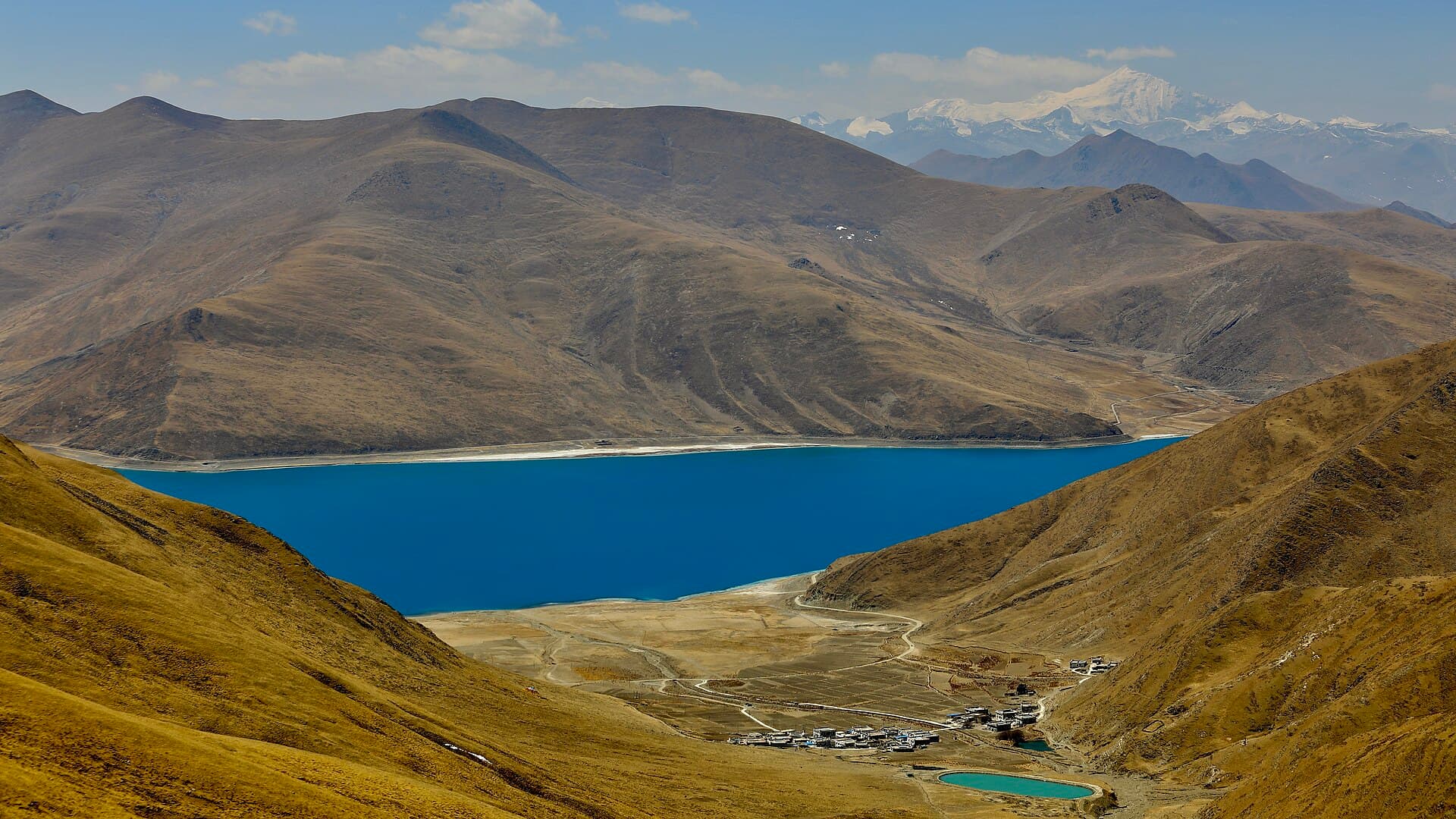
The first long drive: around 370 km and seven hours. The road leaves the Yarlung Tsangpo valley and switchbacks up to the Kamba La (4,790 m), the classic lookout over Yamdrok Lake (4,441 m), one of Tibet's sacred lakes; lunch is an included hot pot at a lake-view restaurant. In the afternoon you stop beneath the Karola Glacier, whose ice tongue ends a few hundred metres from the road — you are at about 5,000 m here, so move slowly. The last 170 km run through Gyantse to Shigatse (3,850 m), Tibet's second-largest city, where your guide registers foreign travellers with the entry-exit office.
Meals: Breakfast, Lunch·Overnight: Shigatse
Gawu La, Rongbuk and a night at Everest Base Camp
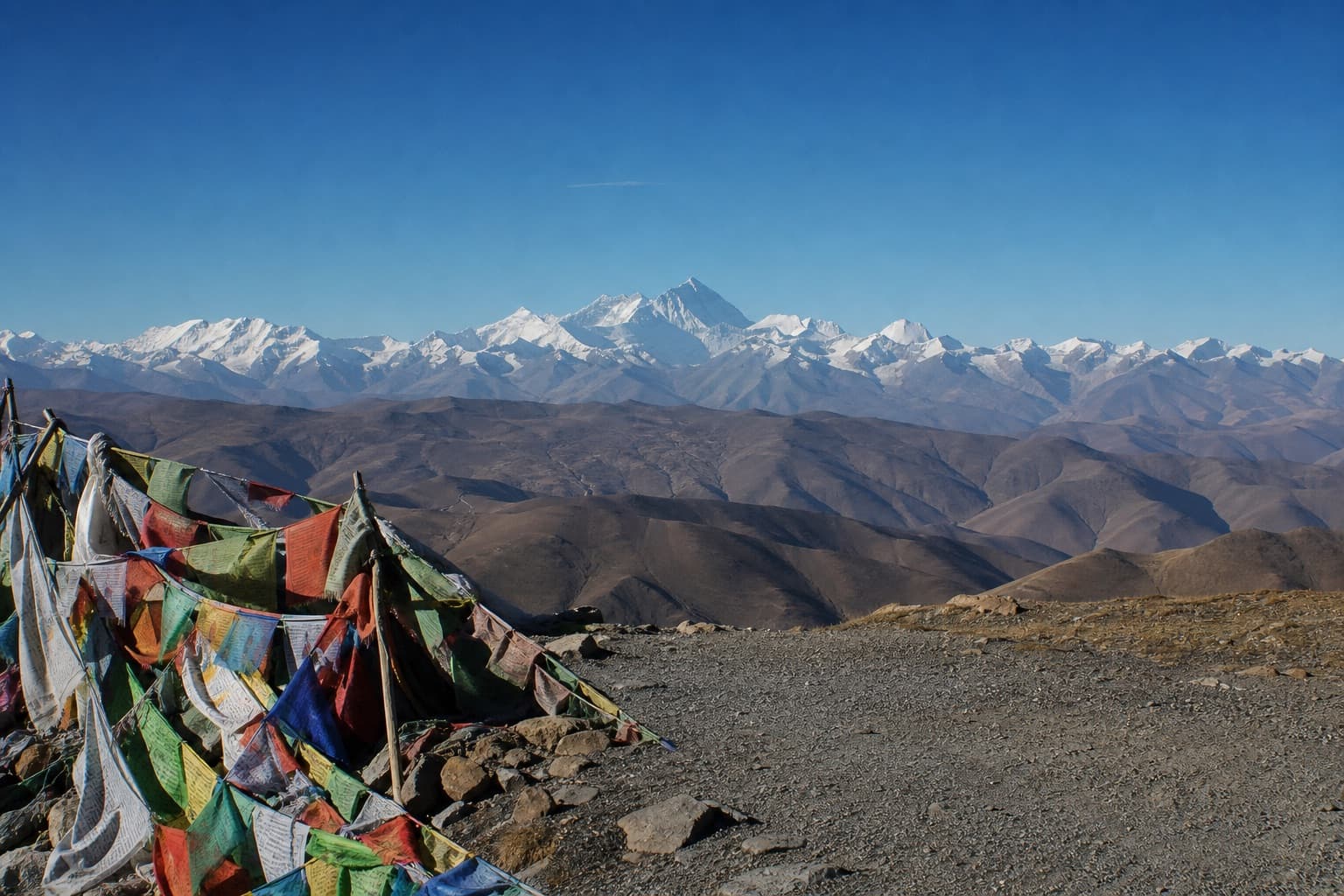
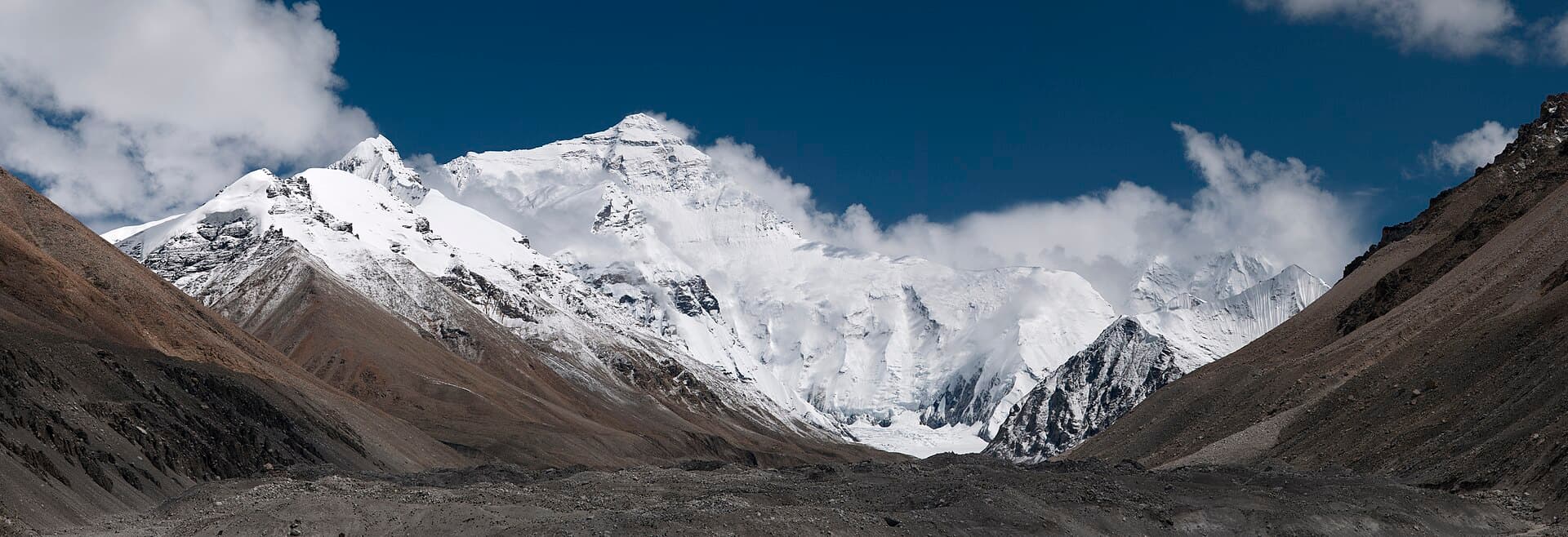
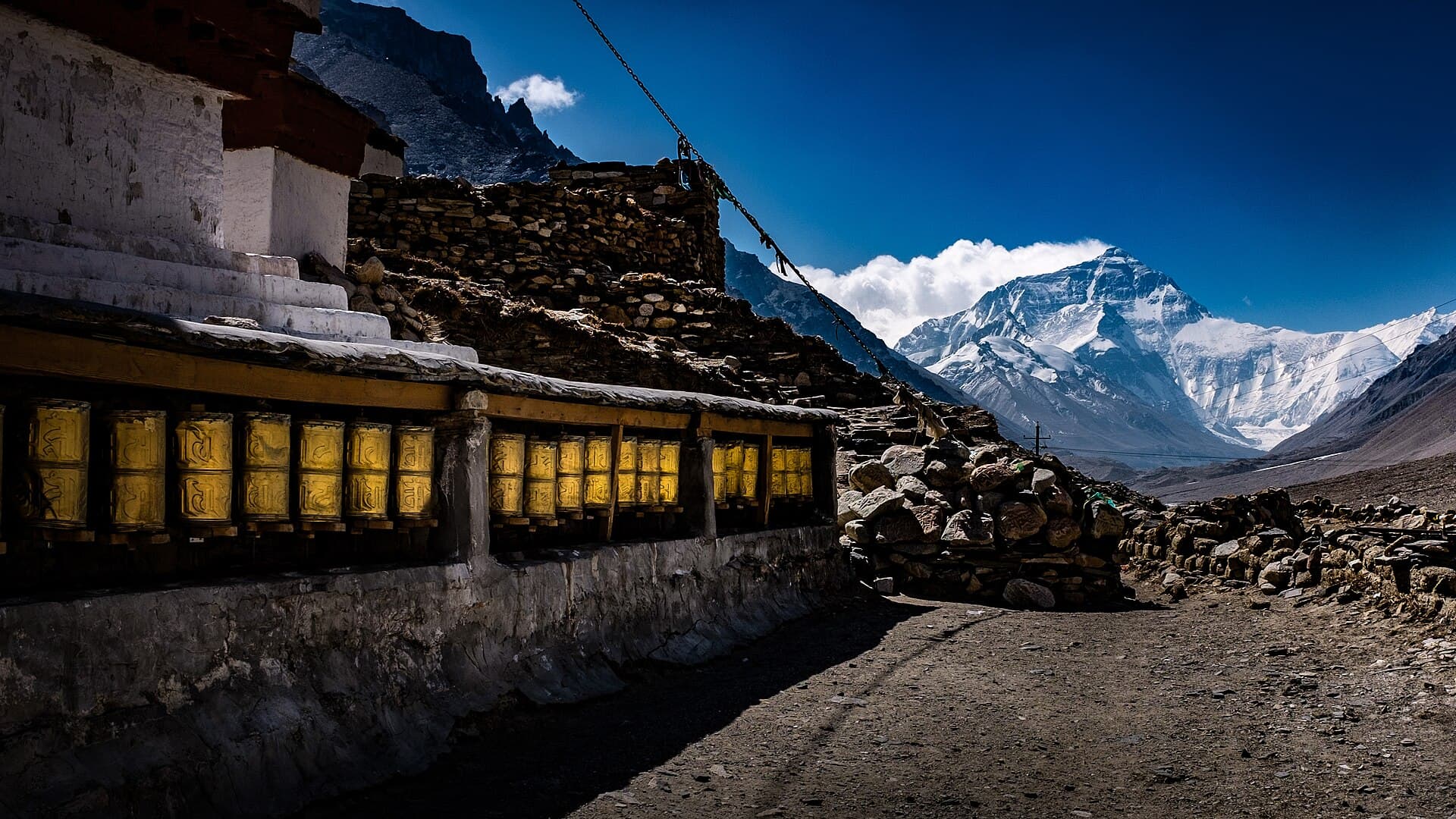
About 350 km and seven hours. The Everest road zigzags through 108 bends to the Gawu La (5,198 m), where clear weather lines up Everest, Lhotse, Makalu, Cho Oyu and Shishapangma, five of the planet's 8,000 m giants. Rongbuk Monastery (5,154 m), shared by monks and nuns, sits beneath the north face. At Everest Town (Tashizom), 50 km short of base camp, you leave the vehicle and driver and continue by eco-bus, so pack a small bag for the night. The tent camp, rebuilt in 2025, has twin rooms, a dining tent and shared bathrooms but no oxygen; nights reach 0–8 °C even in summer, and down jackets can be rented. If the camp is closed, you sleep in an Everest Town guesthouse.
Meals: Breakfast·Overnight: Everest Base Camp tent camp (if closed: Everest Town guesthouse)
Everest at dawn, then west to Saga or Zhongba
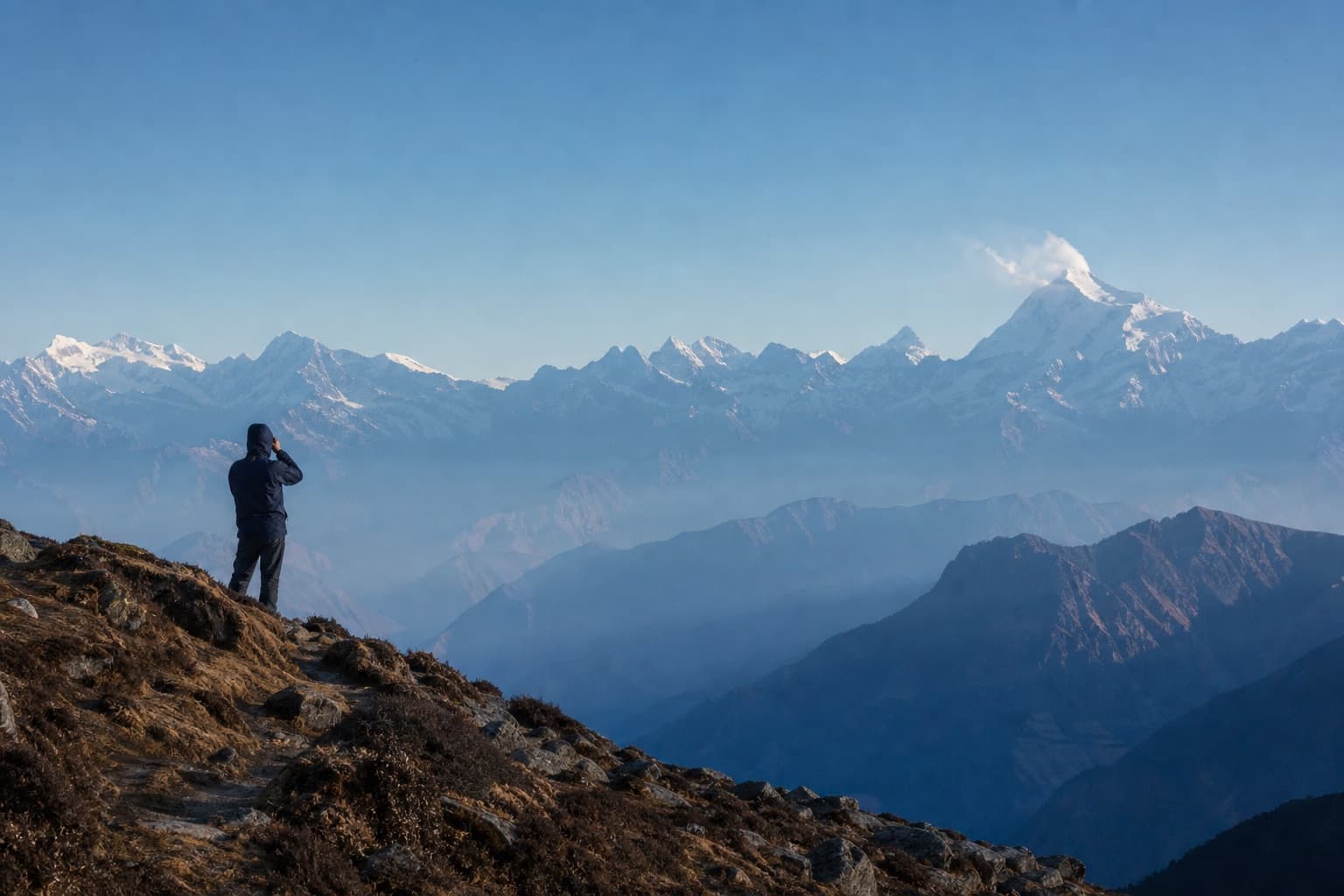
Set an early alarm: on a clear morning the sun lights Everest's summit while the valley is still in shadow, and a short walk from camp takes you to the viewpoint; spring and autumn give the clearest skies. After the eco-bus back to Everest Town, the group heads west on one of the longest days, 400–450 km and seven to nine hours, through the Shishapangma protection zone. Shishapangma, the only 8,000 m peak entirely inside Tibet, fills the southern skyline, and Pelku Tso glints in the distance. Hotels for foreigners are scarce out here, so you sleep in Saga or Zhongba, without oxygen supply.
Meals: Breakfast·Overnight: Saga or Zhongba
Lake Manasarovar and the road to Darchen
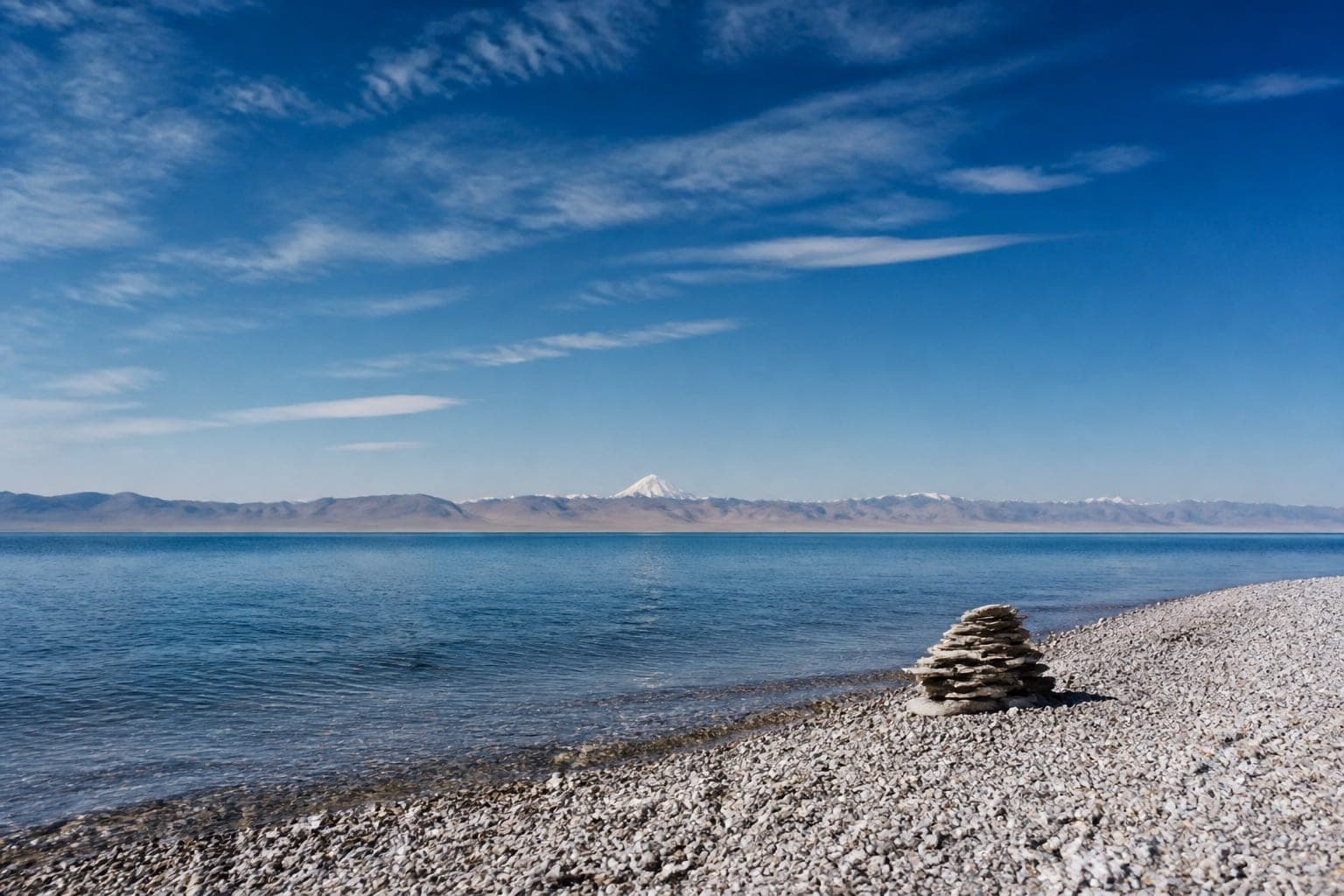
About 460 km and eight hours along the G219. You cross the Maquan river wetlands and pass through Payang, which at about 4,600 m is one of the highest towns anywhere, before the plateau opens onto Lake Manasarovar (4,590 m), holy to Tibetan Buddhists, Hindus and followers of Bon. On a calm day it mirrors Mount Kailash (6,638 m) and the Naimonanyi massif. After a stop by the shore, the last stretch reaches Darchen (4,675 m), the small town where the kora begins, and a hotel with oxygen. Tonight, pack a light daypack with only what you will carry for three days.
Meals: Breakfast·Overnight: Darchen
Kailash kora day 1: Tarboche to Dirapuk
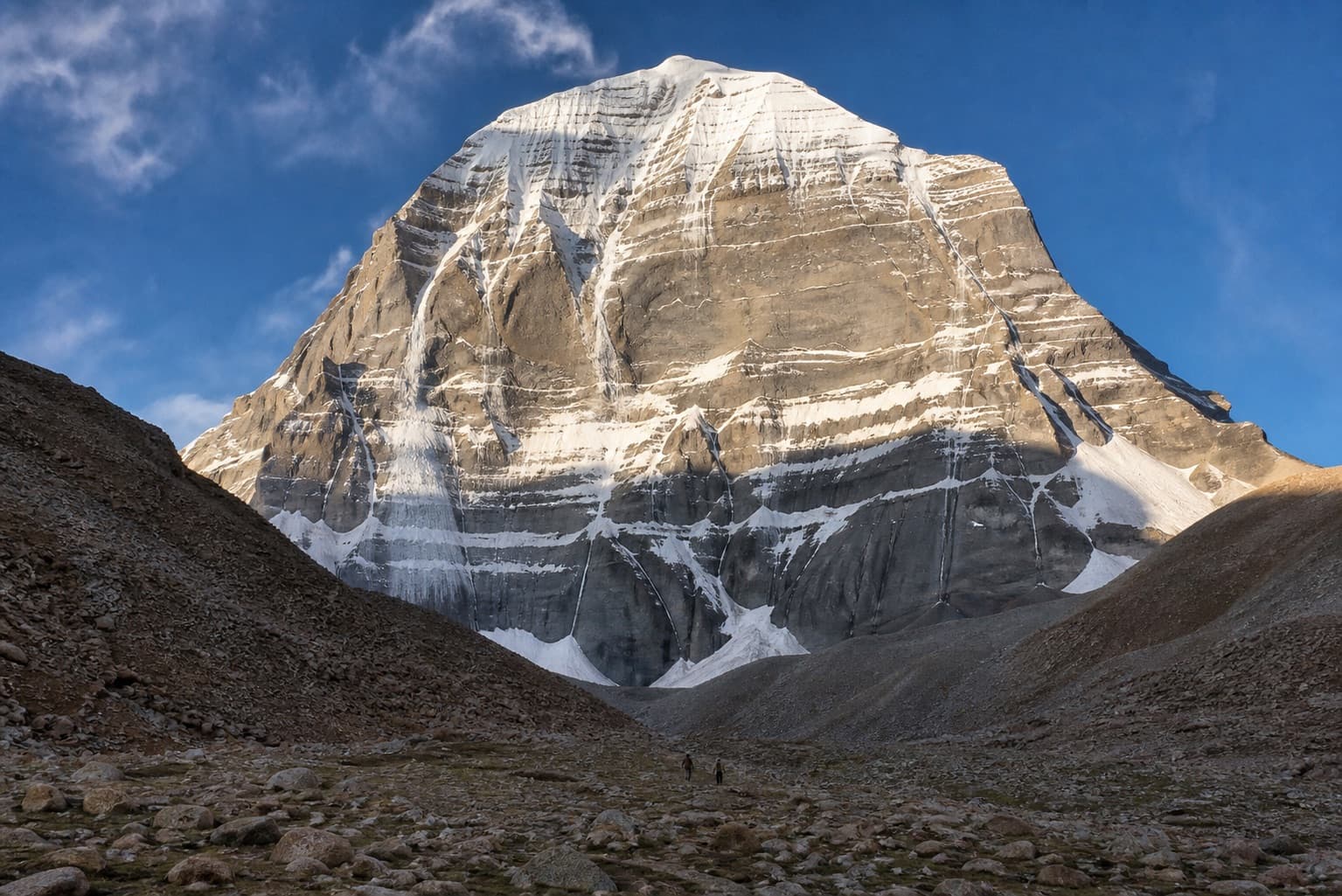
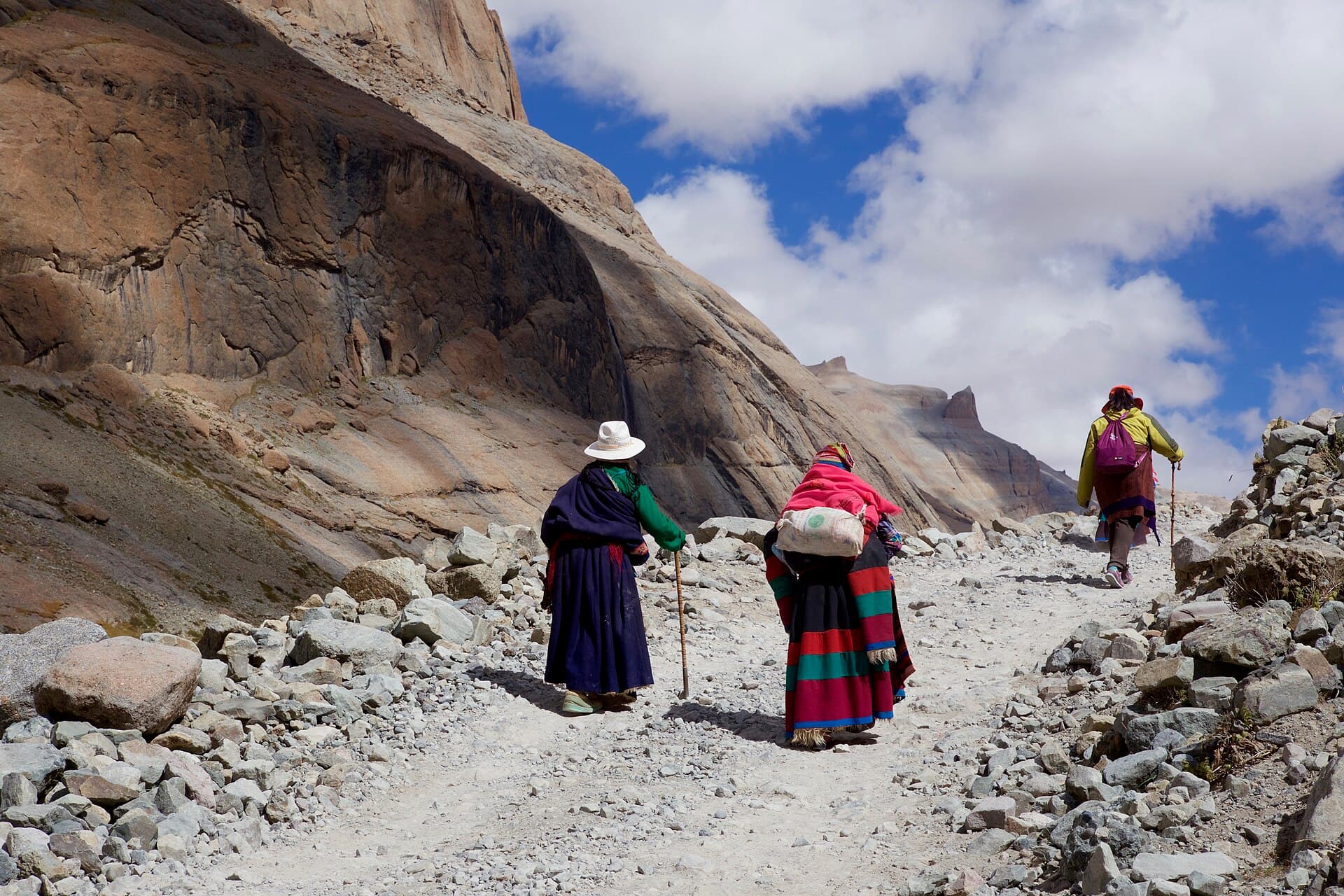
An eco-bus carries you the first 6 km from Darchen to Tarboche, the great prayer-flag pole where the circuit begins. From there you walk about 14 km, seven to eight hours, up the Lha Chu valley, past mani stones and pilgrims measuring the route in full-length prostrations, with the west face of Kailash and then the north face in view. The day ends at Dirapuk (5,100 m), right opposite the north face. Tonight's guesthouse or tent is basic: several beds to a room, one each, shared toilets and no oxygen. There is no breakfast tomorrow, so buy snacks in Darchen. Horses, yaks and porters can be hired locally at your own cost.
Meals: Breakfast·Overnight: Dirapuk (kora guesthouse)
Kora day 2: over the Drolma La to Zutulpuk
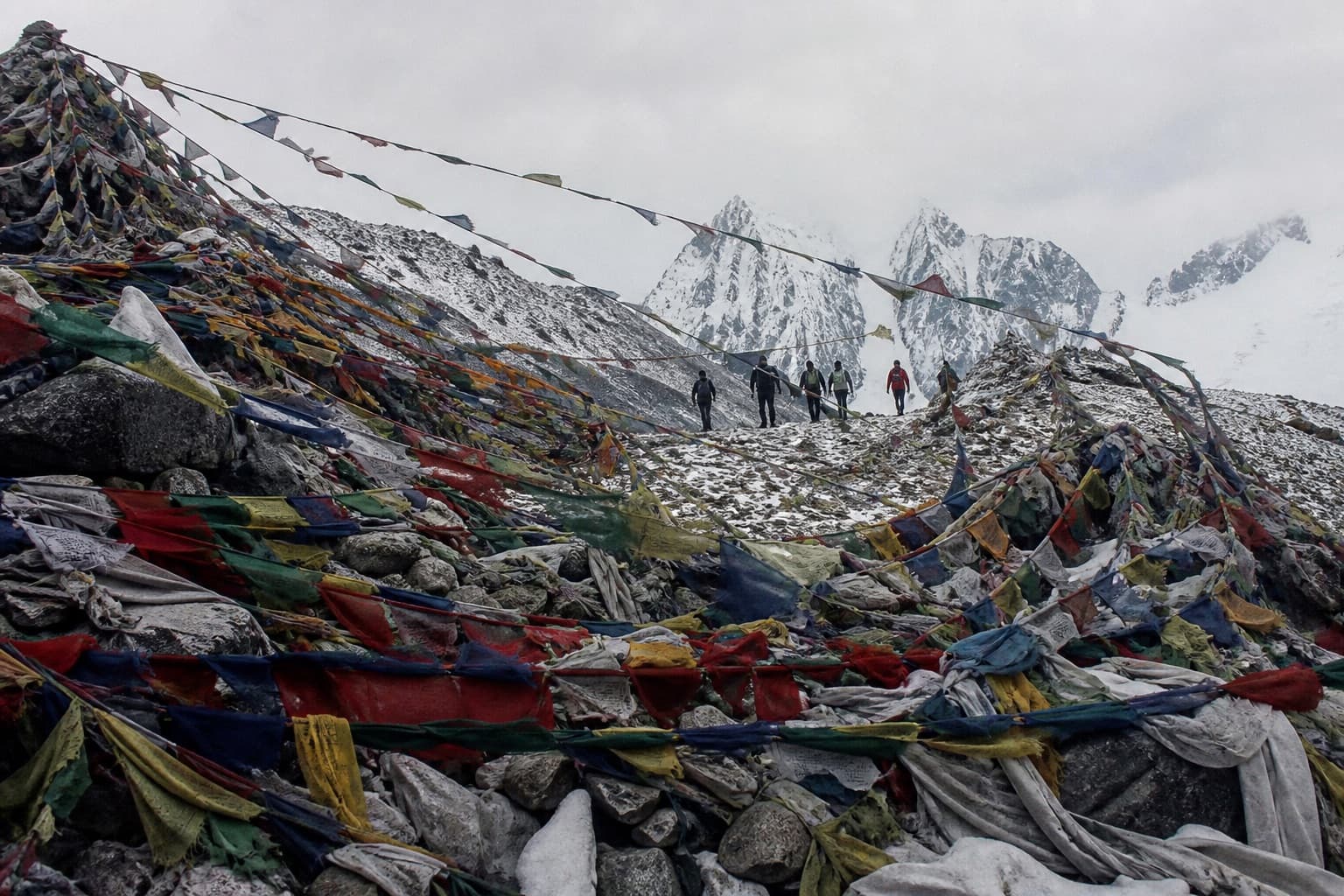
The hardest day of the trip: about 20 km on foot and ten to eleven hours, starting early and without breakfast. From Dirapuk at 5,100 m the trail climbs to the Drolma La (5,630 m), the high point of the kora, buried under prayer flags; pilgrims believe crossing it clears a lifetime's sins. Just below lies Gauri Kund, the small glacial Lake of Compassion. The way down is steep and stony at first, then becomes a long, easier walk along the river to Zutulpuk (4,880 m), where Milarepa is said to have meditated in a cave. Tea houses along the trail sell sweet tea and noodles. Another dorm-style night follows.
Overnight: Zutulpuk (kora guesthouse)
Kora day 3, then down to Zanda
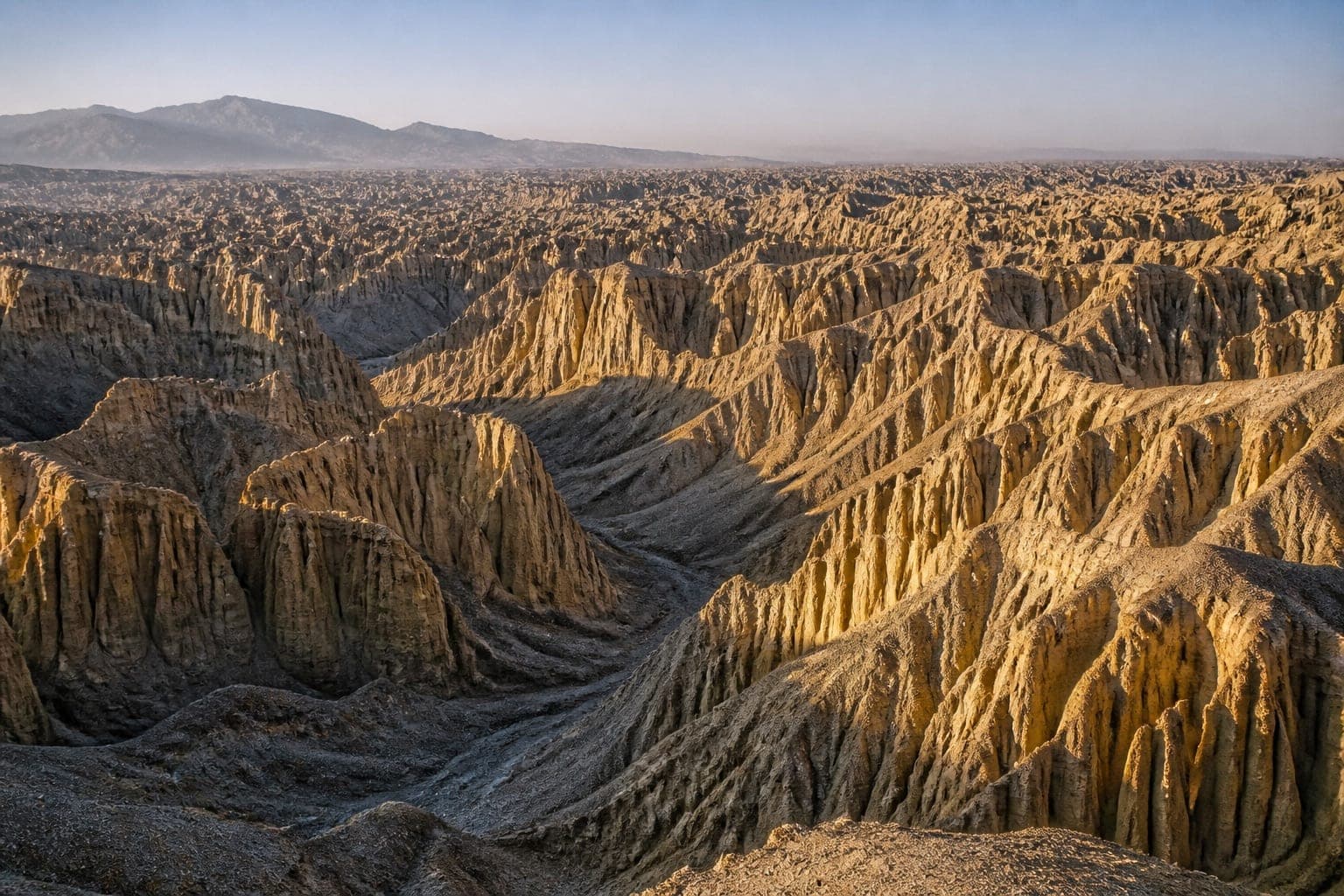
The final stage is the gentle one: about 6.6 km and two to three hours downhill to Zongdui, as rock and snow give way to grass and shrubs and marmots scurry between the mani stones. Zutulpuk has no breakfast, so eat from your supplies or at a tea house. The eco-bus covers the last 4 km to Darchen, where you arrive around midday and buy your own lunch. In the afternoon the group drives about 230 km, four and a half hours, through eroded canyons to Zanda (3,700 m), almost 1,000 m below Darchen and a gentler night after the trail.
Overnight: Zanda
Guge Kingdom, Tholing and the Zanda Earth Forest
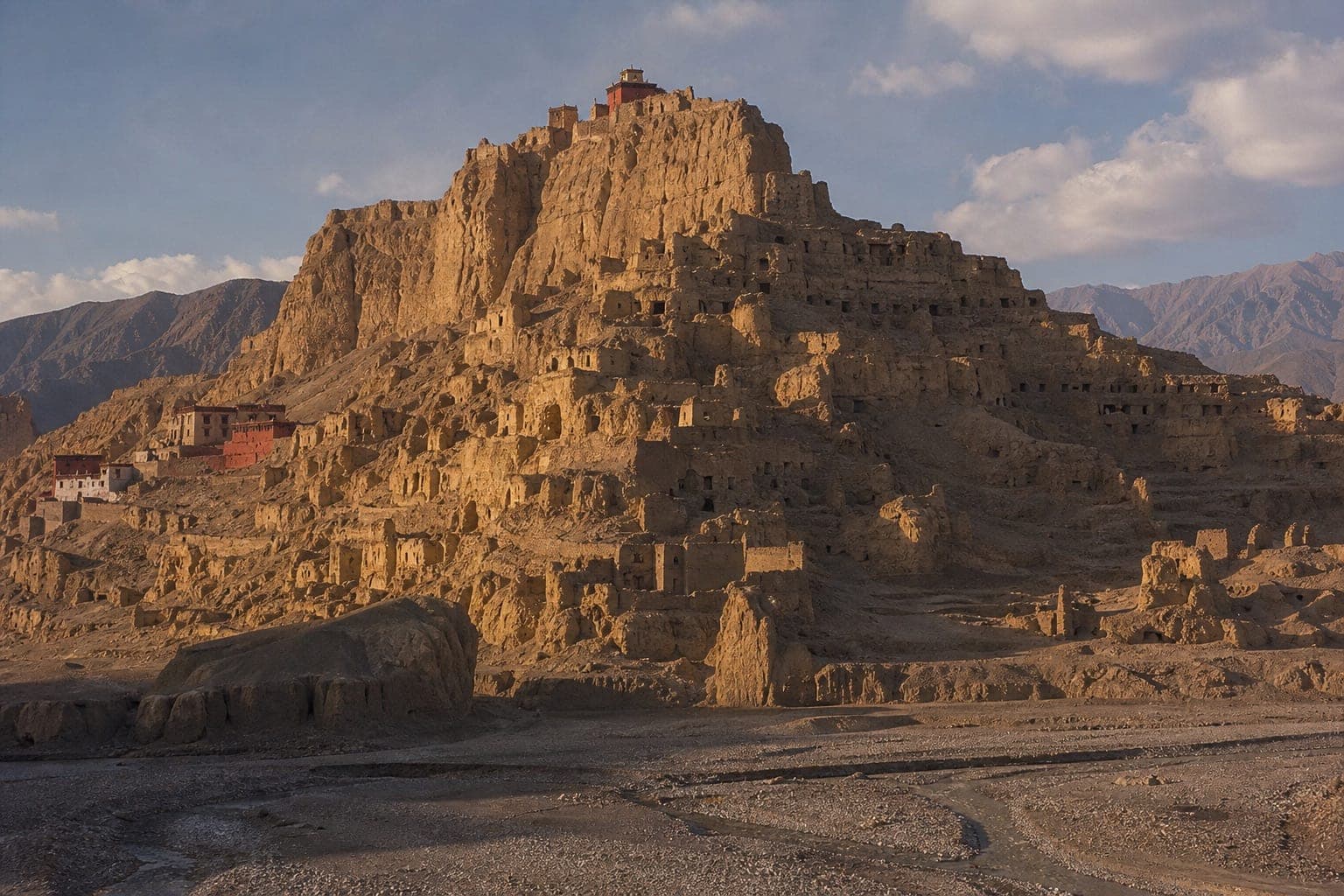
A day for western Tibet's history. The Guge citadel, begun in the 10th century and abandoned when the kingdom fell in the 17th, is a hillside of more than 600 ruined buildings, and its surviving chapels still hold vivid murals; the paths are steep, so take your time. Tholing Monastery, the first temple the Guge kings built in Ngari, keeps old murals and is ringed by more than 100 ruined stupas. In between lies the Zanda Earth Forest, kilometres of clay towers carved by water from an ancient lake bed. Then about 270 km, five hours, back to Darchen.
Meals: Breakfast·Overnight: Darchen
Back east on the G219 to Saga or Zhongba
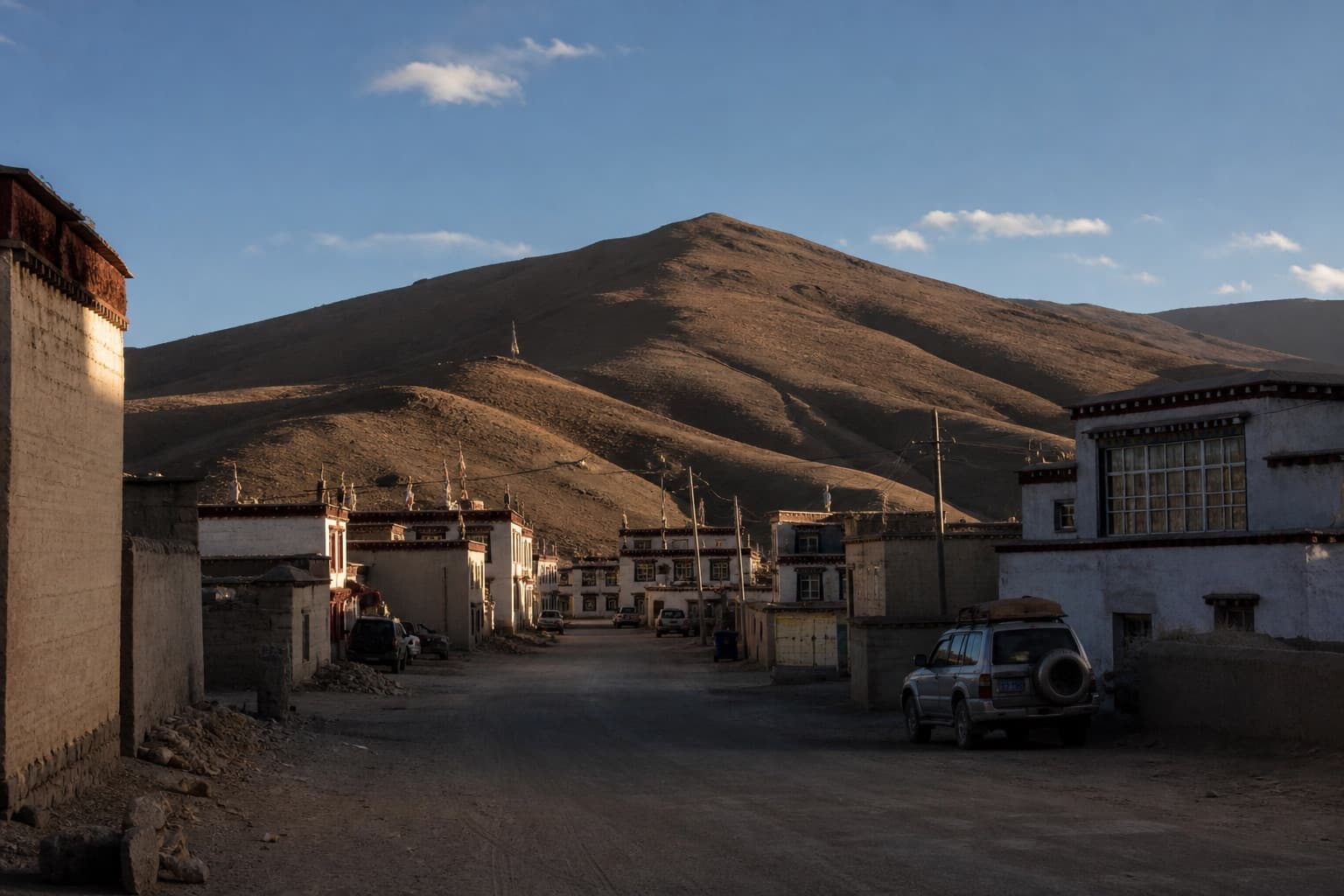
A long travel day: 380–500 km and seven to eight hours, back east along the G219, with the Himalaya to the south and the Gangdise range to the north. Saga lies on the upper Yarlung Tsangpo, and its county sits mostly above 4,600 m — dry, bright and thin-aired, so keep drinking water and wear sunglasses. Tibet's roads have timed speed limits, so drivers sometimes stop to wait out the clock; it's a chance to stretch your legs. Lunch depends on what's open along the road, so keep snacks to hand. The night is in Saga, or in Zhongba if Saga is full.
Meals: Breakfast·Overnight: Saga or Zhongba
Two routings: Sangsang to Sakya, or Gyirong Valley
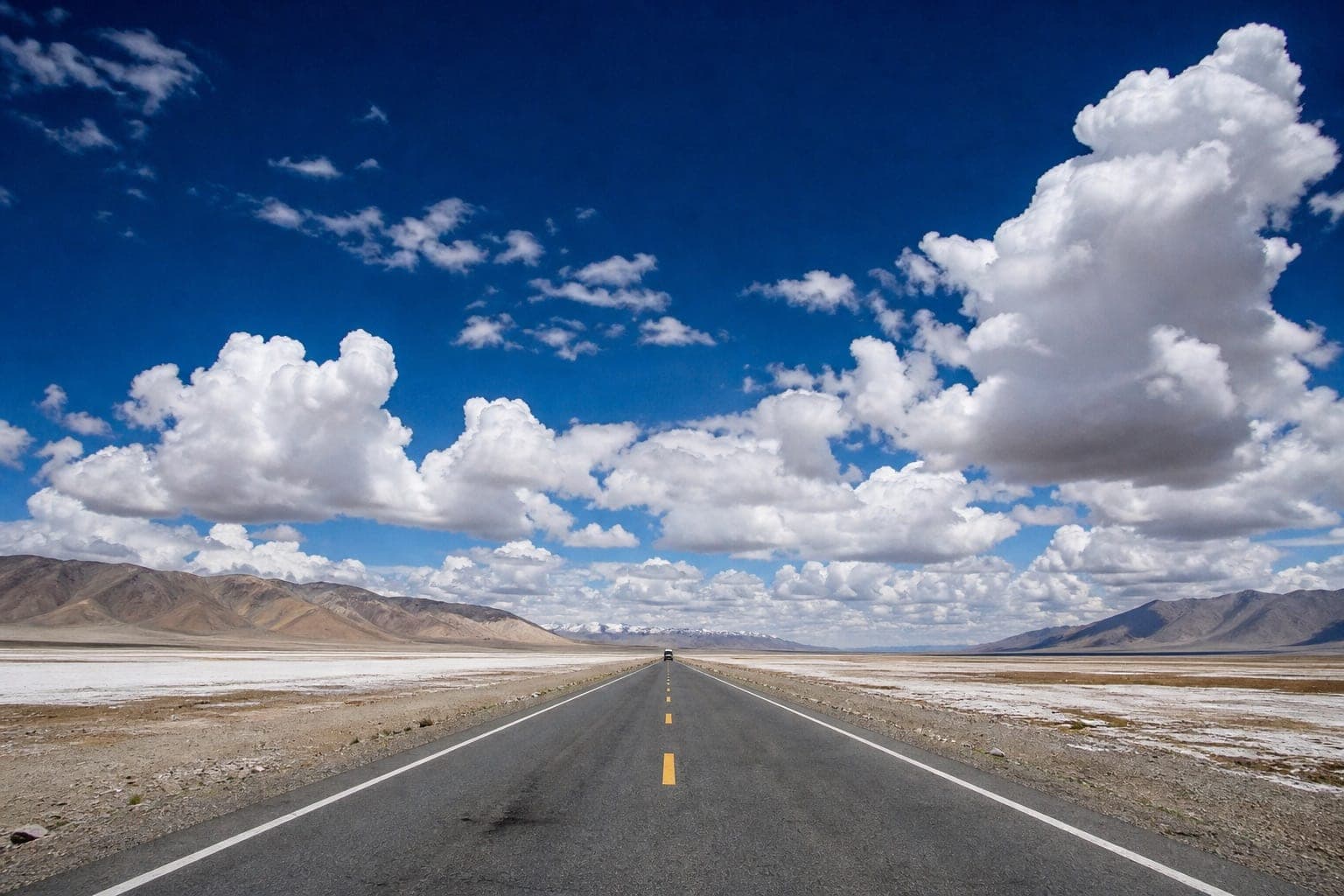
Today depends on who shares your vehicle. If nobody on board is leaving for Nepal, you drive 450–580 km, seven to ten hours, east over the Tujila pass and across the Sangsang grassland, its pastures scattered with yaks and nomad tents, then down to Sakya for the night. If anyone is on our 13-day trip that exits at Gyirong, the whole group drives 200–250 km, four to five hours, south into the forested Gyirong Valley to see its gorge and suspension bridge. Those travellers cross into Nepal in the afternoon, and you sleep in Gyirong town, at about 2,600 m the lowest night of the trip.
Meals: Breakfast·Overnight: Sakya (Gyirong routing: Gyirong)
Sakya Monastery on either routing
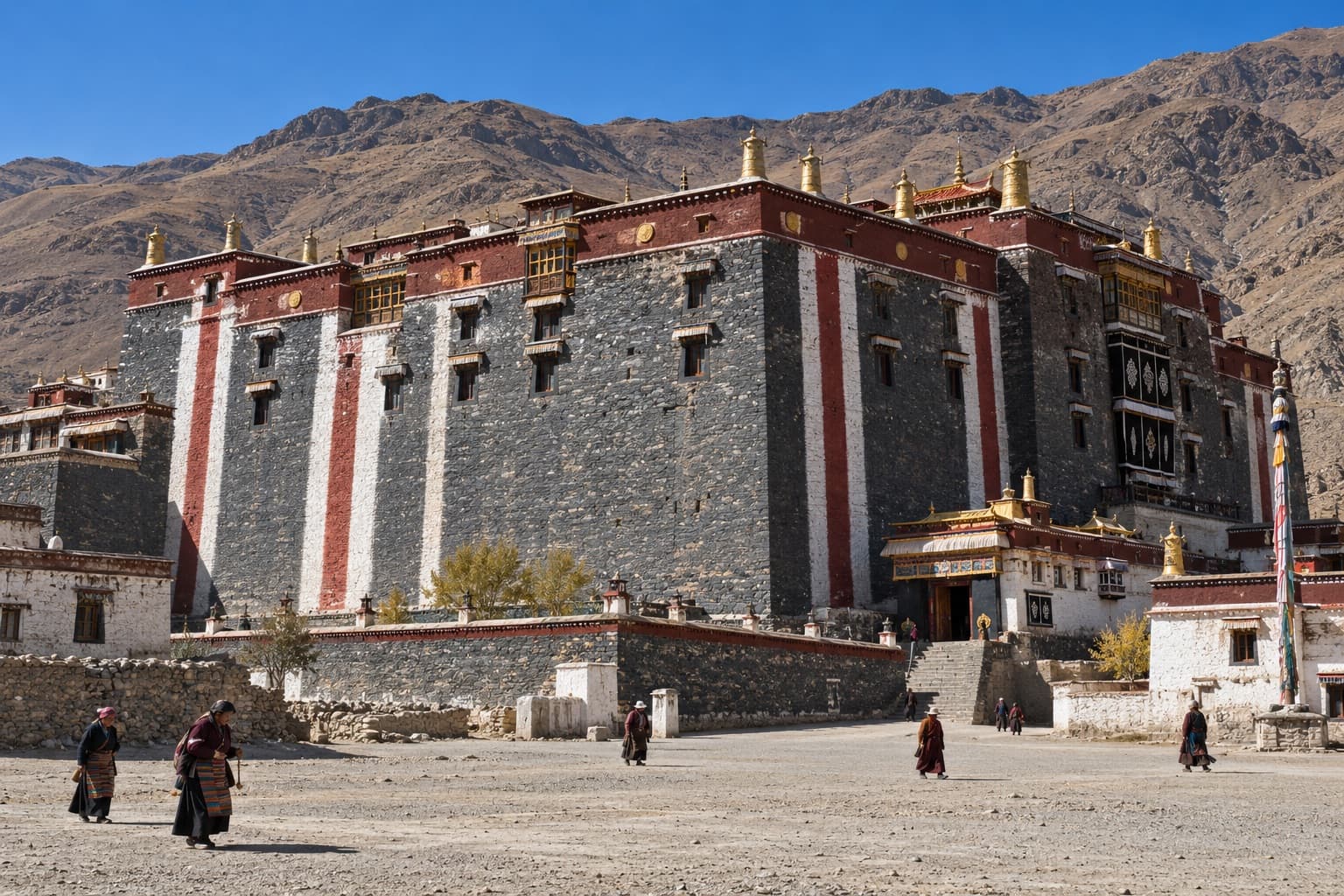
Both routings visit Sakya Monastery, founded in 1073 as the main seat of the Sakya school: fortress-like walls, a scripture wall holding tens of thousands of texts, and more than 3,000 murals. On the Sakya routing you tour it in the morning and drive about 150 km, three hours, to Shigatse (3,850 m) and a hotel with oxygen. On the Gyirong routing the day is a long one, about 490 km and eight hours from Gyirong, with the monastery visit at the end and the night in Sakya, in a hotel without oxygen supply.
Meals: Breakfast·Overnight: Shigatse (Gyirong routing: Sakya)
Tashilhunpo Monastery and the drive to Lhasa
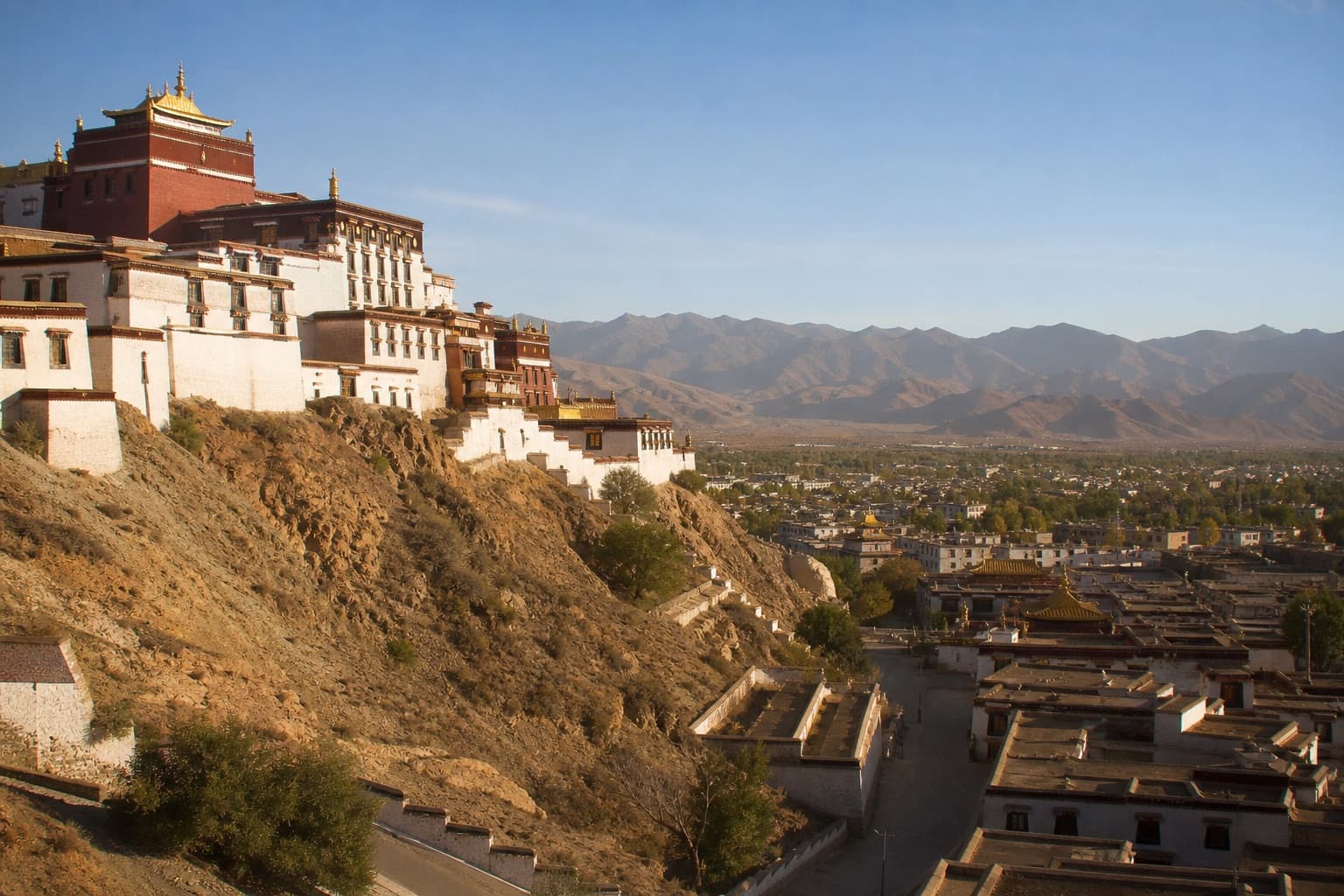
In Shigatse you visit Tashilhunpo, which the first Dalai Lama established in 1447 and every Panchen Lama since the fourth has used as his seat. Its great Maitreya, the Buddha to come, was made with more than 115 tonnes of copper, and the reliquary stupas of past Panchen Lamas are worked in gold, silver, coral and turquoise. Then the road east follows the Yarlung Tsangpo, about 270 km and four and a half to five hours from Shigatse; starting from Sakya, the day stretches to about 490 km and up to eight hours. You arrive in Lhasa (3,650 m) for a final night.
Meals: Breakfast·Overnight: Lhasa
Departure from Lhasa
After breakfast your guide and driver take you to the airport at Gonggar or to the railway station; foreign travellers leave Lhasa with a licensed guide, just as they arrived. The drive to the airport takes about an hour, so pick a flight that leaves after 10:00. Shared drop-offs are included for flights departing 08:30–22:30 and for trains at any time — send us your ticket details in advance so that the group transfers can be planned.
Meals: Breakfast
What's Included
- ✓All permits for the route: the Tibet Travel Permit, the Alien's Travel Permit and, if required, the military permit
- ✓A licensed guide who speaks English for the whole trip, working in Chinese and English when the group is mixed
- ✓Shared licensed tourist vehicle and driver (7–26 seats, sized to the group); for Lhasa sightseeing with under four travellers, a taxi with the guide, paid for
- ✓15 nights, twin-share: 4-star hotels with oxygen in Lhasa (4) and Shigatse (1), hotels with oxygen in Darchen (2), simpler hotels in Saga or Zhongba (2) and Zanda (1), the Everest Base Camp tent camp (1), two dorm-style nights on the kora at Dirapuk and Zutulpuk, and two nights in Sakya, Gyirong or Shigatse depending on the routing
- ✓Breakfast every day from day 2 except the two kora mornings (days 9 and 10), plus two specialty meals: a Tibetan or Nepali meal in Lhasa and hot pot for lunch beside Yamdrok Lake
- ✓Entry tickets: Potala Palace, Jokhang, Sera, the Tibetan culture experience, Yamdrok Lake, Karola Glacier, Rongbuk, Everest Base Camp and Mount Kailash (each with its eco-bus), Lake Manasarovar, Guge Kingdom, Zanda Earth Forest, Tholing, Sakya and Tashilhunpo
- ✓Shared airport or station transfers in Lhasa on the start and end dates — any train, or flights arriving 08:00–22:00 and departing 08:30–22:30 — with waits of up to about two hours while arrivals are grouped
- ✓A small oxygen bottle each, a 6.8-litre medical oxygen tank carried in the vehicle for emergencies, and two 300 ml bottles of water per person per day
- ✓Insurance: travel accident, vehicle passenger and travel-agency liability cover
Not Included
- —Your Chinese visa, and flights or trains into and out of Lhasa (we can arrange tickets at extra cost)
- —Meals not listed above: most lunches and dinners, and breakfast on the two kora mornings
- —Single-room supplement from $750 per person (varies by season) — rooms are twin-share by default
- —Holiday departures (May Day, Saga Dawa, China's National Day): up to $120 per person extra, confirmed when you book
- —Horse, yak or porter hire on the kora, and the paid rescue vehicle if you need to turn back
- —Tips for guide and driver (about CNY 60 per traveller per day is usual)
- —Extra nights in Lhasa before or after the trip, transfers outside the free times, and the room difference if you wait in Darchen instead of walking the kora
Accommodation
Hotels are assigned by the local agency, and specific ones can't be requested. Lhasa (four nights) and Shigatse have 4-star hotels with oxygen; Darchen's two nights are in hotels that also supply oxygen; Saga or Zhongba (two nights), Zanda, Sakya and Gyirong have simpler hotels without it. Breakfast is included at all of them. At Everest you stay in the tent camp at base camp, with twin rooms, shared washrooms and no oxygen, or, if the camp is closed, in an Everest Town guesthouse with private bathrooms. The two kora nights at Dirapuk and Zutulpuk are in basic guesthouses or tents: shared multi-bed rooms with one bed each, shared toilets, no breakfast and no oxygen. Every bed has a quilt and a blanket, so a sleeping bag is optional. Rooms are twin-share; solo prices are in the FAQ.
Departures & Pricing
| Season | Per person |
|---|---|
| Spring & autumn (Apr 16 – Jun 25, Oct 7 – 31) | $1,580 |
| Summer (Jun 26 – Oct 6) | $1,770 |
| May Day & Saga Dawa departures (Apr 26 & Jun 11, 2027) | $1,690 |
| National Day departure (Sep 27, 2027) | $1,880 |
per person, twin-share. Fixed small-group departures run on set dates — tell us your month and we'll confirm the next available group.
Frequently Asked Questions
Yes — you travel in the same shared group as everyone else. The local agency can't promise to find you a roommate, so a solo booking includes a private room and costs USD 2,330 in total for spring and autumn departures (16 April–25 June and 7–31 October) and USD 2,680 for summer and National Day departures (26 June–6 October). On the two kora nights everyone sleeps in shared multi-bed rooms anyway. Departures timed for May Day, Saga Dawa or China's National Day can cost up to USD 120 more per person; we confirm the exact price when you book.
Gallery
You May Also Like
Kailash to Nepal (13 Days)
Lhasa · Yamdrok Lake · Karola Glacier · Shigatse · Everest Base Camp · Lake Manasarovar · Darchen · Mount Kailash kora · Zanda · Guge Kingdom · Gyirong Valley · Gyirong border
Lhasa to the Nepal border in thirteen days: a night at Everest Base Camp, the three-day kora around Mount Kailash and the Guge ruins at Zanda, then down the Gyirong Valley, where the tour ends and you cross into Nepal on your own. A shared group on fixed dates, mid-April to October.
Kailash & Northern Lakes (14 Days)
Lhasa · Yamdrok Lake · Shigatse · Sangsang Grassland · Lake Manasarovar · Darchen · Mount Kailash kora · Zanda · Guge Kingdom · Shiquanhe · Gaize · Dangra Yumtso · Serling Tso · Namtso · Lhasa
Two weeks through Tibet's far west, without Everest: the three-day kora around Mount Kailash, the Guge Kingdom ruins at Zanda, then back to Lhasa across the northern Changtang past Dangra Yumtso, Serling Tso and Namtso. Shared group, fixed departures from mid-April to October.
Everest & Namtso (9 Days)
Lhasa · Yamdrok Lake · Karola Glacier · Shigatse · Rongbuk · Everest Base Camp · Shigatse · Lhasa · Namtso · Lhasa
Nine days that add Namtso to the road to Everest: Sera's debating monks, the Potala and the Jokhang in Lhasa; Yamdrok Lake and, beyond it, the Karola Glacier on the drive west; a night at Everest Base Camp; Tashilhunpo; and a final day trip to Namtso once you're acclimatised. Shared group, fixed departures.