Tibet Trails
Plan My Trip
The Mount Kailash Kora: A Complete Pilgrimage Guide
Experience·11 min read

The Mount Kailash Kora: A Complete Pilgrimage Guide

Mount Kailash is sacred to four faiths, and the kora around it is one of the world's great pilgrimages. Here's a complete, practical guide to the route, the altitude, and how to prepare.

In the remote far west of Tibet rises Mount Kailash, a striking, pyramid-shaped peak that has drawn pilgrims for centuries. It is one of the most sacred mountains on earth, and the kora — the circular pilgrimage route around its base — is a profound undertaking. This is not a casual trek. It is high, remote, and physically demanding, and reaching it is a journey in itself. This guide walks you through what the kora is, what to expect, and how to prepare so the experience is as rewarding as it is challenging.

Why Mount Kailash Is Sacred

Few places on the planet hold spiritual significance across so many traditions at once. Mount Kailash is revered by four faiths:

  • Buddhism, which identifies it with the mythical Mount Meru and associates it with profound spiritual meaning.
  • Hinduism, which regards it as the abode of Lord Shiva.
  • Jainism, which connects it to the spiritual liberation of its first teacher.
  • Bon, Tibet's indigenous tradition, for which the mountain is a central sacred site.

In several traditions the mountain is linked to the cosmic axis of the world, sometimes identified with the mythic Mount Meru. The peak itself has never been climbed, out of respect for its sanctity. Pilgrims instead walk around it — the act of circumambulation, or kora — which is believed to bring great spiritual merit.

What the Kora Actually Involves

The outer kora is a circuit of roughly 52 kilometers around the base of the mountain. Pilgrims walk clockwise (Bon practitioners traditionally walk counterclockwise). Most visitors complete it over three days, though devoted pilgrims sometimes do it in a single long day, and some perform it with full-body prostrations over many days.

The route starts and ends near Darchen, the small gateway settlement at roughly 4,600 meters. A typical three-day structure looks like this:

Day Roughly Notes
Day 1 Darchen to Dirapuk A long but manageable valley walk; first close views of the peak's north face
Day 2 Dirapuk over the Drölma La pass to Dzutrulpuk The hardest day; crosses the high point at around 5,600 meters
Day 3 Dzutrulpuk back toward Darchen A shorter walk out along the valley, often three to five hours

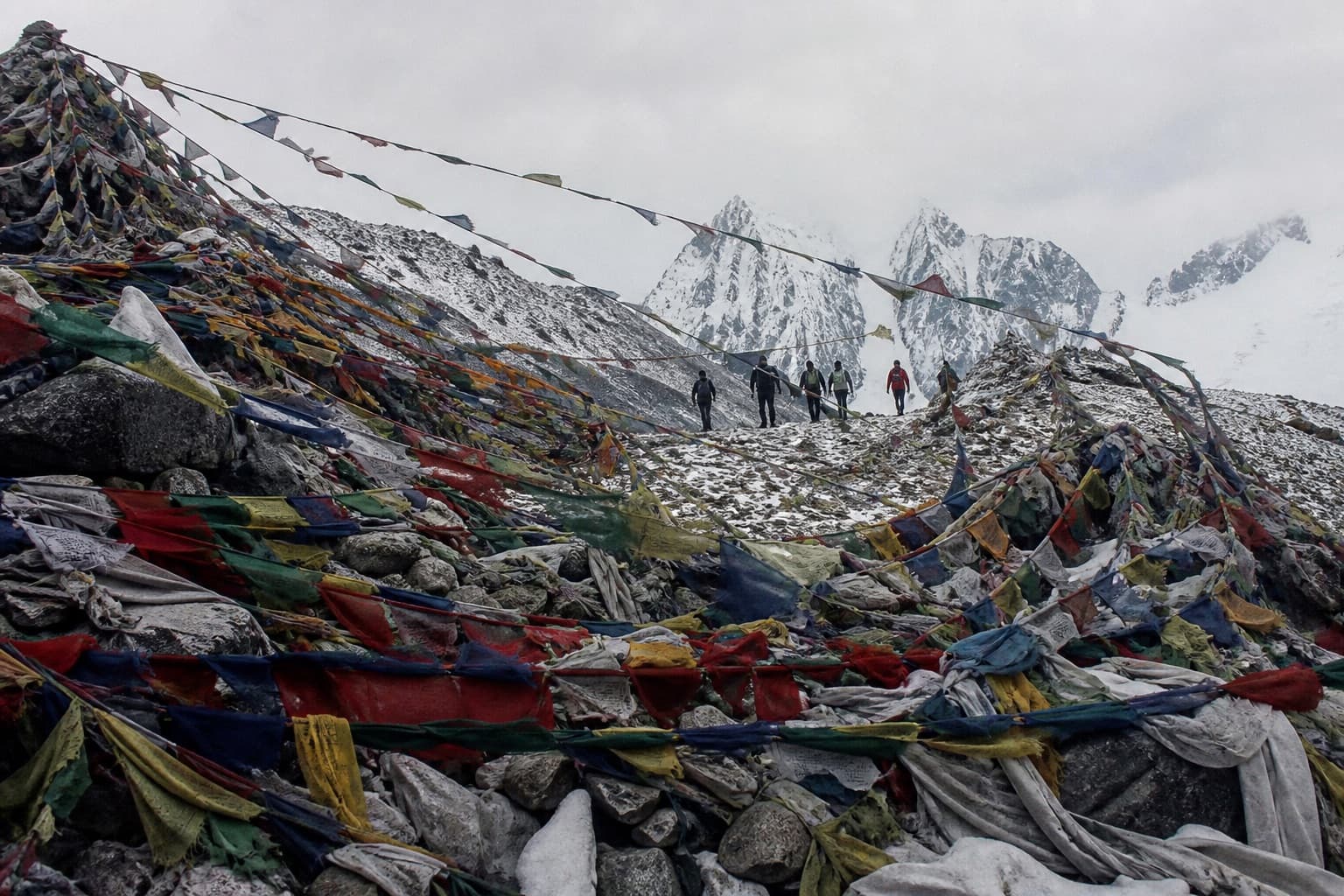
The great challenge is Day 2 and the Drölma La (Dolma La) pass, the highest point of the route at approximately 5,600 meters above sea level. Crossing it is strenuous and the air is extremely thin. The climb to the pass is the crux of the entire pilgrimage — slow, steady, and unforgettable, often marked by prayer flags and pilgrims pausing in reverence at the top.

The Altitude Reality

Let's be direct: this is one of the highest treks most people will ever attempt. The kora stays at very high elevation throughout, and the pass exceeds 5,600 meters. Altitude is the single biggest factor in whether the experience goes well.

Acclimatization is non-negotiable. You should not travel straight to Kailash and start walking. A proper trip builds in days at progressively higher elevations first — typically time in Lhasa (around 3,650 meters) and other stops along the long overland route west — so your body adapts before the kora. This is exactly why Kailash itineraries are long; our Everest & Kailash pilgrimage tour is structured over many days for this reason.

Know the signs of altitude sickness — headache, nausea, dizziness, trouble sleeping, loss of appetite — and tell your guide immediately if you feel unwell. Worsening symptoms must be taken seriously; the only reliable treatment for serious altitude illness is descent. Walk slowly, hydrate constantly, and never push through severe symptoms to "finish."

Fitness and Preparation

You don't need to be an elite athlete, but you do need genuine fitness and the right mindset.

  1. Train beforehand. Build cardiovascular endurance and get used to walking for hours over consecutive days, ideally with some hill or stair work and a daypack.
  2. Expect consecutive long days. The challenge is cumulative — three days of high-altitude walking back to back.
  3. Prepare mentally. Cold, wind, basic conditions, and the sheer effort of the pass test your resolve as much as your legs.
  4. Consider support options. On parts of the route, options such as porters or pack animals may help carry loads; ask your operator what's appropriate.

What to Pack for the Kora

Conditions are cold, exposed, and changeable. Pack for serious mountain weather even in summer.

  • Layered clothing: thermal base layers, insulating mid-layers, and a windproof, waterproof outer shell.
  • Warm accessories: hat, gloves, and a buff or scarf — the pass is bitterly cold and windy.
  • Sturdy, broken-in hiking boots and good socks.
  • Strong sun protection: high-SPF sunscreen, lip balm, sunglasses, and a sun hat; UV is intense at altitude.
  • Trekking poles to ease the climb and descent.
  • A warm sleeping bag, since accommodation along the route is very basic guesthouses.
  • Personal items: headlamp, water bottles or hydration system, snacks and energy food, and any personal medications.

Accommodation on the kora is simple — expect basic guesthouses with minimal facilities, not hotels. Meals are simple too. Manage expectations and you'll cope far better.

When to Go

The practical season for the Kailash region is generally the warmer months, roughly late spring through early autumn, when the pass is most reliably passable and conditions are least severe. Winter is extremely harsh and not feasible for most travelers.

A particularly significant time is the Saga Dawa festival (usually around May or June), when the great Tarboche prayer-flag pole near Kailash is ceremonially raised and pilgrims gather in large numbers. Completing the kora during Saga Dawa is considered especially auspicious. It's an extraordinary time to be there, though also busier — see our festivals guide for timing, and remember that Tibetan festival dates shift each year.

Getting There — and the Permits You Need

Kailash is genuinely remote. Reaching it means a long overland journey across western Tibet, often combined with highlights like Everest Base Camp and the city of Shigatse along the way. The drive is part of the adventure, crossing some of the highest, most spectacular terrain on earth.

Crucially, foreign visitors cannot travel independently in Tibet. You must join a licensed organized tour, travel with a registered guide, and hold the necessary permits — including the Tibet Travel Permit and additional permits required for the restricted western regions — all arranged by your operator in advance. Our Tibet Travel Permit guide explains the paperwork, and given Kailash's remoteness and altitude, going with an experienced, well-organized operation isn't just a rule — it's what makes the trip safe and possible.

Is the Kailash Kora Right for You?

Be honest with yourself. The Mount Kailash kora is one of the most meaningful journeys available to a traveler — spiritually resonant, visually staggering, and deeply rewarding. It is also hard: very high, remote, cold, and physically taxing, with basic conditions throughout. If you have reasonable fitness, the right preparation, time to acclimatize properly, and respect for the mountain's sacred significance, it can be the experience of a lifetime.

If that sounds like you, we'd be glad to help you plan it carefully and safely. Explore the Everest & Kailash pilgrimage tour, browse all our Tibet tours, or contact us to start the conversation.

Plan your Tibet trip with us

Permits handled, local guides, transparent pricing. Tell us your dates and we will send a tailored itinerary.

FAQs

The outer kora is a circuit of roughly 52 kilometers around the base of Mount Kailash. Most visitors complete it over three days, with the second day crossing the high Drölma La pass. Some devoted pilgrims do it in a single long day or over many days with prostrations.