Tibet's second city is the seat of the Panchen Lama and the gateway to Everest. Here is how to visit Tashilhunpo Monastery, what to see along the way from Lhasa, and how Shigatse fits into a wider plateau itinerary.
Shigatse is Tibet's second-largest city and one of the most rewarding stops on any central-Tibet route. Sitting at around 3,850 metres at the meeting of the Yarlung Tsangpo and Nyang Chu rivers, it is the traditional seat of the Panchen Lama and the practical staging post for the overland drive to Everest. Most travelers reach it on the second or third day of a Lhasa-based trip, by which point the body has had a little time to settle into the altitude.
Why Shigatse Matters
For centuries Shigatse was the centre of power in the Tsang region, a counterpart to Lhasa's Ü. That history is written into its great monastery and the old town that grew up around the trade routes running west toward Nepal and the high plateau. Today it is a working Tibetan city with a busy market, a comfortable base of hotels, and an unmistakable sense of being on the threshold of the high Himalaya.
Because foreign visitors travel on an organized tour with a licensed guide, you will arrive here as part of a planned route rather than finding your own way. That works in your favour: the drive in from Lhasa, the monastery visit, and the onward journey are all sequenced to manage altitude sensibly.
Tashilhunpo Monastery
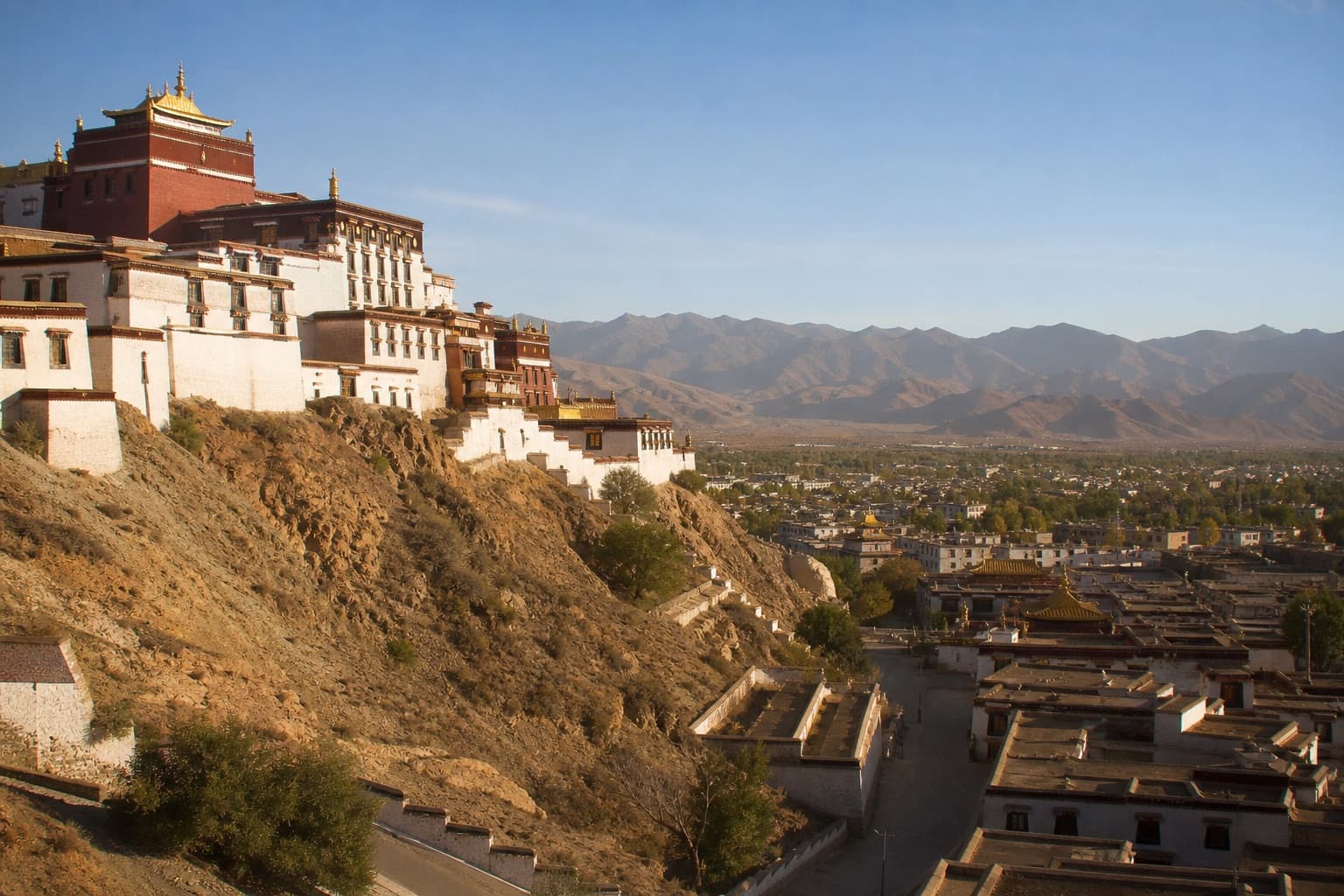
Tashilhunpo is the reason most people come. Founded in 1447 by Gendun Drup, who was later recognised as the First Dalai Lama, it became the seat of the Panchen Lamas, the second most senior figure in the Gelug school of Tibetan Buddhism. The monastery survived the twentieth century comparatively well and remains a large, active community.
Two things tend to stay with visitors:
- The Maitreya Hall, which houses a gilded copper statue of the Future Buddha standing about 26 metres tall, one of the largest of its kind anywhere.
- The tombs of the Panchen Lamas, whose chortens are decorated with gold and precious stones.
Give yourself a couple of hours. The complex is built across a hillside, so there is steady walking and a fair amount of climbing between halls. Pilgrims walk the kora (the devotional circuit) around the outer walls in a clockwise direction, and joining the early-morning circuit is one of the quieter, more atmospheric experiences in Tibet. Look out for the great thangka wall, a tall stone structure on the hillside from which an enormous appliqué image of the Buddha is unfurled during the monastery's festivals, one of the most striking sights of the religious calendar here.
The Town Beyond the Monastery
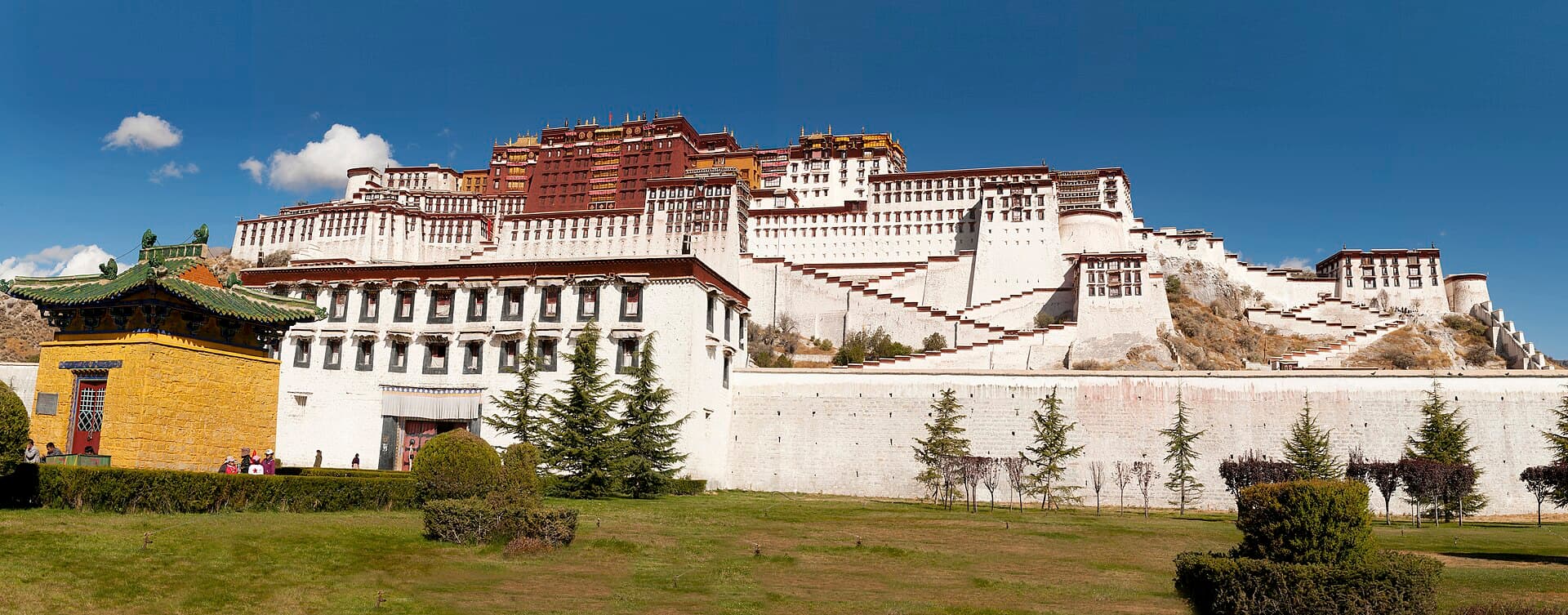
While Tashilhunpo dominates, Shigatse has more to offer if your schedule allows. The reconstructed Shigatse Dzong, the old fortress crowning the skyline, echoes the silhouette of Lhasa's Potala and makes a memorable photograph, especially at dusk. The town's market is a genuinely local affair, good for browsing Tibetan crafts, prayer flags, and everyday goods, and for the simple pleasure of watching plateau life go by. As Tibet's second city, Shigatse also has the region's best range of hotels and restaurants outside Lhasa, which is part of why it works so well as an overnight base.
The Road from Lhasa
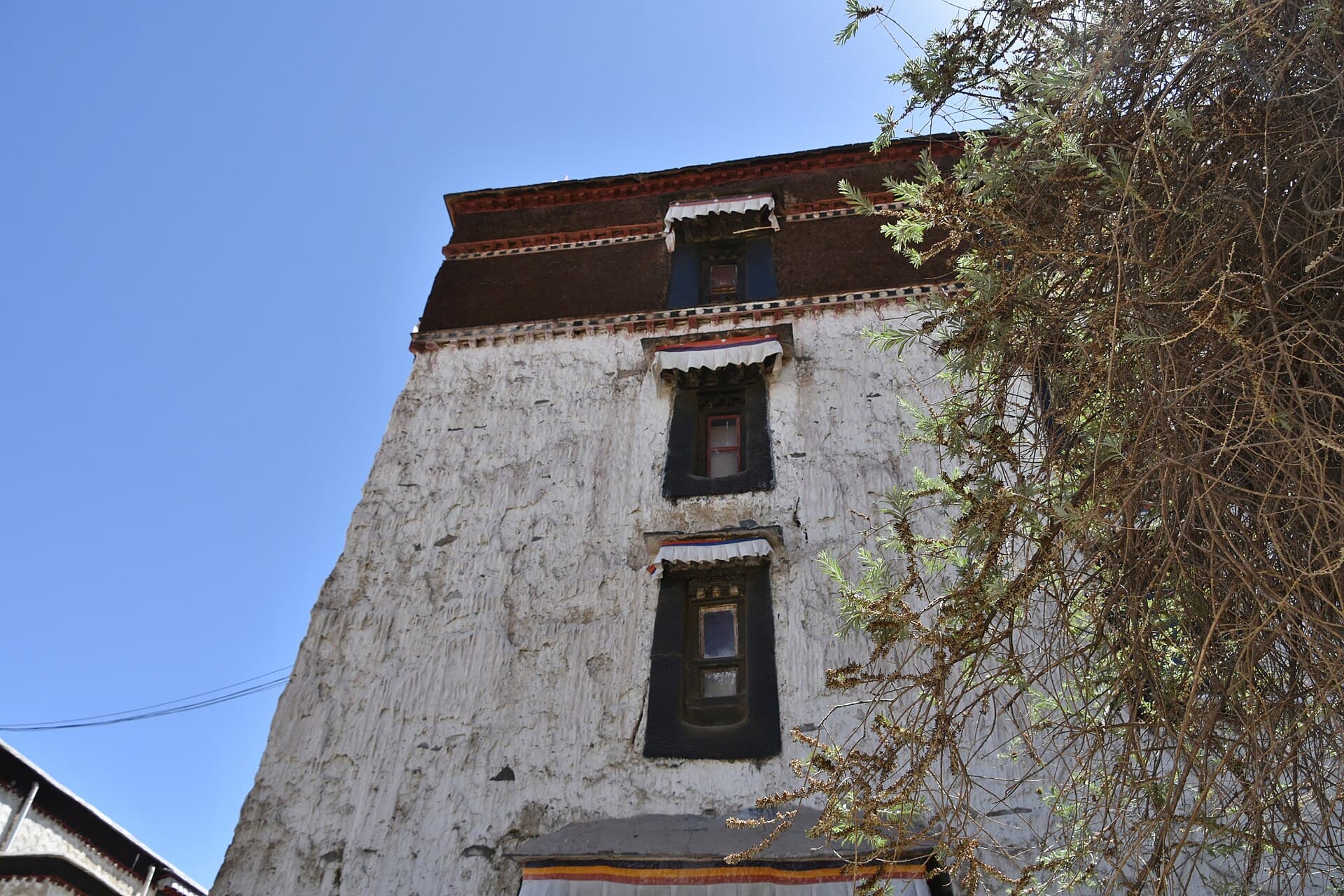
Getting to Shigatse is half the pleasure. There are two main routes, and a good operator will usually take the scenic one on the way out:
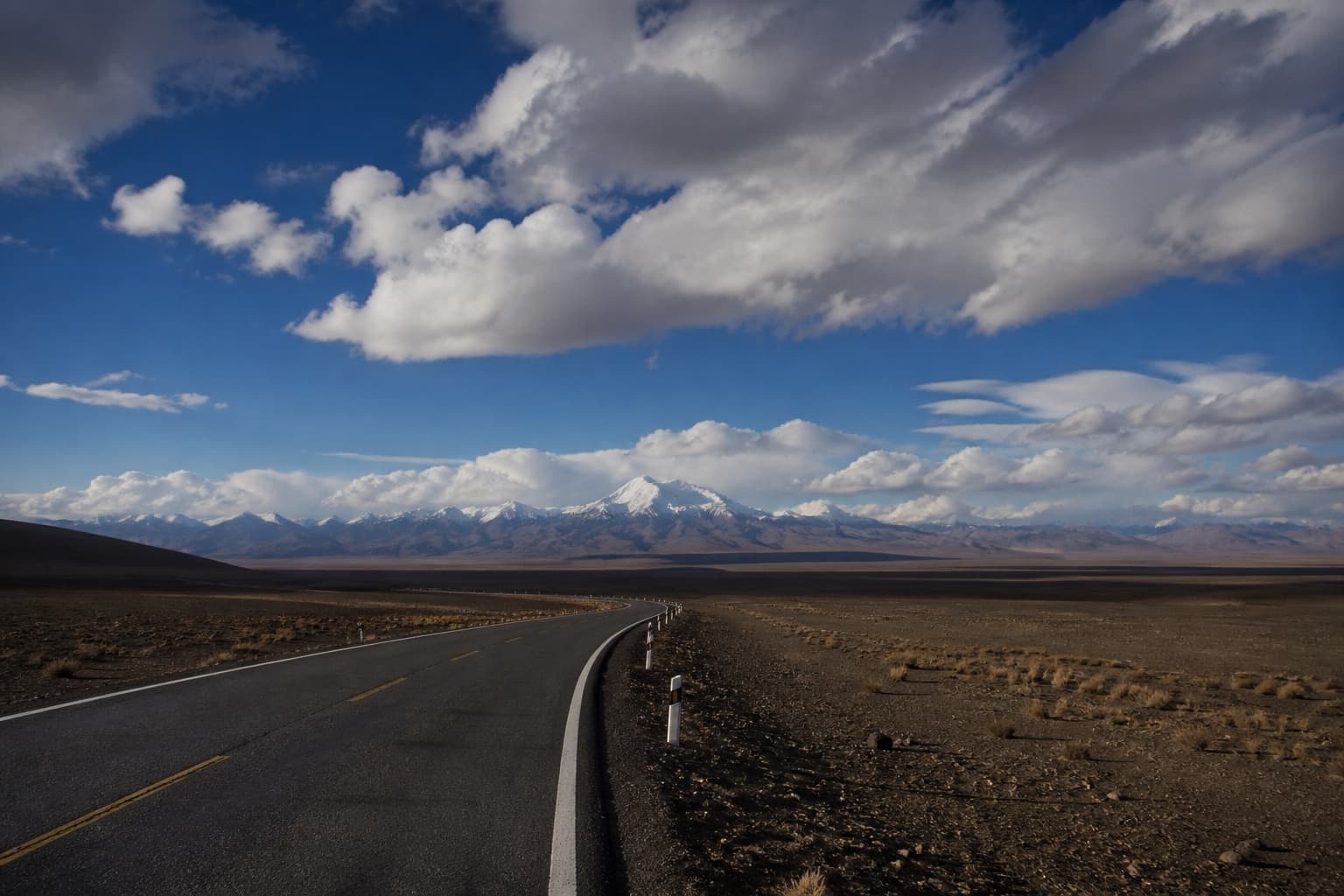
- The southern (Friendship Highway) route via Gyantse, which crosses the Kamba La pass with its famous overlook of turquoise Yamdrok Lake, continues past the Karola Glacier, and stops at the historic town of Gyantse before reaching Shigatse. This is the classic, view-rich approach.
- The direct northern route along the Yarlung Tsangpo valley, which is faster and often used for the return.
Either way the driving is comfortable on sealed roads, and the day is broken up with photo stops and short visits. (The southern pass above Yamdrok is written Kamba La on most maps and Gampa La on others — the same 4,790-metre crossing either way.)
There is also a railway. The Lhasa–Shigatse line opened in 2014 and covers the distance in about three hours, which is far faster than the road. Almost no foreign visitor uses it, though, because the whole point of the journey is Yamdrok, the Karola Glacier and Gyantse, and because your guide and vehicle travel with you regardless. It is worth knowing about if illness or a schedule change means you need to get back to Lhasa quickly.
For most travelers Shigatse is reached as part of a guided tour rather than a standalone trip.
Gateway to Everest — and to the far west
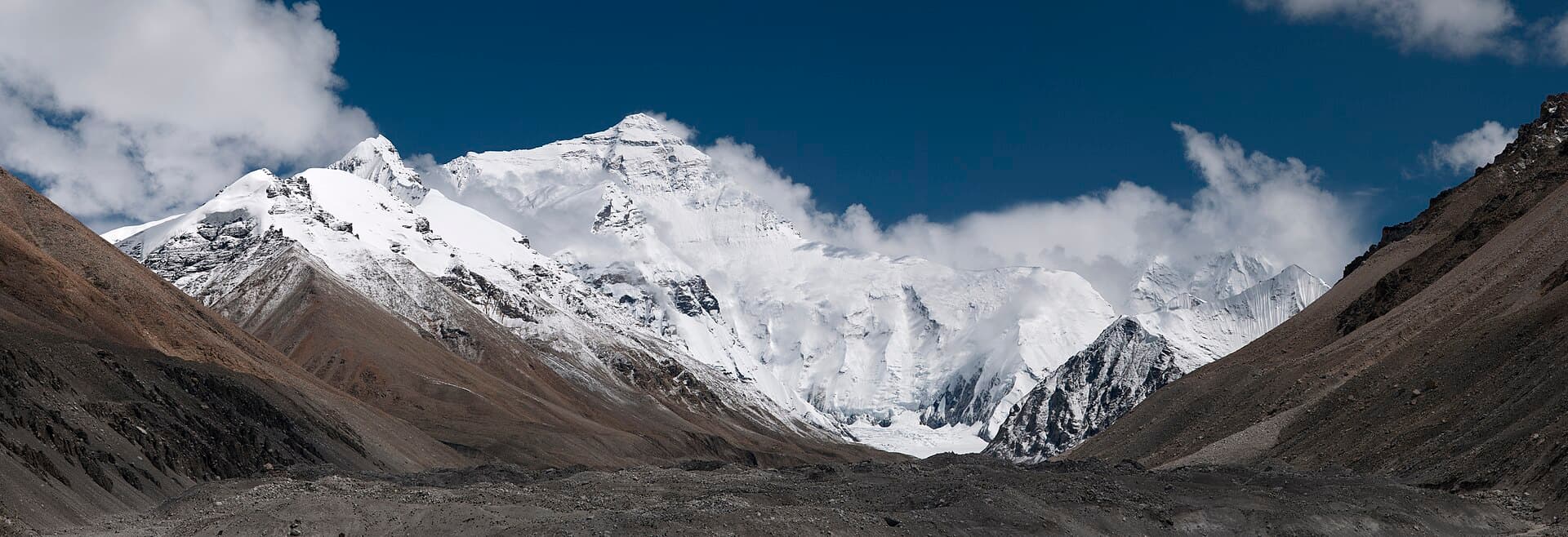
Shigatse is the last sizeable city before the road climbs toward Everest, so it is where most Everest itineraries spend a night to break the journey and stock up. From here it is a long but spectacular drive over the Gyatso La (5,248m) and the Gawu La (5,198m) to Rongbuk and the north-side base camp.
It is also where the paperwork happens. The Alien's Travel Permit — the document you need for Everest, Sakya, Tingri and everything west of them — is issued at the public security office in Shigatse, not in Lhasa. Your guide collects it on the morning you leave, which is why Everest itineraries put a night here rather than pushing straight through from Gyantse. Nothing is required from you beyond the passport your guide is already holding.
If Everest is your goal, the well-trodden shape is Lhasa, then Gyantse and Shigatse, then the mountain:
- 8-Day Lhasa to Everest Base Camp — three days in Lhasa first, then out to base camp and back to Shigatse for Tashilhunpo.
- 9-Day Everest Base Camp & Namtso Lake — the same route, with a day trip to Namtso at the end.
- 7-Day Lhasa to Everest Base Camp — the shortest run, with one day fewer in Lhasa; one night here on the way out and one on the way back.
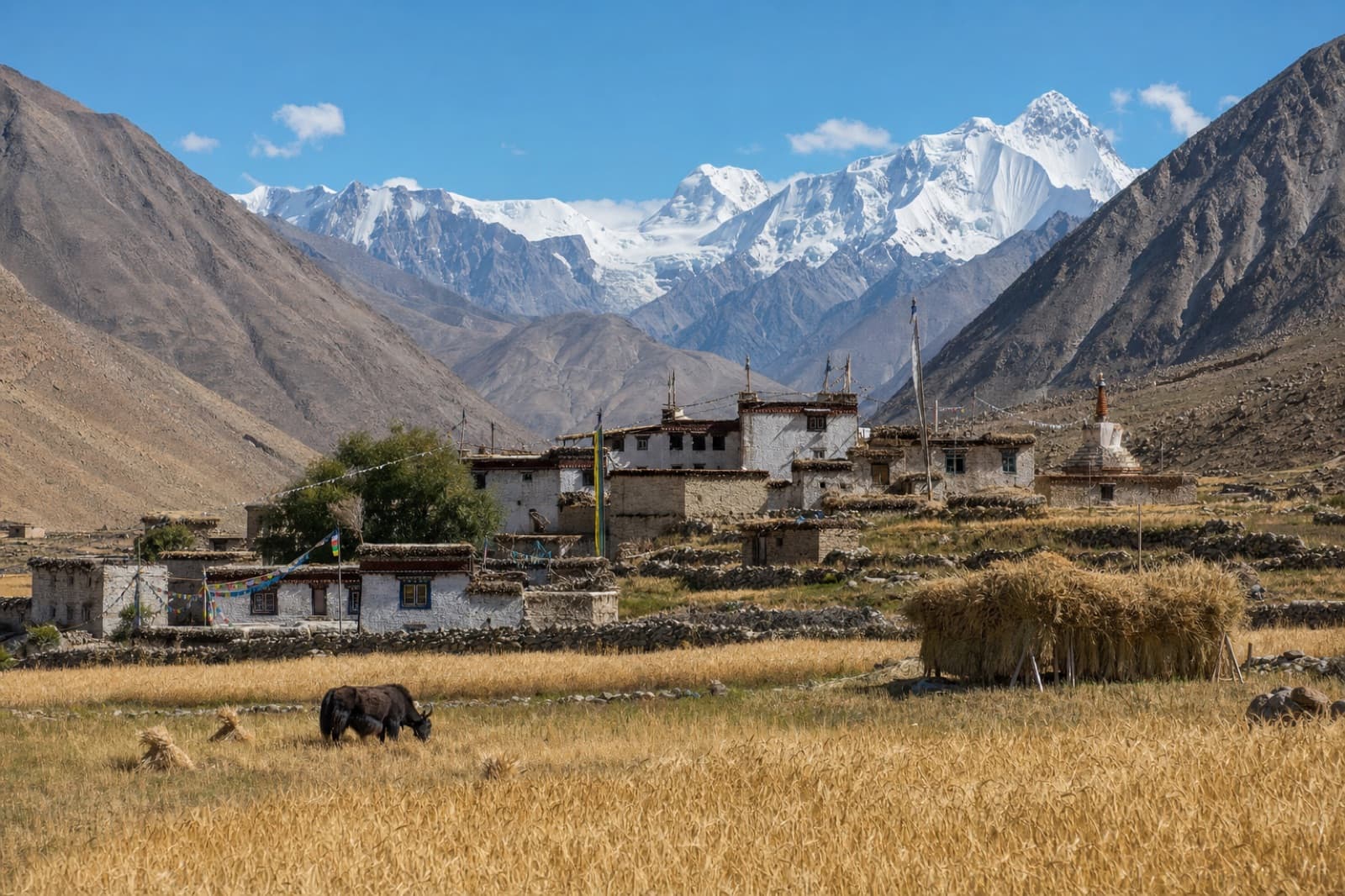
Shigatse is equally the hinge for the long western road. Everything heading to Saga, Ngari, Mount Kailash and Lake Manasarovar leaves from here, and after Shigatse there is no city of any size for a thousand kilometres. Our 16-day Everest, Kailash & Guge tour passes through twice — once outbound to Everest, once on the way home via Sakya.
Worth the Detour: Sakya
About 130 kilometres south-west of Shigatse, roughly two and a half hours off the Everest road, Sakya Monastery is the seat of the Sakya school and looks like nothing else in Tibet: a squat grey fortress of a building, its walls striped in grey, red and white for the three bodhisattvas, more Central Asian citadel than Tibetan temple. Inside is one of the largest surviving libraries on the plateau, including a wall of scriptures stacked floor to ceiling that was only properly catalogued in this century.
It is not on the fast route, which is exactly why it stays quiet. Itineraries that return from Everest along the Himalayan foothills through Dinggye rather than back up the main highway can take it in, adding a few hours rather than a day. Our 16-day Everest, Kailash & Guge tour stops here on its way back from Kailash.
Evenings in Shigatse
Shigatse is a working city, not a resort, and most visitors eat at the hotel and sleep. The one thing worth going out for is a Langma hall — a Tibetan song-and-dance venue where local families come for the evening, the performers work through Tibetan, Amdo and Khampa repertoire, and the audience joins in by the end. They are unglamorous, loud and entirely genuine. Several of our group itineraries build one in on the night the group comes back down from Everest.
When to Go
Shigatse is visitable for much of the year, but the most reliable conditions for the onward Himalayan views run from late April to early June and September to October, when skies are clearest and the high passes are dependable. Summer brings warmer days but more haze and occasional afternoon cloud. Winter is cold and quiet, with crisp light on the clear days and far fewer visitors.
Practical Notes
- Acclimatize first. At 3,850 metres Shigatse is higher than Lhasa, so it is sensible to spend your opening days in Lhasa before coming here. See our how to get to Tibet guide when planning the order of your trip.
- Permits are arranged for you. Travel beyond Lhasa, including Shigatse, requires the Tibet Travel Permit and any additional area permits, all of which we handle once you book. Read the full picture on our Tibet Travel Permit page.
- Dress in layers. Mornings at the monastery can be cold even when afternoons are mild.
- Be respectful in temples. Follow your guide on photography, walk clockwise, and remove hats inside chapels.
Shigatse rewards travelers who want more than Lhasa: a great monastery, a beautiful approach, and the genuine sense of heading deeper into the Himalaya. Whether you stop here on a central-Tibet loop or push on toward Everest, it is one of the plateau's essential cities.
Plan your Tibet trip with us
Permits handled, local guides, transparent pricing. Tell us your dates and we will send a tailored itinerary.
FAQs
By road it is roughly 250 to 280 kilometres depending on the route. The scenic Friendship Highway via Gyantse takes most of a day with photo and sightseeing stops, while the direct valley road is faster. Most travelers arrive on the second or third day of a Lhasa-based tour.