Everything you need to plan a first visit to Lhasa, from the Potala Palace and Jokhang Temple to walking the Barkhor pilgrim circuit at 3,650 metres.
Quick answer: Lhasa sits at 3,650 m and deserves three days: one to arrive and rest, one for the Potala Palace and Jokhang Temple, and one for the Barkhor kora plus Drepung or Sera monastery. Potala tickets are time-slotted and limited, so they are booked in advance by your agency. As a foreign visitor you need a Tibet Travel Permit and a licensed guide — the city cannot be visited independently.
Lhasa is where almost every Tibet journey begins. Sitting at roughly 3,650 metres (about 11,975 feet) in a broad river valley, it has been the spiritual and political heart of the Tibetan Plateau for more than a thousand years. For most travellers it is also the first taste of serious altitude, the first sight of the Potala Palace rising above the city, and the first time they walk a kora alongside pilgrims who have travelled for weeks to be there.
This guide covers what to see, how long to stay, and the practical details that make the difference between a rushed visit and a memorable one.
Before You Go: Permits and the Organized-Tour Rule
Foreign travellers cannot travel independently in Tibet. You must join a licensed organized tour, travel with a guide, and hold a Tibet Travel Permit, which your agency arranges on your behalf after you confirm an itinerary. This is not a formality you can skip or arrange at the airport; the permit is checked before you board a flight or train into Tibet, and again at sights and checkpoints around Lhasa.
The permit is separate from your China visa. Even if your nationality now qualifies for visa-free entry to mainland China, you still need the Tibet permit and a booked tour to enter the region. Plan to have your details with your operator at least three weeks ahead. See our Tibet Travel Permit page for the full document checklist, and read permit vs China visa if the two documents are confusing you.
How Many Days in Lhasa
We suggest a minimum of two full days in Lhasa before going higher, both to see the city properly and to let your body adjust to the altitude. Your first afternoon should be quiet: check in, drink plenty of water, and avoid alcohol and heavy exertion. Most acclimatization symptoms ease within a day or two at this elevation.
A typical Lhasa stay looks like this:
| Day | Focus | Why it works |
|---|---|---|
| Arrival | Rest, short walk near the hotel | Lets your body adjust before sightseeing |
| Day 2 | Potala Palace + Jokhang Temple | The two headline sights, both central |
| Day 3 | Drepung & Sera monasteries | Active monastic life, debating courtyards |
For a ready-made plan, browse our Tibet tours for options that cover the core sights at an acclimatization-friendly pace. More on pacing in our guide to how many days in Tibet.
The Potala Palace
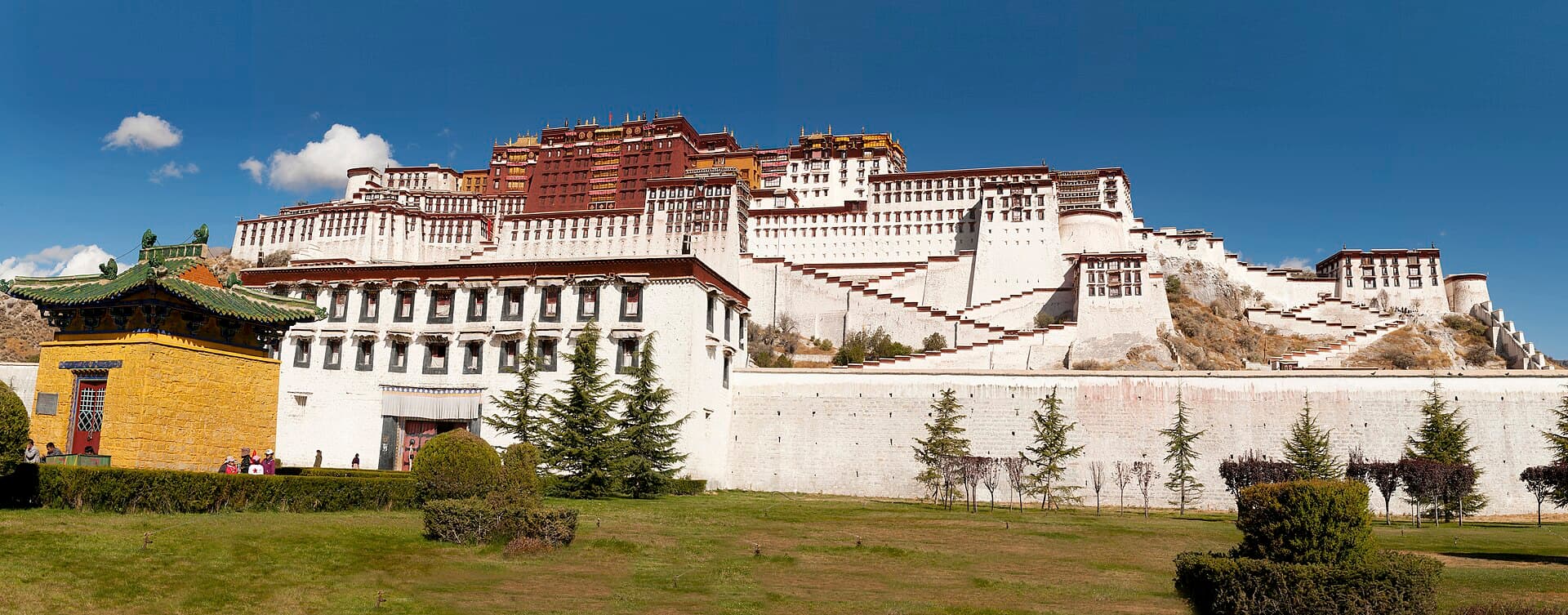
The Potala Palace is the image most people carry of Tibet: a white-and-ochre fortress-palace climbing the slope of Red Mountain, a UNESCO World Heritage Site and the former winter residence of the Dalai Lamas. Inside are chapels, assembly halls, golden stupa-tombs, and centuries of murals.
A few practical points:
- Tickets are controlled and booked in advance. Your guide handles this, but entry is by timed slot, and the number of daily visitors is capped.
- Time inside the state rooms is limited. Once you pass the ticket check, expect a defined window to move through the interior, so don't dawdle at the entrance.
- It is a real climb. The ascent involves many stairs at altitude. Go slowly, pause often, and you'll be fine; this is exactly why we put the Potala on day two, not arrival day.
- No photography inside the chapels. Outside and on the approach is fine.
Jokhang Temple
Founded in the 7th century, the Jokhang is the most sacred temple in Tibetan Buddhism and the spiritual centre of Lhasa. Pilgrims prostrate themselves on the flagstones outside, and the air is thick with juniper smoke and yak-butter lamps. The golden roof offers a classic view back toward the Potala.
As in most temple halls, photography is generally not permitted inside; ask your guide where it's allowed. Remove your hat and sunglasses indoors, and move clockwise through the chapels.
Walking the Barkhor
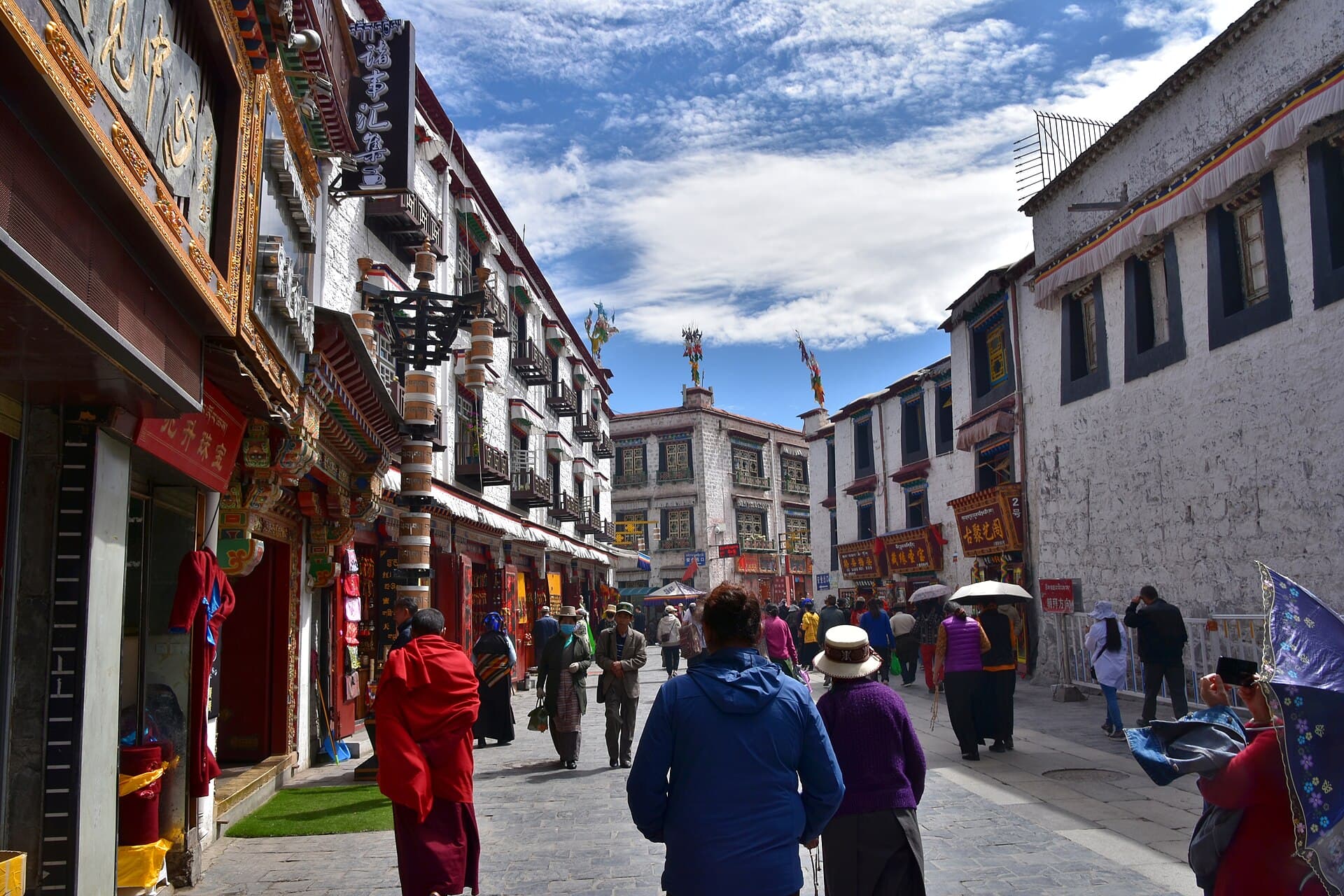
The Barkhor is the roughly one-kilometre pilgrim circuit that wraps around the Jokhang. Walk it clockwise, the same direction as the pilgrims and the spinning prayer wheels. It is at once a devotional path and a lively market street, lined with stalls selling prayer flags, jewellery, and Tibetan crafts.
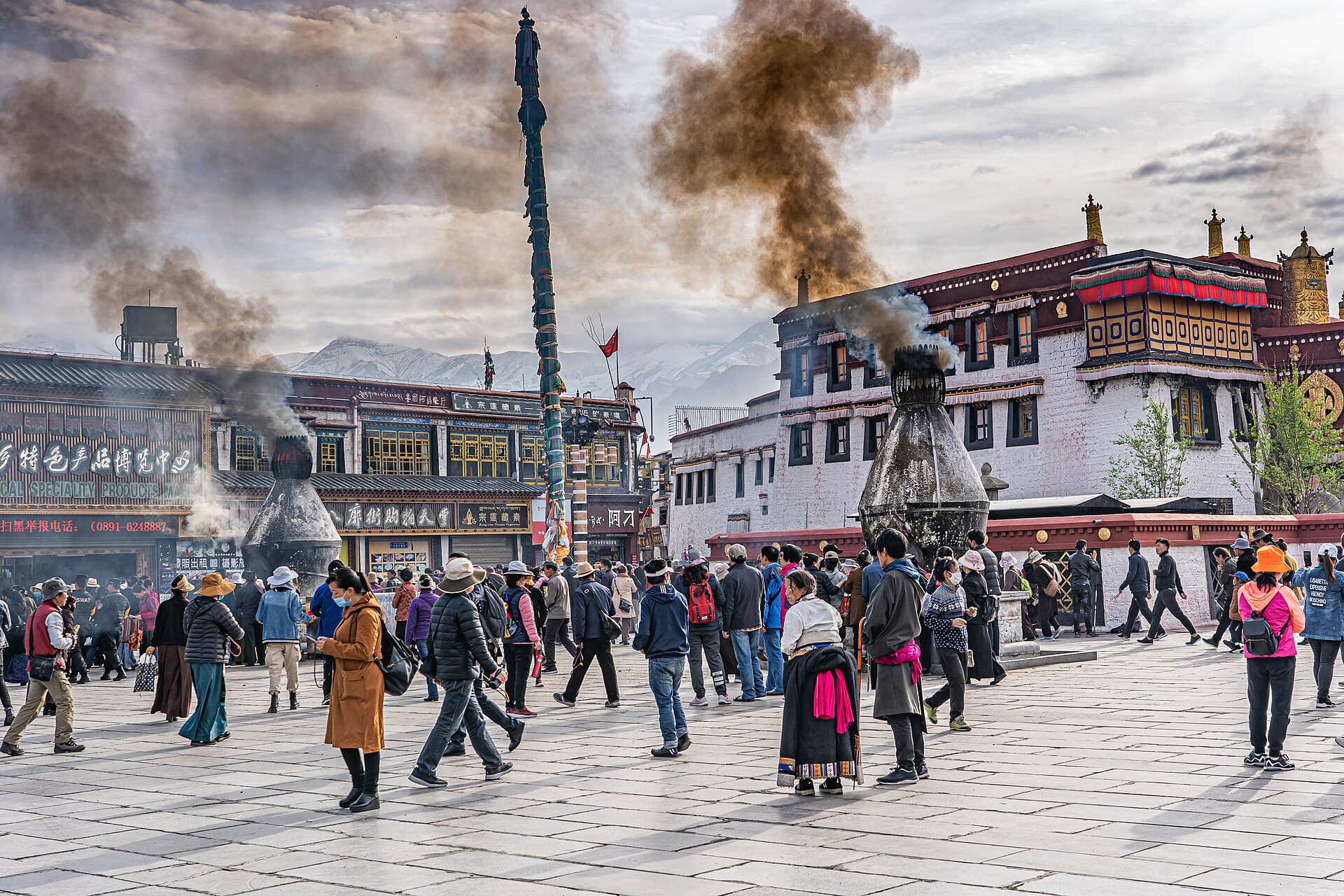
The Barkhor is the best place in Lhasa simply to sit, watch, and absorb the rhythm of the old city. A sweet-tea house off the circuit is the local way to take a break. Be respectful with your camera: always ask before photographing people, and accept a no gracefully. Our etiquette guide goes deeper on this.
Beyond the Centre: Drepung and Sera
Two great Gelugpa monasteries sit on Lhasa's edges. Drepung was once among the largest monasteries in the world; Sera is famous for its afternoon debate sessions, when monks clap and gesture to punctuate their theological arguments in a gravel courtyard. Both are easy half-day additions and give a fuller picture of living Tibetan Buddhism than the headline sights alone. For background, see Tibetan Buddhism & monasteries.
Ganden: Worth the Extra Drive
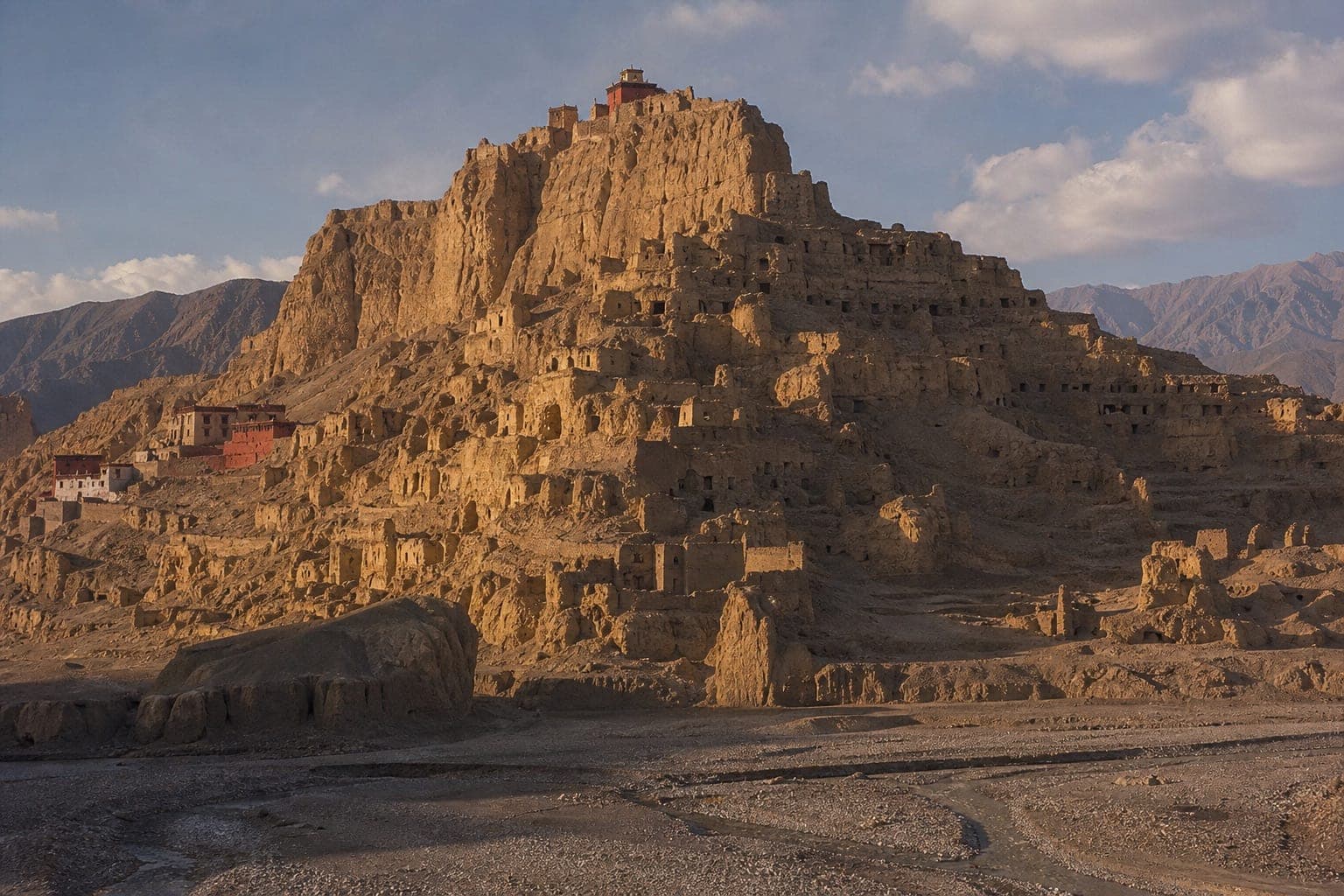
The third of Lhasa's great Gelug seats, Ganden, sits farther out than Drepung or Sera: roughly 40 kilometres and an hour and a half's drive east of the city, on a ridge high above the Kyichu valley. It asks more of your schedule than a quick city add-on, but the payoff is real — tiered white monastery buildings climbing a mountainside, a pilgrim kora along the ridge with some of the widest views in central Tibet, and a quieter, more monastic atmosphere than the closer-in sites. We cover its history and kora in full in our Tibetan Buddhism & monasteries guide; ask your operator about adding a half-day or full-day for it, especially if a Ganden to Samye trek is anywhere on your radar.
Samye Monastery: A Day Trip Across the River
If your schedule has room for one excursion beyond the city, make it Samye, Tibet's first monastery, founded in the 8th century and laid out as a three-dimensional mandala of the Buddhist universe. It sits south of Lhasa across the Yarlung Tsangpo, roughly half a day's drive each way, so it suits travelers with an extra day or two rather than a tight three-day stop. We cover its history and layout in full in our Tibetan Buddhism & monasteries guide.
Eating and Resting in Lhasa
Lhasa has the widest food choice in Tibet, from Tibetan and Nepali kitchens to Sichuanese restaurants and Western cafes around the old town. Try butter tea and tsampa at least once, and lean on warm, high-calorie meals while you acclimatize. Drink far more water than usual, and keep your first nights low-key.
Where Lhasa Leads
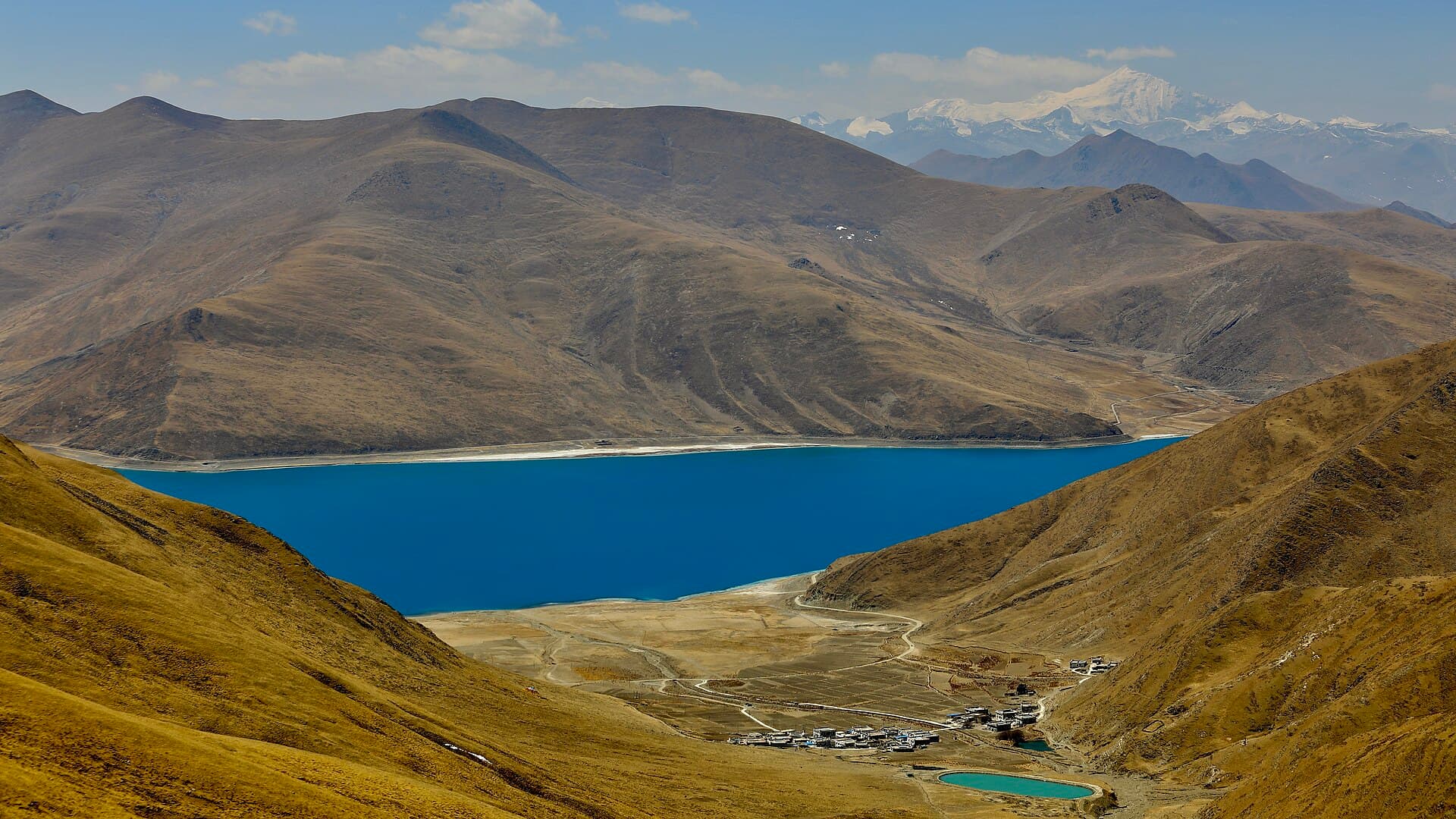
Lhasa is the gateway, not the whole story. From here, popular routes run south to Yamdrok Lake, Gyantse, and Shigatse; out to Everest Base Camp; or north to Namtso. Browse the full range of Tibet tours, or read our Lhasa destination page for itinerary ideas. When you're ready to shape a trip, get in touch and we'll build it around your dates and pace.
Plan your Tibet trip with us
Permits handled, local guides, transparent pricing. Tell us your dates and we will send a tailored itinerary.
FAQs
No. Foreign travellers cannot travel independently in Tibet. You must join a licensed organized tour, travel with a guide, and hold a Tibet Travel Permit, which your agency arranges before you enter the region.