Tibet Trails
定制我的行程
Money in Tibet: ATMs, Cash, Cards & Tipping
Planning·7 分钟阅读

Money in Tibet: ATMs, Cash, Cards & Tipping

From withdrawing yuan at Bank of China to using Alipay with a foreign card, plus how much to carry and what to tip — a practical guide to handling money on your Tibet trip.

Handling money in Tibet is mostly straightforward once you understand a few regional realities: cash matters more outside the cities, mobile payments dominate, and ATMs thin out as you travel. This guide covers what currency to use, how to get it, how cards and mobile payments work for foreigners, and the often-asked question of tipping.

The currency

Tibet uses the Chinese yuan (CNY, also written RMB or ¥), the same currency as the rest of mainland China. There is no separate Tibetan currency. Plan and budget in yuan.

ATMs: fine in the cities, scarce beyond

In the main towns — Lhasa and Shigatse in particular — ATMs are available, and the ones that reliably accept foreign cards are typically operated by major banks such as the Bank of China, ICBC, and China Construction Bank. These accept major networks including Visa and Mastercard.

A few practical notes on withdrawals:

  • Per-transaction limits apply, commonly in the range of 2,500-3,000 yuan.
  • Your home bank may charge fees for international withdrawals, so check before you travel.
  • ATMs are not always reliable — machines occasionally run out of cash or reject foreign cards — so withdraw during bank hours and keep some backup cash.
  • Outside the major towns, ATMs become scarce. Once you leave the cities for remote routes, you may not see a working machine for foreign cards.

The takeaway: withdraw enough cash while you are in a city to cover the remote portions of your trip. Running short in a remote area with no ATM is a genuine inconvenience.

Bringing and changing foreign currency

Some travelers prefer to arrive with a reserve of foreign currency to change rather than relying solely on ATMs. If you do, US dollars and euros are the most readily exchanged. Exchange is best done at branches of major banks in Lhasa, where staff can handle foreign currency and the rates are official. Carry clean, undamaged notes, as worn or torn bills are sometimes refused.

A practical tip: keep your exchange receipts. They can be useful if you want to convert leftover yuan back to your home currency at the end of your trip. And as with anywhere, examine larger notes you receive in change and favour withdrawing or exchanging through banks rather than informal channels, which keeps you clear of counterfeit risk.

Credit cards: don't rely on them

Credit cards have limited usefulness in Tibet. Acceptance is generally restricted to large hotels and a handful of high-end shops or restaurants in Lhasa and Shigatse. Smaller shops, markets, and rural vendors will not take them. Treat cards as a backup for big-ticket items at major establishments, not as your everyday payment method.

Mobile payments: the dominant option

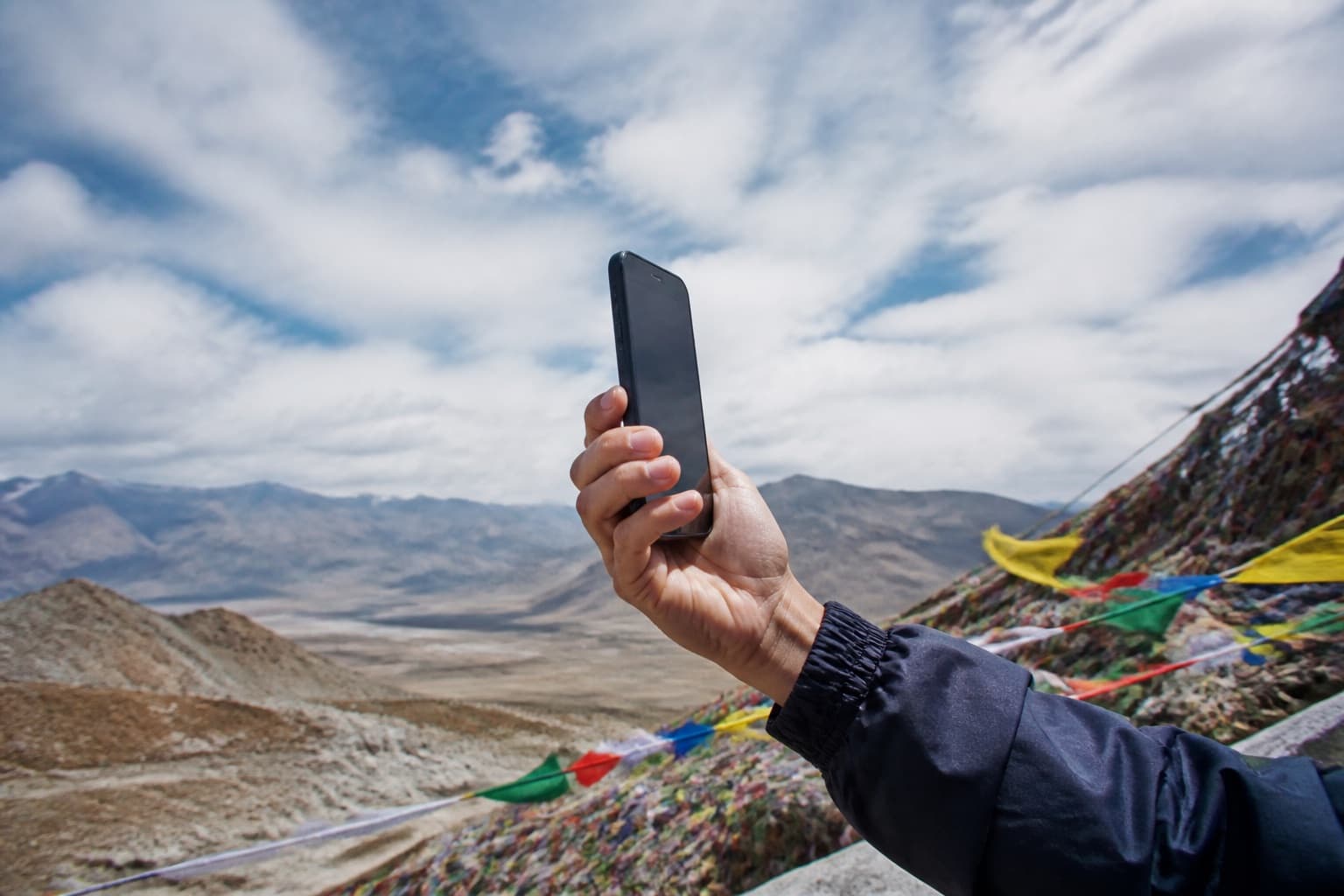
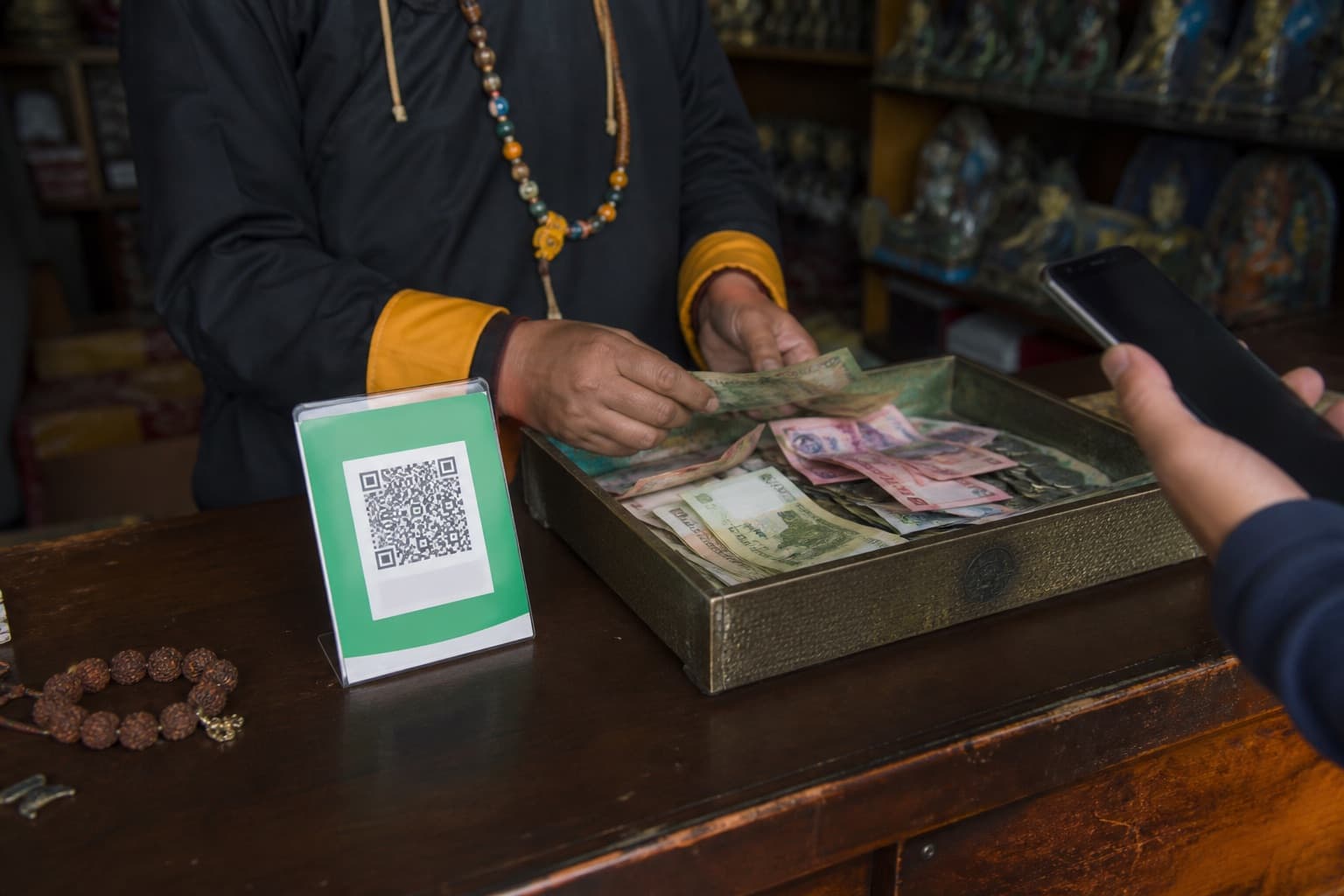
This is the most important shift in how money works in China, Tibet included. Mobile payment via Alipay and WeChat Pay has become the default way to pay for almost everything — from shops to taxis to small vendors.

The good news for visitors is that the system has opened up to foreigners. You can now:

  • Link an international Visa or Mastercard directly to Alipay and WeChat Pay.
  • Use Alipay's Tour Pass and direct card-linking features without needing a Chinese bank account.

A couple of honest caveats: there may be small transaction fees for payments above a certain threshold, and in some small towns and villages vendors accept WeChat Pay more readily than Alipay, so having both set up is sensible. Even so, for most travelers, configuring Alipay or WeChat Pay before the trip is the single most useful money preparation you can make. It covers the vast majority of day-to-day spending where cash or cards would be awkward.

A note on setup

Install and configure these apps and link your card before you arrive, while you still have easy internet access. Pair this with the connectivity prep in our guide on Tibet travel restrictions so you land ready to pay.

How much cash should you carry?

There is no single figure, but the principle is simple: carry enough physical cash to comfortably cover the remote parts of your itinerary, where ATMs and card acceptance disappear and even mobile coverage can be patchy. In the cities you can rely largely on mobile payments and top up cash as needed. Before heading to somewhere like Everest Base Camp, make sure you have yuan in hand.

Tipping in Tibet

Tipping is one of the most common questions travelers ask, partly because it is genuinely a grey area.

Historically, tipping is not a traditional custom in this part of the world. However, it has become an expected part of the tourism experience, particularly for guides and drivers who spend days with your group, and for many it is now a meaningful part of their income.

Here is a realistic guide. The figures below are common ranges given by the whole group, not per person:

Who Common range (per day, from the group) Notes
Guide ~55-100 yuan Reflects days spent with your group
Driver ~40-80 yuan Usually somewhat less than the guide

Key principles:

  • Tipping is discretionary and should reflect the quality of service you received.
  • Tips are typically given at the end of the tour, not daily.
  • On a group tour, it is easiest for one person to collect everyone's contribution and hand it over together, sometimes in a sealed envelope.
  • There is no rigid obligation — these are guidelines. A guide who has gone above and beyond may warrant more; if service fell short, you are not bound to a fixed amount.

A simple money plan for your trip

  1. Before you go: Install Alipay and WeChat Pay and link an international card. Check your bank's foreign-withdrawal fees.
  2. On arrival in a city: Use a major-bank ATM (Bank of China, ICBC, or China Construction Bank) to withdraw cash, keeping per-transaction limits in mind.
  3. Before remote legs: Top up cash so you are covered where ATMs and card acceptance vanish.
  4. Day to day: Lean on mobile payments in towns; use cash in remote areas and with small vendors.
  5. End of tour: Tip your guide and driver according to service, ideally collected by one group member.

What you will and won't be paying for

If your trip is an organized tour — as it must be for foreign visitors — a good portion of your major costs is usually settled in advance with your operator: the tour itself, permits, guide, transport, and often accommodation. That means much of your on-the-ground spending is for the extras: meals not included in the package, snacks and drinks, souvenirs, optional entrance fees, personal items, and tips.

It helps to think of your spending money in those terms when deciding how much cash to carry and how much to load onto mobile payments. Day-to-day purchases in towns lean on Alipay and WeChat Pay; the remote stretches and small vendors lean on cash; and the big items are already handled. Budgeting around that split keeps things simple.

Get these basics in place and money will be one of the least stressful parts of your trip. If you would like guidance tailored to your specific itinerary and how remote it goes, contact us or browse our Tibet tours.

与我们一起规划您的西藏之旅

许可证全程办妥、本地向导、价格透明。告诉我们您的日期,我们将为您定制行程。

常见问题

Tibet uses the Chinese yuan (CNY, also written RMB or ¥), the same currency as the rest of mainland China. There is no separate Tibetan currency.