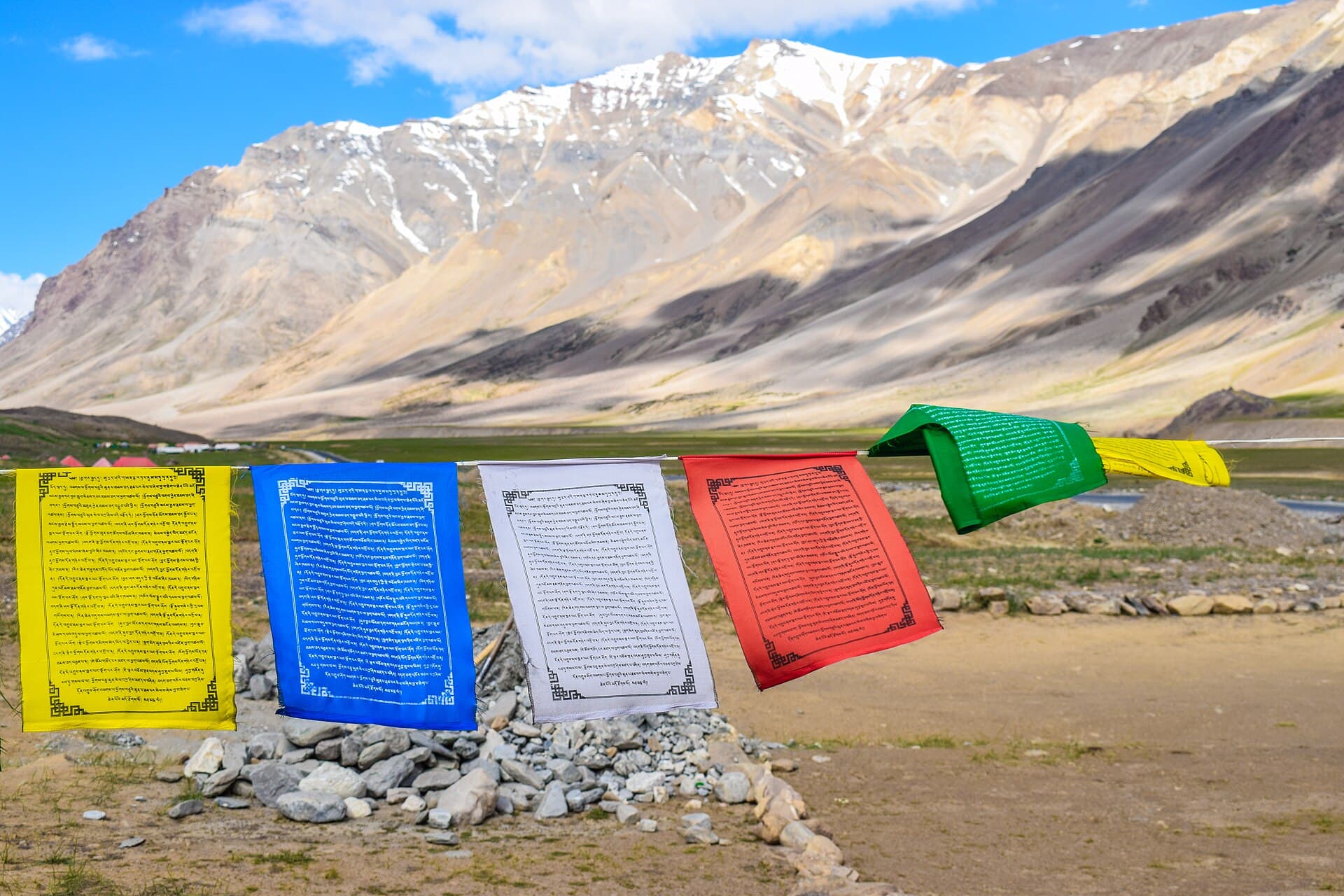
Mont Kailash
Un sommet sacré vénéré par quatre religions, contourné par les pèlerins lors de l'exigeante kora de 52 km et associé aux eaux sacrées du lac Manasarovar tout proche.
Overview
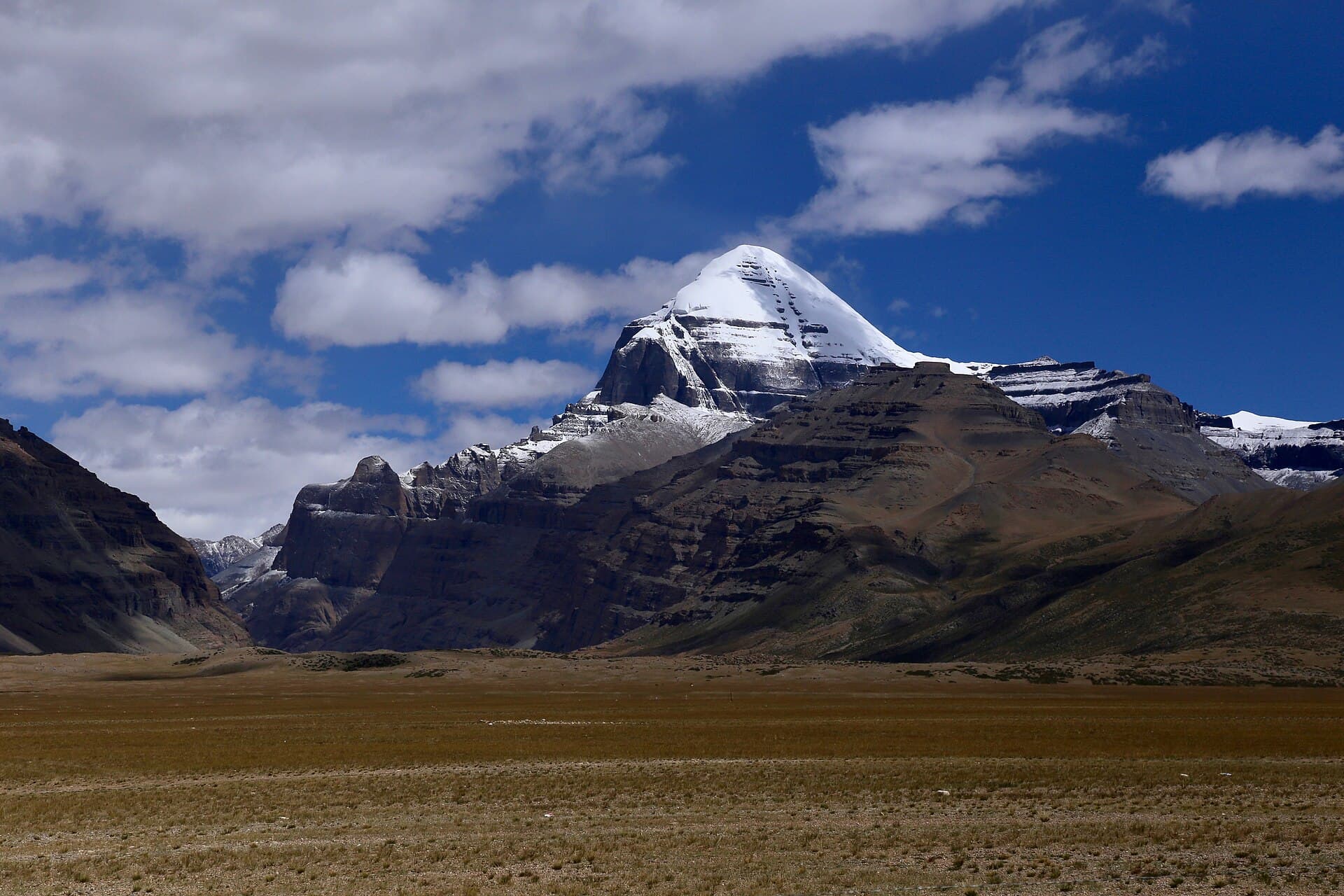
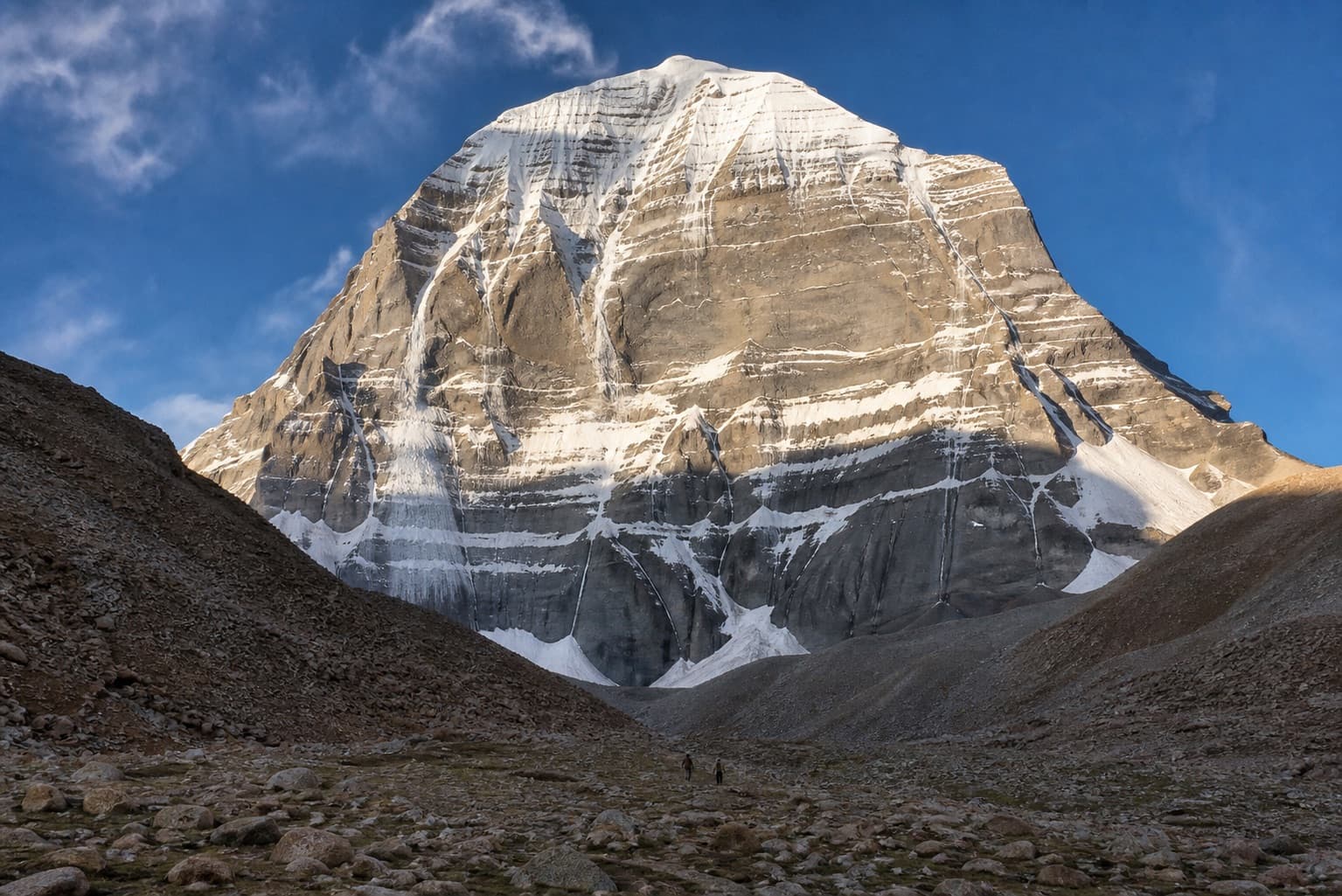
Mount Kailash (6,638 m / 21,778 ft) rises in remote western Tibet and is held sacred by four faiths — Buddhism, Hinduism, Jainism, and the Bön tradition. It has never been climbed, out of long-standing respect for its sanctity. For pilgrims, the goal is not the summit but the kora: a circuit on foot around the mountain's base. Nearby, the deep-blue Lake Manasarovar, sitting around 4,590 m, is equally revered and ranks among the highest freshwater lakes in the world.
This is the most committing destination in Tibet. The region is far from Lhasa, the infrastructure is basic, and the trek crosses a high pass on foot. It rewards travellers who come for meaning and remoteness rather than comfort. For many, the journey to Kailash is the single most profound experience Tibet offers.
Top Things to See & Do
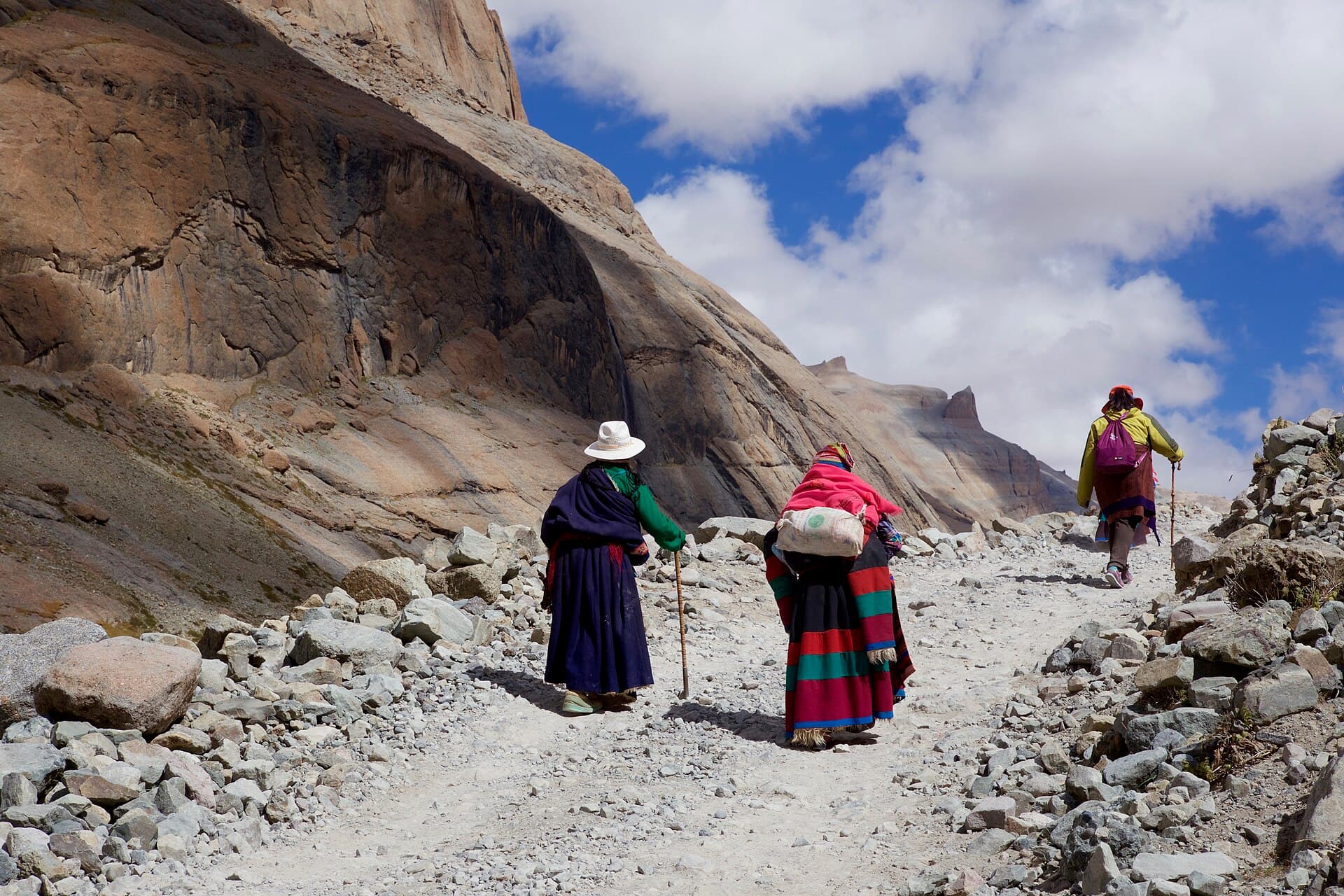
- The Kailash kora — A roughly 52 km (32-mile) circuit, usually walked over three days from the village of Darchen. The hardest section crosses the Drölma La pass at about 5,630 m. Pilgrims walk clockwise; some perform full-body prostrations the entire way.
- Lake Manasarovar — Its still, deep-blue water is sacred to pilgrims, who may walk its shore or take its waters. The views of Kailash across the lake are unforgettable.
- Darchen — The small town at the foot of the mountain (around 4,575 m) where the kora begins and ends, and the main staging point for the trek.
- Chiu and other lakeside monasteries — Small monasteries near Manasarovar offer quiet vantage points and a sense of the area's spiritual depth.
- The plateau crossing — The multi-day overland journey through far-western Tibet is stark, vast, and beautiful, passing remote villages and open grasslands.
Best Time to Visit
Mid-May to mid-October is the only practical window. The shoulders of this window — May to June and September — usually bring the most stable weather for the trek. Summer is warmest but can see rain. The Saga Dawa festival, typically falling in May or June, draws large numbers of pilgrims and is a remarkable time to be there, though it is busier. Outside this season, snow on the Drölma La and brutal cold make the kora impractical.
How to Get There
Kailash lies a long way from Lhasa — commonly several days of overland driving across the plateau, often via Shigatse and Saga. It can also be combined with Everest on a longer western itinerary. You need a Tibet Travel Permit, an Alien's Travel Permit, and a Frontier (border) Pass, all arranged by your agency. Because of the distance and altitude, this is only done as an organized guided tour with proper acclimatization built in. See the 14-day Kailash, Guge & northern lakes tour, the 16-day tour that adds Everest Base Camp, or contact us to plan.
Where It Fits in a Tibet Trip
Kailash belongs in a longer, ambitious itinerary, never a short one. By the time you reach it, you should already have spent days acclimatizing in Lhasa and travelling through Shigatse and the high passes. Many travellers pair Kailash with Everest Base Camp on a two-week western Tibet journey, since both lie along the route west. The kora itself demands genuine fitness and full acclimatization, so this destination suits travellers ready for a remote, physically demanding pilgrimage. Travellers with a couple of extra days sometimes continue further west to the ruined cave-city of the Guge Kingdom near Zanda, one of the least-visited great sites in the Himalayan world.
Circuits qui passent par Mont Kailash
Everest, Kailash & Guge (16 jours)
Lhassa · Lac Yamdrok · Glacier de Karola · Shigatsé · Camp de base de l'Everest · Lac Manasarovar · Darchen · Kora du mont Kailash · Zanda · Royaume de Guge · Sakya · Shigatsé · Lhassa
Seize jours de Lhassa à l'extrême ouest du Tibet et retour : une nuit au camp de base de l'Everest, la kora de trois jours autour du mont Kailash et les ruines du royaume de Guge à Zanda, avec un retour par Sakya et Tashilhunpo. Un groupe partagé qui part de Lhassa à dates fixes, de la mi-avril à octobre.
Kailash & lacs du Nord (14 jours)
Lhassa · Lac Yamdrok · Shigatsé · Prairie de Sangsang · Lac Manasarovar · Darchen · Kora du mont Kailash · Zanda · Royaume de Guge · Shiquanhe · Gaize · Dangra Yumtso · Serling Tso · Namtso · Lhassa
Deux semaines dans l'extrême ouest du Tibet, sans l'Everest : la kora de trois jours autour du mont Kailash, les ruines du royaume de Guge à Zanda, puis le retour à Lhassa à travers le Changtang septentrional, par le Dangra Yumtso, le Serling Tso et le Namtso. Groupe partagé, départs à dates fixes de la mi-avril à octobre.
Du Kailash au Népal (13 jours)
Lhassa · Lac Yamdrok · Glacier de Karola · Shigatsé · Camp de base de l'Everest · Lac Manasarovar · Darchen · Kora du mont Kailash · Zanda · Royaume de Guge · Vallée de Gyirong · Frontière de Gyirong
De Lhassa à la frontière du Népal en treize jours : une nuit au camp de base de l'Everest, la kora de trois jours autour du mont Kailash et les ruines de Guge à Zanda, puis la descente de la vallée de Gyirong, où le circuit s'achève et où vous passez seul au Népal. Un groupe partagé à dates fixes, de la mi-avril à octobre.
Questions fréquentes sur Mont Kailash
No. The mountain is never climbed, out of respect for its sacred status. The pilgrimage is the kora, a roughly 52 km walk around its base, usually over three days. The goal is to complete the circuit, not to reach the summit.