Jhator, "giving alms to the birds", is Tibetan sky burial: the body is offered to vultures as a final gift. Why it is done, and why visitors can't watch.
Quick answer: Jhator, usually translated as "giving alms to the birds", is the Tibetan Buddhist funeral known in English as sky burial. The body of the deceased is carried to a high, open site and offered to vultures. It expresses two Buddhist teachings: once consciousness has left, the body is an empty vessel (impermanence), and giving it to feed other beings is a final act of generosity. It is a private family rite, and visitors are not permitted to watch, photograph or film it.
Of all Tibetan customs, sky burial is the one most often misunderstood. Sensational headlines treat it as shocking, but for Tibetan Buddhists it is a tender, meaningful, and entirely logical way to honor the dead. This guide explains what sky burial means, the beliefs behind it, and — just as importantly — why it is not something travelers should ever try to witness.
What sky burial actually is
The Tibetan word is jhator, often translated as "giving alms to the birds." (The English phrase "sky burial" was coined by outsiders.) In this funerary practice, the body of the deceased is offered to vultures on a high, open site rather than buried in the ground or cremated.
That may sound startling at first, but the meaning is gentle and consistent with everything else in Tibetan Buddhist life. To understand it, you have to start with what Tibetans believe about death.
The Buddhist philosophy behind it
Two ideas sit at the heart of jhator: impermanence and generosity.
- Impermanence. A central Buddhist teaching is that all physical form is temporary. Once consciousness has departed, the body is regarded as an empty vessel — no longer the person. Offering it to nature expresses, in the most direct way possible, the acceptance that material existence passes.
- Generosity. Jhator is understood as a final act of giving. There is a well-known story of the Buddha, in a previous life, offering his own body to feed a starving tigress and her cubs. In that spirit, returning the body to sustain other living beings — the birds — is seen as a compassionate, generous gift rather than a grim disposal.
There are practical dimensions too. On much of the high plateau, the ground is frozen or rocky and wood for cremation is scarce. But Tibetans themselves frame the practice first in spiritual terms, not merely practical ones.
One of several funeral traditions
It helps to know that sky burial is not Tibet's only way of honoring the dead — it sits within a whole spectrum of funeral practices, each traditionally suited to circumstance and standing. Seeing the range makes jhator easier to understand as a considered choice rather than a shocking exception.
- Sky burial (jhator) has historically been the most common form among ordinary people across much of Tibet.
- Stupa (relic) burial is the most honored of all, traditionally reserved for the Dalai Lama, the Panchen Lama, and other revered teachers, whose embalmed remains are enshrined in a stupa for veneration.
- Cremation is a respected practice, more common in the wetter, more forested southeast where wood is available, and is also associated with certain lamas.
- Water burial is practiced in some areas where vultures are scarce, with the body committed to a river.
- Ground burial has often been reserved for those who died of infectious disease, while tree burial for infants has been recorded in forested regions such as Nyingchi.
Which practice a family follows depends on region, tradition, and circumstance — but all of them share the same underlying view that the body is a vessel to be returned, with care, once life has passed.
The role of the vultures
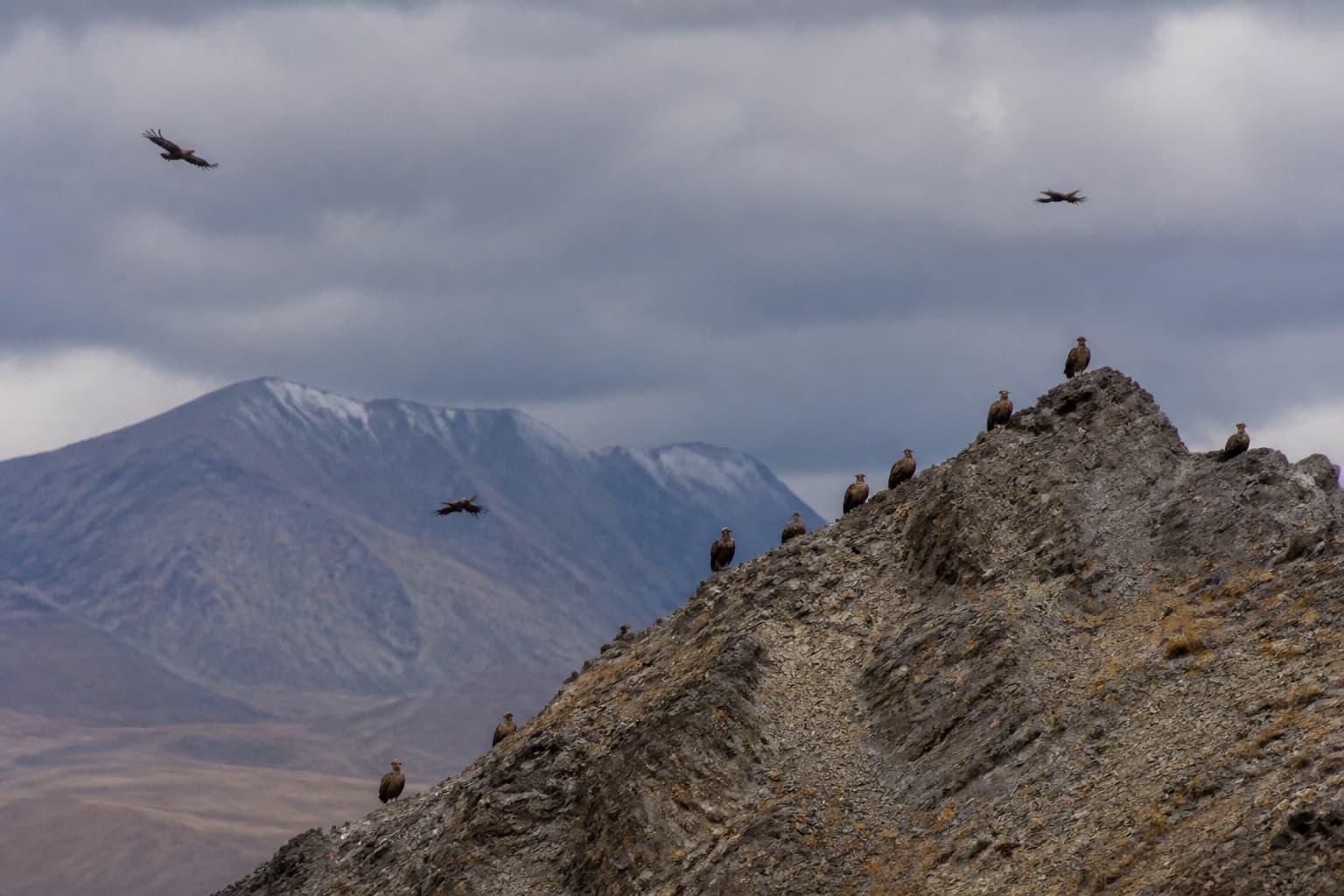
The great Himalayan vultures that come to these sites are not seen as scavengers in the negative sense. In Tibetan understanding they are sacred — sometimes regarded as manifestations of dakinis (sky-dwelling spiritual beings) — and are honored for helping carry the deceased onward. That reverence is part of why the ritual carries such dignity for those who practice it.
Why visitors must not watch or photograph it
This is the most important part of this guide, so we will be direct: sky burial is private, and travelers are not permitted to watch, photograph, or film it. You should never seek it out.
This is not an arbitrary rule. Consider what it would mean for any family:
- A sky burial is a funeral — an intimate moment of grief and a sacred religious rite for the family involved.
- Tibetans believe that the presence of curious outsiders, and the intrusion of cameras, can disturb the passage of the deceased.
- Out of respect for these beliefs, regulations prohibit sightseeing, photography, and filming at burial sites, including with zoom lenses or drones from a distance.
The restriction is itself part of the respect the ritual asks for. Honoring it is simply the decent thing to do — the same courtesy you would extend to a grieving family anywhere in the world. A responsible tour will never offer sky burial as a "sight," and you should be wary of anyone who does.
How to engage respectfully instead
You can appreciate the meaning of this tradition without ever intruding on it.
- Learn the philosophy. Understanding impermanence and generosity tells you far more about Tibet than a glimpse ever could.
- Visit monasteries thoughtfully. Tibet's living Buddhist culture is open to respectful visitors in many settings. See our guide to Tibetan Buddhism and monasteries.
- Follow your guide. Local guides know which places welcome visitors and which moments are private, and they will keep you on the right side of that line.
A custom that asks for humility
Sky burial endures because it expresses something Tibetans hold deeply: that the body is temporary, that death is part of life, and that even in dying one can give. Approached with humility — and from a respectful distance that means not approaching the ritual at all — it offers travelers a window into the heart of Tibetan Buddhist values.
What you can see on a trip. None of our tours visit a sky burial site, and no responsible tour should. What you can see is the living Buddhism behind the practice: the assembly halls and debating courtyard of Sera on our 5-day Lhasa & Yamdrok Lake tour, and, on longer routes, Tashilhunpo in Shigatse, seat of the Panchen Lamas, on the 9-day Everest Base Camp & Namtso tour. Your guide can talk through funeral customs there, in context and without intruding on anyone's grief.
To experience Tibet's living culture with guides who understand these boundaries, explore our Tibet tours. You can also review the basics on our Tibet Travel Permit page or contact us with any questions about traveling respectfully.
From the page to the plateau
Understanding it respectfully, in Lhasa
Sky burials are private and closed to visitors. The beliefs behind them, though, are all around you in Lhasa: the butter lamps of the Jokhang, pilgrims circling the Barkhor, monks debating at Sera. A local guide explains what you are seeing, and what not to photograph.
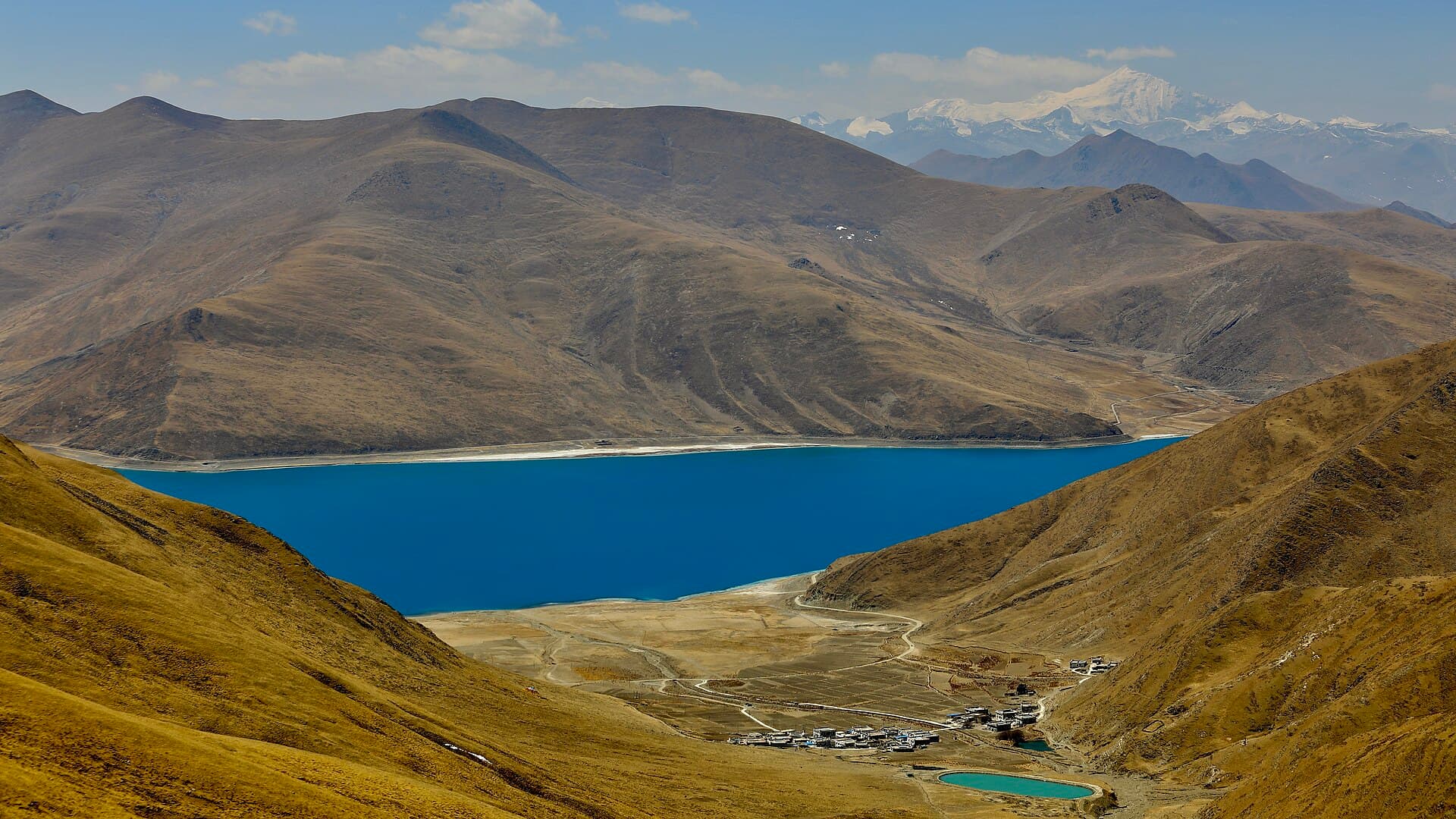
Lhasa & Yamdrok (5 Days)
Lhasa · Yamdrok Lake · Xiazhulin Temple · Lhasa
Five days based in Lhasa: a hands-on morning of Tibetan crafts, the debating monks at Sera, the Potala Palace and the Jokhang, then a day out over the Kamba La to Yamdrok Lake and Xiazhulin Temple. Our shortest Tibet trip, run as a shared group on fixed dates.
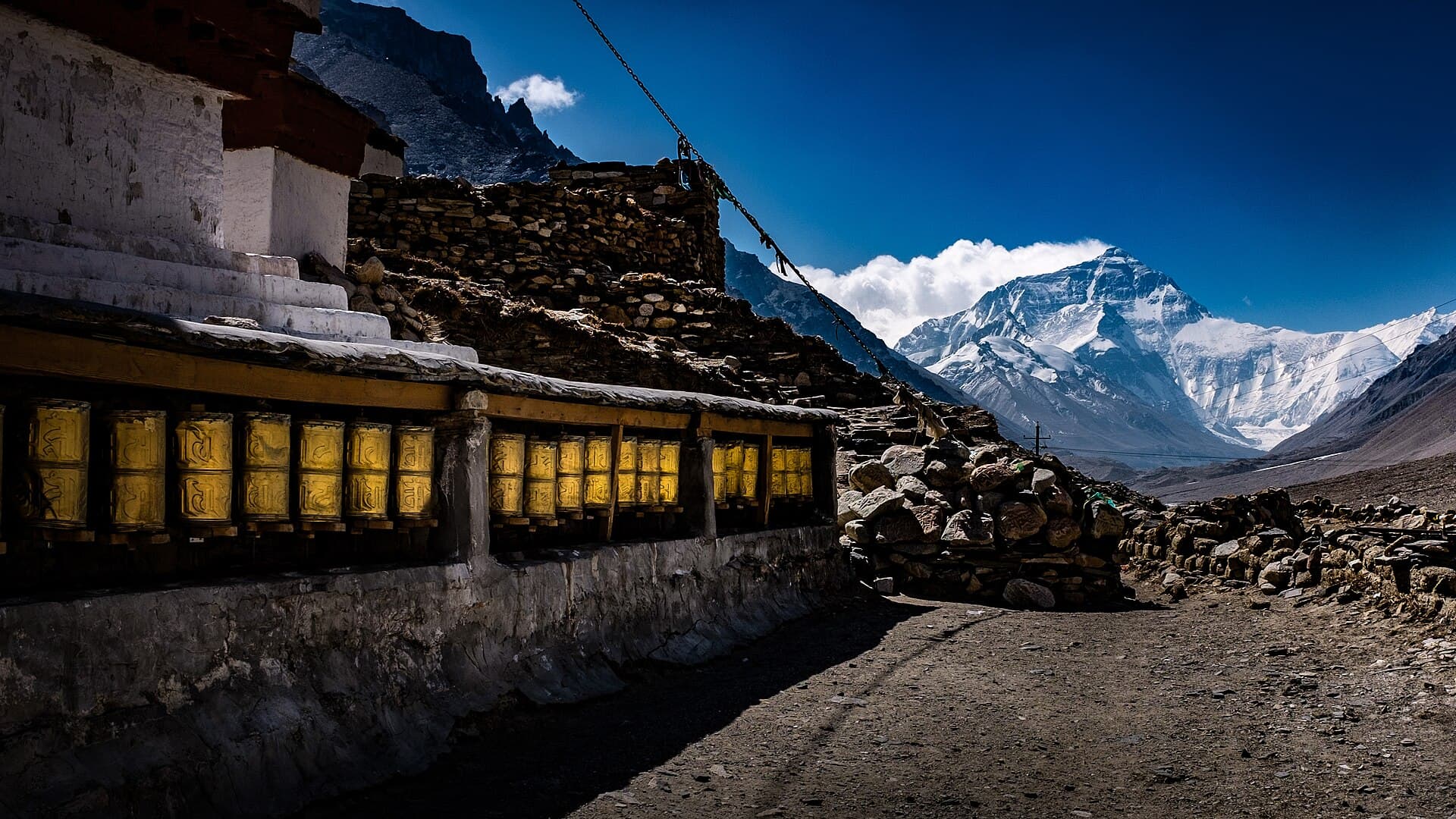
Everest & Namtso (9 Days)
Lhasa · Yamdrok Lake · Karola Glacier · Shigatse · Rongbuk · Everest Base Camp · Shigatse · Lhasa · Namtso · Lhasa
Nine days that add Namtso to the road to Everest: Sera's debating monks, the Potala and the Jokhang in Lhasa; Yamdrok Lake and, beyond it, the Karola Glacier on the drive west; a night at Everest Base Camp; Tashilhunpo; and a final day trip to Namtso once you're acclimatised. Shared group, fixed departures.
FAQs
Jhator is usually translated as "giving alms to the birds." It refers to offering the body of the deceased to vultures at a high open site. The English term "sky burial" was created later by outsiders.