Comprenez les quatre écoles du bouddhisme tibétain et les monastères vivants que vous pouvez visiter, des grands sièges Gelug de Lhassa aux salles de récitation de Shigatsé — et comment visiter avec respect.
Le bouddhisme tibétain n'est pas une pièce de musée. C'est une tradition vivante qui façonne encore le quotidien sur tout le plateau — dans la fumée des offrandes de genévrier, le murmure des pèlerins faisant le tour d'un temple, et le chant profond qui s'élève d'une salle d'assemblée à l'aube. Pour la plupart des visiteurs, les monastères sont la partie la plus mémorable d'un voyage au Tibet. Ce guide explique ce que vous regardez réellement, afin que la visite signifie davantage qu'une rangée de toits dorés sur vos photos.
Un aperçu rapide du bouddhisme tibétain
Le bouddhisme a atteint le Tibet au VIIe siècle et a peu à peu absorbé des éléments de la tradition autochtone Bön. Ce qui en a émergé se regroupe généralement en quatre grandes écoles. Elles partagent le même objectif bouddhiste fondamental — la libération de la souffrance pour le bien de tous les êtres — mais diffèrent par leur lignée, leur accent et leur histoire.
| École | Nom courant | Connue pour |
|---|---|---|
| Nyingma | « Les Anciens » | La plus ancienne école, remontant à la première transmission du bouddhisme au Tibet au VIIIe siècle. |
| Kagyu | « Lignée orale » | La pratique de la méditation et la transmission des enseignements de maître à disciple. |
| Sakya | Nommée d'après le monastère de Sakya | Une forte tradition d'érudition et une coloration distinctive grise, rouge et blanche des temples. |
| Gelug | « Bonnets jaunes » | L'école la plus récente et aujourd'hui la plus répandue ; débat scolastique et discipline monastique. Les lignées du dalaï-lama et du panchen-lama lui sont associées. |
Vous n'avez pas besoin de mémoriser cela pour apprécier une visite. Mais remarquer à quelle école appartient un monastère aide à comprendre son art, ses robes et son atmosphère.
Les grands sièges monastiques autour de Lhassa
Trois des plus importants monastères Gelug — souvent appelés les « trois grands sièges » — se trouvent à Lhassa et dans ses environs. À leur apogée, ils abritaient des milliers de moines et fonctionnaient comme d'immenses centres d'étude. Ils ont été fondés au début du XVe siècle par Tsongkhapa, fondateur de l'école, et ses disciples.
- Ganden fut le premier monastère Gelug, établi par Tsongkhapa lui-même. Il se dresse haut sur une crête avec de vastes vues sur la vallée et un circuit de pèlerinage prisé, ou kora, autour du complexe.
- Drepung comptait autrefois parmi les plus grands monastères du monde. Adossés à un versant à l'ouest de la ville, ses bâtiments blanchis à la chaux s'étagent sur la pente comme une petite ville.
- Sera est célèbre pour ses débats de cour, où les moines tapent dans leurs mains, gesticulent et se défient mutuellement sur des points de philosophie bouddhiste. Si votre programme coïncide avec les heures de débat, c'est inoubliable.
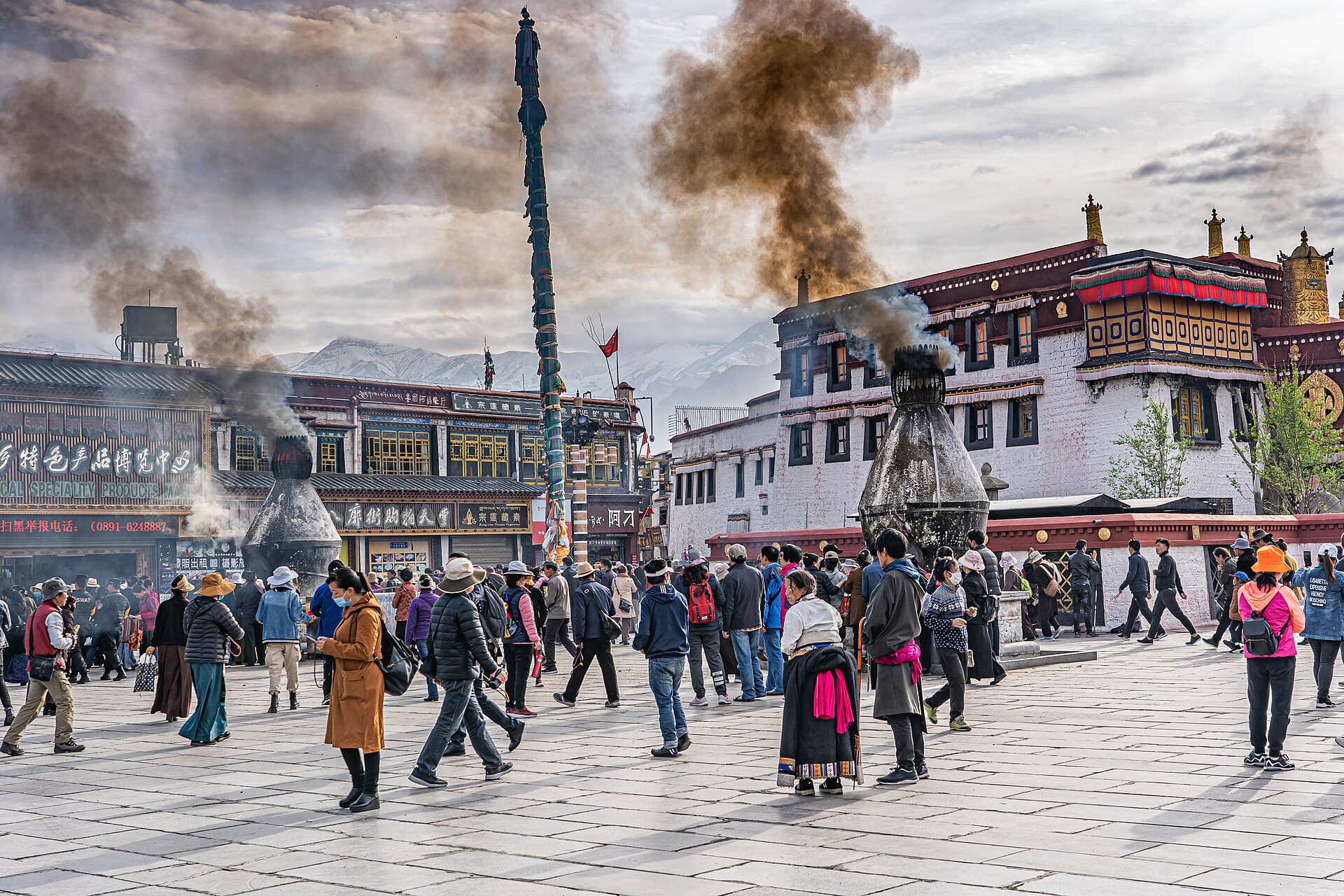
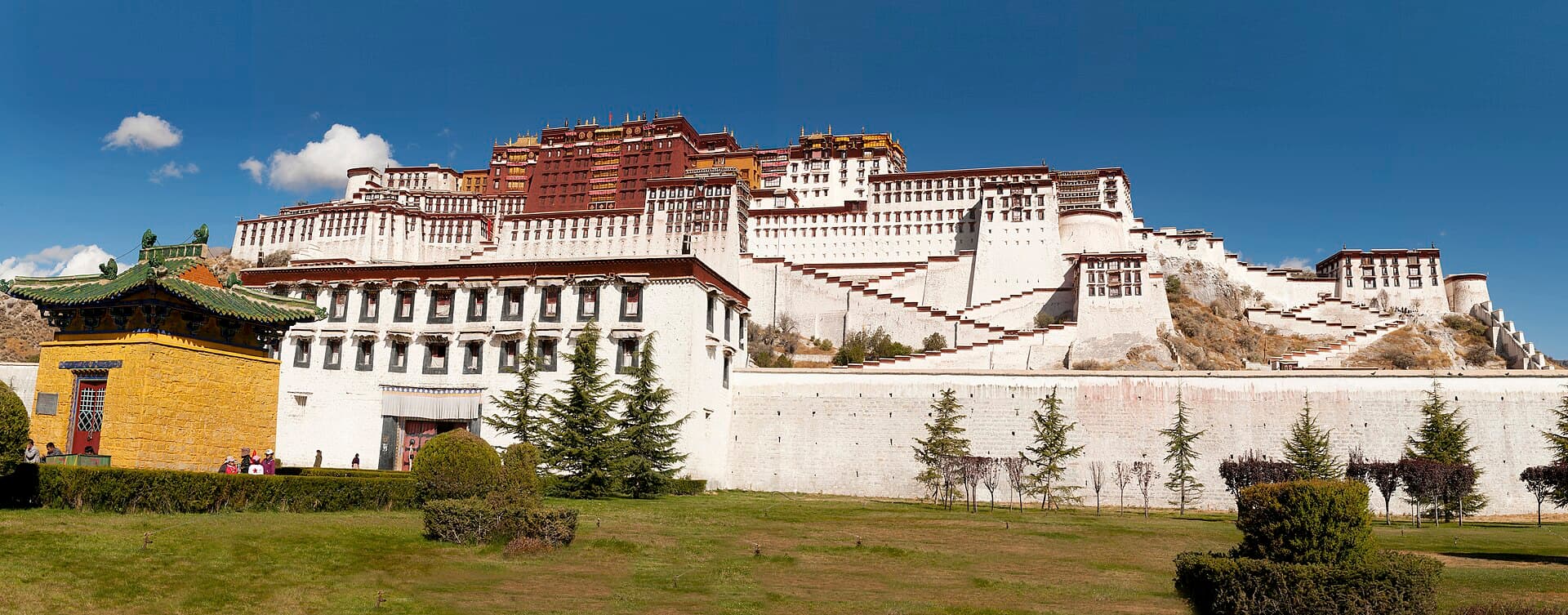
Au cœur de Lhassa, le temple du Jokhang est considéré comme le temple le plus sacré du Tibet. La place qui le précède se remplit de pèlerins, certains se prosternant de tout leur long vers les portes. Le palais du Potala, l'édifice emblématique qui couronne la silhouette de la ville, fut historiquement le siège des dalaï-lamas et reste l'image que la plupart des gens se représentent lorsqu'ils imaginent le Tibet.
Ganden : le premier siège Gelug et sa kora
Parmi les trois grands sièges évoqués plus haut, Ganden est à la fois le plus ancien et le plus spectaculaire. Tsongkhapa l'a fondé en 1409 au sommet de la montagne Wangbur, une crête dominant la vallée de la Kyichu, à environ 40 kilomètres — environ une heure et demie de route — à l'est de Lhassa. Premier monastère de sa nouvelle école, il donne son nom au siège le plus élevé de la lignée Gelug : le titre de l'abbé, Ganden Tripa, reste celui du chef officiel de la tradition Gelug ; il est détenu pour une durée déterminée et non transmis par réincarnation, comme le sont les lignées du dalaï-lama et du panchen-lama.
Le monastère se situe à une altitude considérable, au-dessus de 4 500 mètres le long de sa crête, nettement plus haut que Lhassa elle-même, et c'est son cadre que la plupart des visiteurs retiennent. Des salles blanchies à la chaux grimpent la crête en gradins, et la vue s'ouvre sur toute la vallée en contrebas. Deux koras font le tour du site : un court circuit intérieur à travers les bâtiments du monastère, et une kora extérieure plus longue qui franchit la ligne de crête derrière l'ensemble, parsemée de drapeaux de prières et offrant l'un des plus vastes panoramas du centre du Tibet. Les pèlerins la parcourent dans le sens des aiguilles d'une montre, comme toute autre kora ; la boucle extérieure demande bien plus de temps que l'intérieure : demandez donc à votre guide laquelle convient à votre journée.
La plupart des visiteurs gagnent Ganden depuis Lhassa en excursion d'une demi-journée ou d'une journée, souvent associée à Drepung ou à Sera, ou comme point de départ du trek Ganden–Samye de quatre jours décrit dans notre guide du trekking au Tibet. Comme la route grimpe à pic hors de la vallée de Lhassa et que le monastère se trouve encore plus haut, mieux vaut le réserver pour un jour ou deux après le début de votre voyage, une fois l'acclimatation entamée ; consultez notre guide d'acclimatation à l'altitude si vous êtes au début d'un court itinéraire.
Sera : la cour de débat des moines
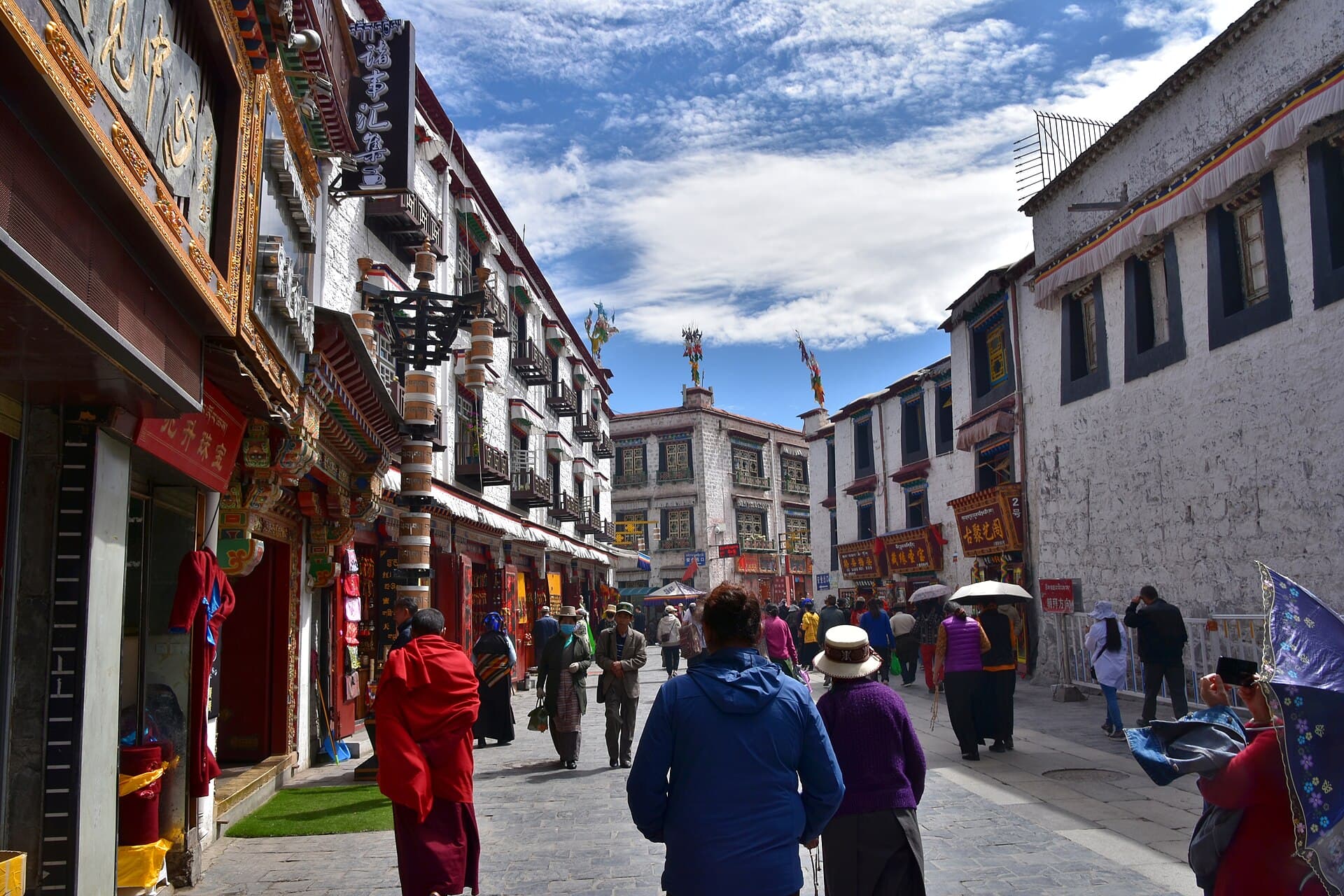
Sera est le plus jeune et le plus proche des trois grands sièges ; il fut fondé en 1419 par Jamchen Chojey, l'un des principaux disciples de Tsongkhapa, sur les basses pentes du mont Sera Utse, à quelques kilomètres au nord du centre de Lhassa. La tradition veut que son nom vienne des roses sauvages qui auraient couvert la colline lors de sa construction. À son apogée, il comptait des milliers de moines répartis en trois collèges, et il demeure aujourd'hui un monastère d'enseignement actif.
Ce qui fait la renommée de Sera, c'est son débat philosophique, tenu la plupart des après-midi dans une cour close au sol de gravier, ombragée de vieux arbres. Les moines se mettent par deux : l'un se tient debout et avance un point de logique bouddhique, ponctuant chaque geste d'un claquement de mains théâtral et d'un coup de pied au sol, tandis que l'autre, assis, défend une position. C'est bruyant, physique, et très différent des salles d'assemblée feutrées évoquées ailleurs dans ce guide ; c'est l'un des rares endroits du Tibet où l'on voit la formation monastique se dérouler en direct plutôt que d'en observer le résultat. Les séances de débat sont suspendues autour des grandes fêtes et des retraites d'enseignement : faites donc confirmer le programme du jour par votre guide plutôt que de le supposer.
Comme Sera est très proche de la ville, il est facile de l'associer à Drepung ou au Barkhor dans une même journée à Lhassa, et la plupart des itinéraires qui incluent les monastères de Lhassa le prévoient par défaut ; consultez notre guide de voyage à Lhassa pour voir comment il s'articule d'ordinaire avec le Potala et le Jokhang. La même étiquette photographique s'applique ici qu'ailleurs : demandez avant de photographier un moine en plein débat, et gardez assez de distance pour ne pas être la cause d'une perte de concentration.
Samye : le premier monastère du Tibet
Au sud de Lhassa, de l'autre côté du fleuve Yarlung Tsangpo, se dresse un monastère antérieur à tous les autres sites de ce guide : Samye. Fondé au VIIIe siècle sous le roi Trisong Detsen, avec le moine érudit indien Shantarakshita et le maître tantrique Guru Rinpoché (Padmasambhava) traditionnellement considérés comme ses fondateurs, Samye est regardé comme le premier monastère bouddhiste construit au Tibet, et le lieu où les premiers moines tibétains furent ordonnés. Tout le reste de l'histoire monastique tibétaine découle de ce qui a commencé ici.
Ce qui distingue Samye, c'est son plan. L'ensemble est conçu comme un mandala tridimensionnel du cosmos bouddhique : le temple central d'Utse représente le mont Meru, axe de l'univers, entouré de temples plus petits figurant le soleil, la lune et les continents environnants, le tout enfermé dans un mur d'enceinte circulaire. La tradition veut que les trois étages de l'Utse aient chacun été bâtis dans un style différent — tibétain, chinois et indien — témoignage matériel des cultures qui ont façonné les débuts du bouddhisme tibétain. Samye est aussi la patrie spirituelle de l'école Nyingma, les « Anciens », la plus ancienne tradition bouddhiste du Tibet.
La plupart des visiteurs gagnent Samye depuis Lhassa en excursion d'une journée ou avec une nuit sur place, soit une demi-journée de route à chaque trajet. C'est aussi le point d'arrivée classique du trek Ganden–Samye, un itinéraire de quatre jours qui part du premier monastère Gelug du Tibet et s'achève ici, à son premier monastère toutes écoles confondues ; consultez notre guide du trekking au Tibet pour savoir en quoi consiste cet itinéraire. Comme il se trouve légèrement à l'écart de la route habituelle Lhassa–Shigatsé, Samye gagne à être prévu à l'avance dans votre itinéraire.
Au-delà de Lhassa : Shigatsé et le plateau au sens large
Le paysage monastique du Tibet s'étend bien au-delà de la capitale. À Shigatsé, deuxième ville du Tibet, le monastère de Tashilhunpo est le siège traditionnel du panchen-lama et abrite une imposante statue dorée du Maitreya, le bouddha du futur. Ses toits dorés et ses salles aux murs rouges sont un point fort de tout itinéraire terrestre vers l'ouest.
Plus loin, des monastères ponctuent les hautes routes — petits, patinés par les intempéries et souvent vieux de plusieurs siècles. Beaucoup de voyageurs les croisent en route vers le camp de base de l'Everest ou sur les longs itinéraires de pèlerinage vers le mont Kailash, où la foi et le paysage semblent inséparables.
Ce que vous verrez à l'intérieur
L'intérieur des monastères suit une logique globalement constante une fois que l'on apprend à la lire :
- Salle d'assemblée (dukhang) : le grand espace central, avec des rangées de coussins bas où les moines se rassemblent pour réciter. De hauts piliers sont souvent enveloppés de tissu.
- Chapelles et sanctuaires : des pièces latérales abritant des statues de bouddhas, de bodhisattvas et de maîtres vénérés, généralement éclairées par des lampes à beurre.
- Fresques et thangkas : peintures murales et peintures sur rouleau représentant des divinités, des maîtres de lignée et des scènes d'enseignement dans un détail dense et symbolique.
- Moulins à prières : des cylindres gravés de mantras que les pèlerins font tourner dans le sens des aiguilles d'une montre, chaque rotation étant comprise comme libérant les prières qu'ils contiennent.
L'odeur des lampes au beurre de yak, la lumière fraîche et tamisée, et la résonance grave du chant font partie de l'expérience. Avancez lentement et laissez vos yeux s'adapter.
Visiter avec respect
Les monastères sont des lieux de culte actifs, et non des attractions mises en scène pour les touristes. Quelques habitudes simples font toute la différence :
- Marchez dans le sens des aiguilles d'une montre autour des sanctuaires, des temples et des moulins à prières, en suivant le flux des pèlerins.
- Habillez-vous avec sobriété — couvrez vos épaules et vos genoux, et retirez chapeaux et lunettes de soleil à l'intérieur des chapelles.
- Demandez avant de photographier des personnes ou des intérieurs. De nombreuses chapelles interdisent la photographie, et certaines la font payer. Respectez chaque « non ».
- Ne touchez pas les statues, les fresques ou les objets rituels, et ne pointez jamais vos pieds directement vers un autel ou un moine.
- Parlez à voix basse et mettez votre téléphone en silencieux.
Pour un tour d'horizon plus complet de l'étiquette sur le plateau, consultez notre guide de l'étiquette de voyage au Tibet.
Notes pratiques pour la planification
Les visiteurs étrangers ne peuvent pas voyager de manière indépendante au Tibet. Par réglementation, les voyageurs internationaux doivent rejoindre un circuit organisé agréé, voyager avec un guide enregistré et détenir un permis de voyage au Tibet, qu'un voyagiste organise en votre nom avant l'arrivée. Ce n'est pas facultatif, et cela façonne la manière dont vous découvrirez les monastères : toujours accompagné d'un guide capable d'interpréter ce que vous voyez et de composer avec les règles propres à chaque site. Nous expliquons les formalités en détail dans notre guide du permis de voyage au Tibet.
Un guide compétent fait véritablement la différence entre admirer un beau bâtiment et le comprendre. L'iconographie, les lignées, le sens derrière le geste de la main d'une statue particulière — autant de strates que la plupart des voyageurs manqueraient seuls.
La plupart des visites de monastères se déroulent en haute altitude. Lhassa est à environ 3 650 mètres, et de nombreux sites sont plus élevés encore. Avancez à un rythme mesuré, surtout durant vos premiers jours, et ne montez pas en hâte les longs escaliers du Potala ou de Ganden.
Intégrer les monastères à un voyage
Une première visite classique se concentre sur les grands sièges de Lhassa et le Jokhang, puis se dirige par voie terrestre vers Shigatsé. Les voyageurs disposant de plus de temps et d'une meilleure acclimatation continuent souvent vers l'ouest. Vous pouvez parcourir des itinéraires structurés sur notre page circuits au Tibet, ou nous contacter pour façonner un parcours autour des traditions et des régions qui vous intéressent le plus. Quelle que soit la forme du voyage, les monastères récompensent une attention sans hâte bien plus qu'une liste de cases à cocher chargée.
De la lecture au plateau
Découvrir le Tibet avec quelqu'un qui sait l'expliquer
Nos voyages sont menés par des guides tibétains locaux agréés, qui vous expliquent ce que vous voyez, dans un monastère, sur un circuit de pèlerins ou dans les prairies. Voici les deux voyages par lesquels commencent la plupart des voyageurs.
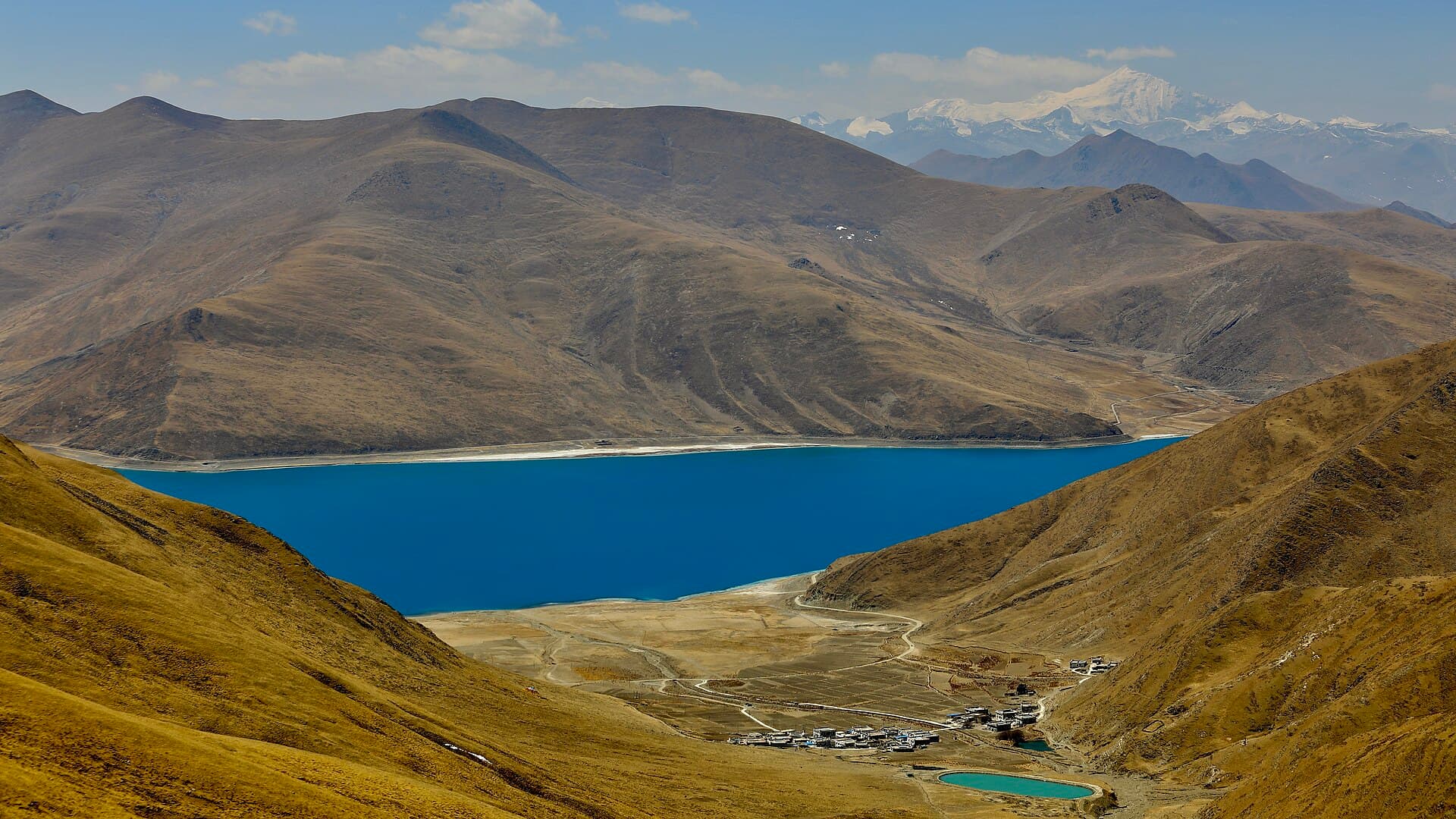
Lhassa & Yamdrok (5 jours)
Lhassa · Lac Yamdrok · Temple de Xiazhulin · Lhassa
Cinq jours basés à Lhassa : une matinée pratique d'artisanat tibétain, les moines débatteurs de Sera, le palais du Potala et le Jokhang, puis une journée par le Kamba La jusqu'au lac Yamdrok et au temple de Xiazhulin. Notre plus court voyage au Tibet, en groupe partagé à dates fixes.
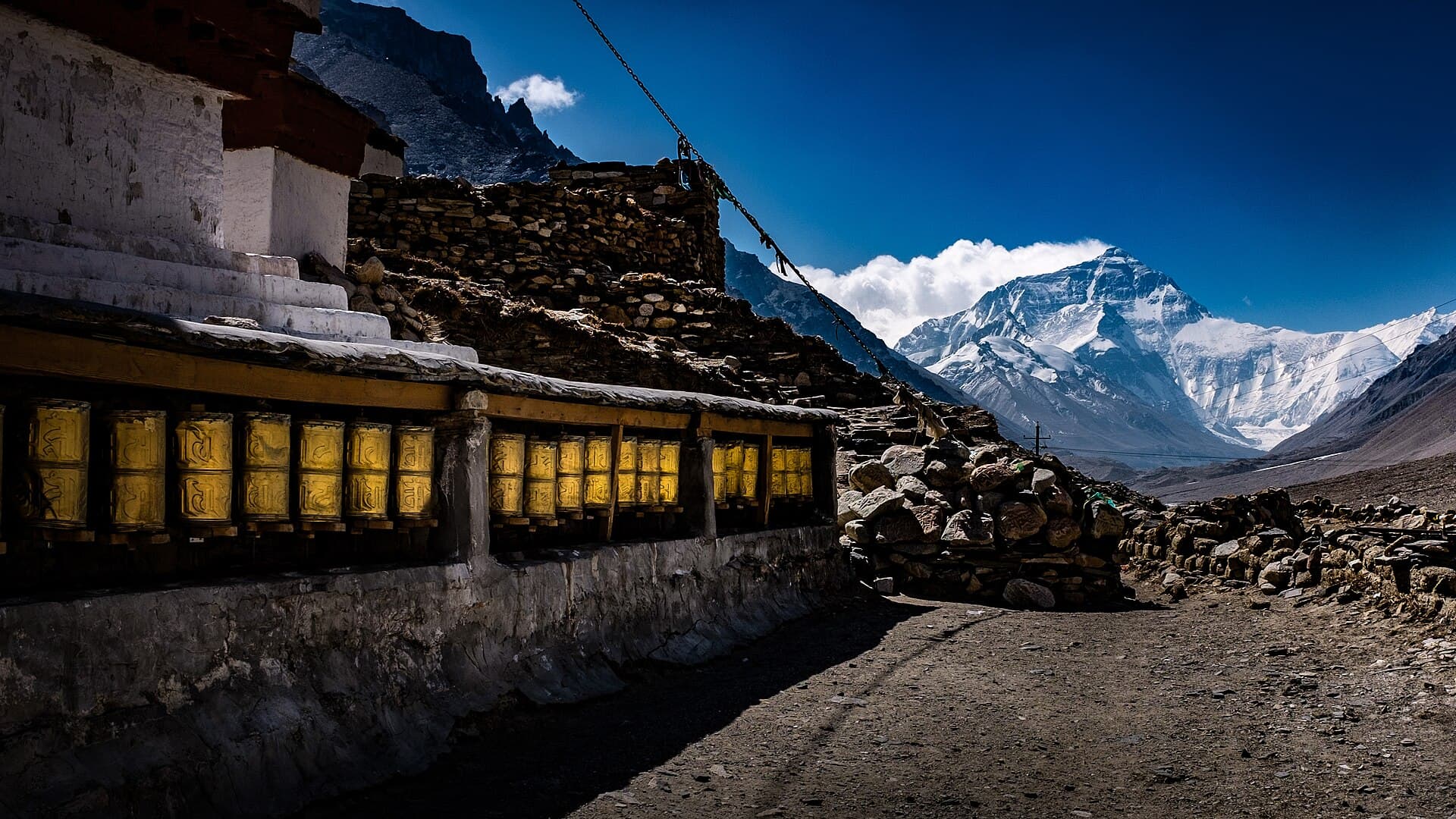
Everest & Namtso (9 jours)
Lhassa · Lac Yamdrok · Glacier de Karola · Shigatsé · Rongbuk · Camp de base de l'Everest · Shigatsé · Lhassa · Namtso · Lhassa
Neuf jours qui ajoutent le Namtso à la route de l'Everest : les moines débatteurs de Sera, le Potala et le Jokhang à Lhassa ; le lac Yamdrok puis, au-delà, le glacier de Karola sur la route de l'ouest ; une nuit au camp de base de l'Everest ; Tashilhunpo ; et, pour finir, une excursion d'une journée au Namtso une fois l'organisme acclimaté. Groupe partagé, départs à dates fixes.
FAQ
Non. Les visiteurs étrangers ne peuvent pas voyager de manière indépendante au Tibet. Vous devez rejoindre un circuit organisé agréé, être accompagné d'un guide enregistré et détenir un permis de voyage au Tibet, que votre voyagiste organise avant votre arrivée. Votre guide vous accompagne à chaque monastère et vous aide à respecter les règles propres à chaque site.