Gyantse es una de las localidades históricas mejor conservadas del Tíbet, hogar de la extraordinaria estupa Kumbum y del monasterio multiescuela de Pelkor Chode. Aquí tienes qué ver, cómo encaja en la ruta hacia Shigatse y el Everest, y cómo planificar tu visita.
Gyantse es un nombre que permanece con los viajeros mucho después de un viaje al Tíbet. En su día la tercera localidad más grande del Tíbet y un centro del comercio de la lana, ha conservado un carácter de Tíbet de antaño que las ciudades más grandes han perdido en buena medida. Situada a 3.950 metros en la carretera entre Lhasa y Shigatse, es famosa sobre todo por dos cosas: la estupa escalonada Kumbum y el monasterio que comparte sus muros, Pelkor Chode. Para muchas personas, la media jornada aquí es uno de los momentos culminantes de todo el viaje.
Dónde se encuentra Gyantse
Gyantse se sitúa a unos 230 kilómetros al sur de Lhasa y aproximadamente a 100 kilómetros al este de Shigatse, en el amplio valle del Nyang Chu. Casi siempre se visita en la ruta panorámica del sur entre las dos ciudades, la misma carretera que cruza el puerto de Kamba La por encima del turquesa lago Yamdrok y pasa junto al glaciar Karola. Ese entorno, rodeado de campos de cebada y vigilado por un viejo fuerte sobre su colina rocosa, da a la localidad un aire pausado y habitado.
Como los viajeros extranjeros exploran el Tíbet en un tour guiado y con permiso, Gyantse forma parte de una ruta más amplia en lugar de ser un lugar al que se accede de forma independiente. Combina con naturalidad con Shigatse, y las dos juntas forman el núcleo de la mayoría de los itinerarios del Tíbet central.
La estupa Kumbum
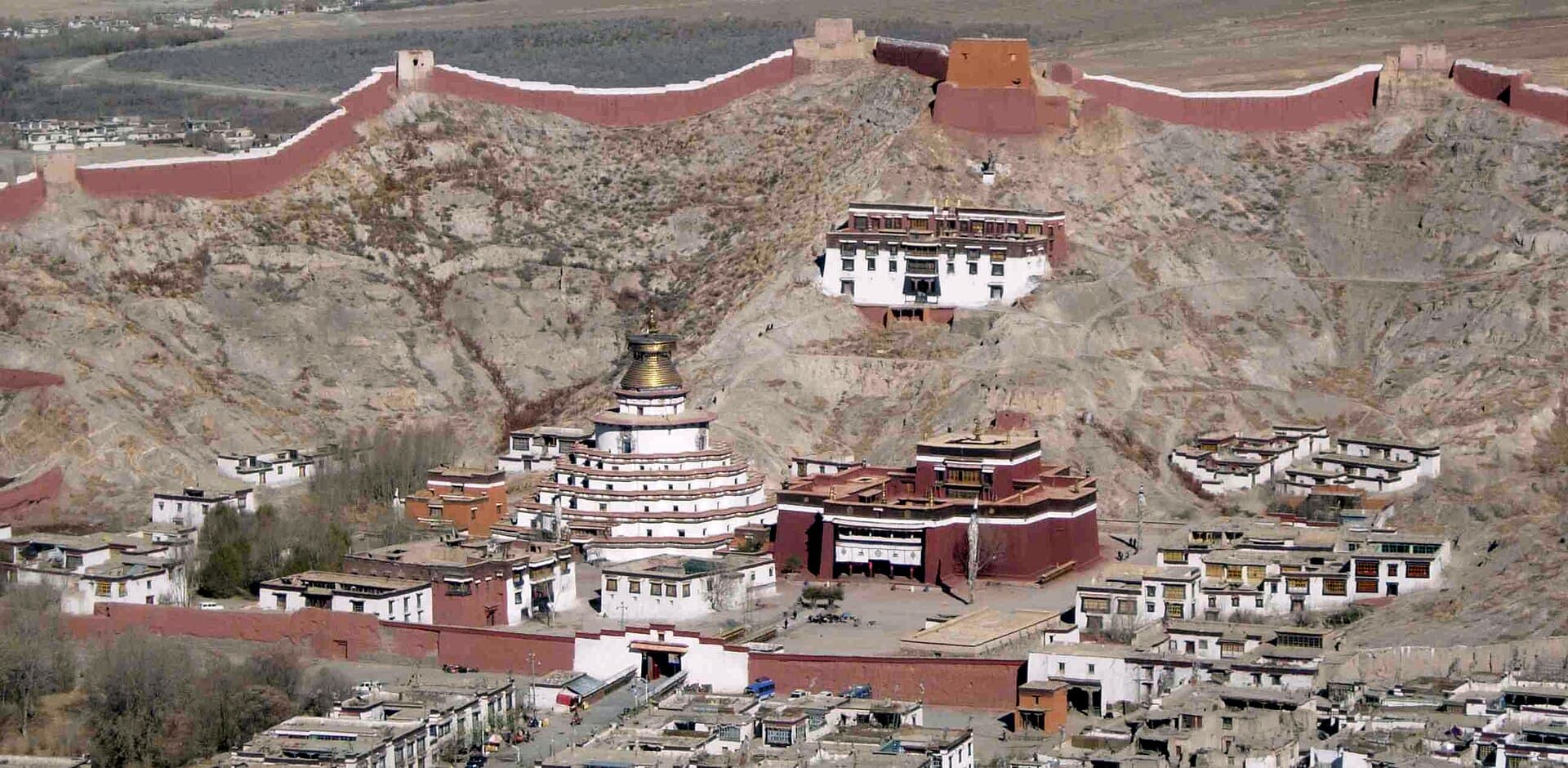
El Kumbum de Gyantse es la estrella. Comenzado en 1427, es un gran chorten escalonado que se eleva en nueve niveles hasta unos 32 metros, con sus niveles encalados ascendiendo hasta una cúpula dorada pintada con los vigilantes «ojos de la sabiduría». Dentro, una secuencia en espiral de pequeñas capillas, más de setenta en total, está repleta de miles de murales y estatuas. El nombre Kumbum significa «cien mil imágenes», y subir a través de los niveles se siente como ascender por todo un cosmos pintado.
Es la estupa más grande de su tipo en el Tíbet y una de las mejores colecciones conservadas de arte religioso tibetano del siglo XV. Reserva tiempo para subir despacio, tanto por la altitud como porque cada rellano recompensa una pausa. El estilo artístico mezcla influencias tibetanas, newaris (nepalesas) y chinas, un reflejo de la antigua posición de Gyantse en las rutas comerciales, y los murales están notablemente bien conservados, con serenos budas, fieros protectores e intrincados mandalas apiñándose en los muros de cada nivel.
El monasterio de Pelkor Chode
Compartiendo el recinto amurallado está Pelkor Chode, construido por primera vez en 1418. Lo que lo hace inusual es su historia de albergar varias escuelas budistas bajo un mismo techo, con colegios de las tradiciones gelug, sakya y buton coexistiendo dentro del mismo complejo, un raro ejemplo de armonía multiescuela. La sala de asamblea de muros rojos guarda hermosa estatuaria y murales antiguos y bien merece el tiempo junto al Kumbum.
El dzong de Gyantse
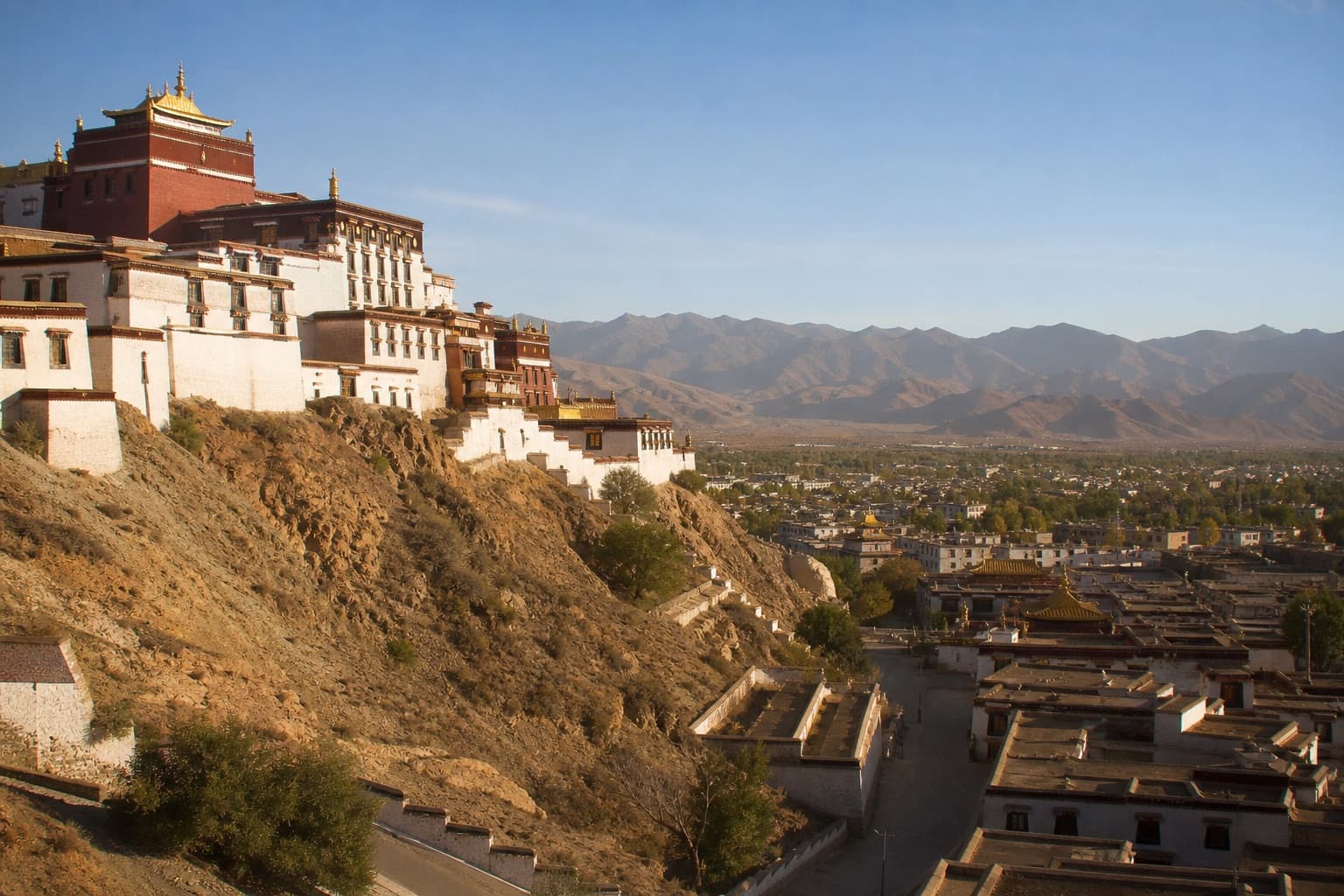
Sobre la localidad se alza el dzong de Gyantse, una fortaleza en una cresta empinada cuyos orígenes se remontan siglos atrás. Es más conocido internacionalmente por la defensa de la localidad en 1904. Puedes subir para disfrutar de amplias vistas sobre los tejados, el monasterio y los campos circundantes, aunque el ascenso es un esfuerzo genuino a esta altitud y es opcional en la mayoría de los tours. Desde las murallas se aclara la distribución de toda la localidad: el recinto amurallado del monasterio, el grupo de tradicionales casas encaladas y los campos de cebada extendiéndose hasta las colinas que la rodean, una clásica localidad de valle tibetano vista desde lo alto.
Gyantse también ha conservado más de su antiguo trazado urbano que la mayoría de las localidades tibetanas, y un breve paseo por el barrio tradicional bajo el fuerte, donde casas de piedra y madera bordean callejones estrechos, da una sensación tangible de cómo era y cómo vivía antaño una localidad comercial de la meseta.
Cómo encaja Gyantse en tu viaje
Gyantse rara vez es un destino por sí solo; es la joya en medio del trayecto de Lhasa a Shigatse. Una visita que incluye la localidad tiene este aspecto:
- Aclimátate en Lhasa durante dos o tres días.
- Recorre la ruta panorámica del sur por el Kamba La, parando en el lago Yamdrok y el glaciar Karola.
- Pasa la mitad del día en Gyantse para ver el Kumbum y Pelkor Chode.
- Continúa a Shigatse para pasar la noche.
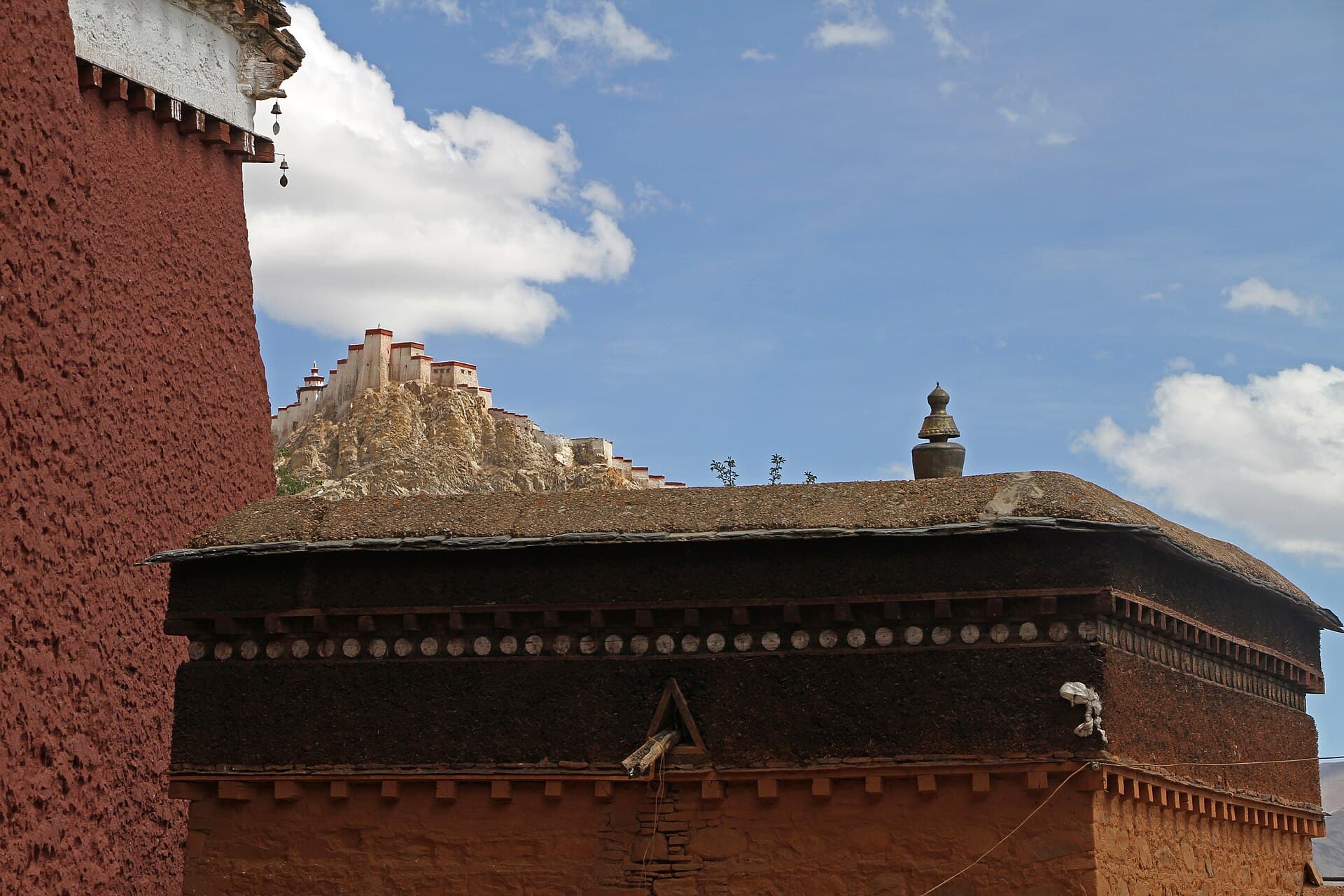
En la práctica llegas a media mañana y te vas a media tarde: dos o tres horas dentro del recinto amurallado cubren el Kumbum y Pelkor Chode sin prisas, y la subida al dzong requiere además otra hora y buenos pulmones.
Dos de nuestros tours incluyen esa parada:
- Express de 4 días de Lhasa al Campo Base del Everest, un viaje privado, visita Pelkor Chode y el Kumbum el día 1, de camino a Shigatse.
- Tour por tierra de 15 días de Chengdu a Lhasa con Daocheng Yading y Shigatse se detiene el día 13 para ver el dzong y visitar Pelkor Chode y el Kumbum.
Nuestros otros tours en grupo de Lhasa a Shigatse toman la misma carretera del sur, pero pasan por Gyantse o por sus inmediaciones sin detenerse, en el último tramo del día hacia Shigatse. Incluyen:
- Tour en grupo de 7 días a Lhasa y el Campo Base del Everest, la versión más corta
- Tour en grupo de 8 días a Lhasa y el Campo Base del Everest
- Tour en grupo de 9 días a Lhasa, el Campo Base del Everest y el lago Namtso
- Tour en grupo de 16 días al Everest, la kora del Monte Kailash y el reino de Guge
Los tours de Nyingchi, del Kailash, de Lhasa a Katmandú y de festivales pasan por la localidad de la misma manera. La otra carretera entre Lhasa y Shigatse es la del norte, más rápida, a lo largo del Yarlung Tsangpo, que evita Gyantse; los tours de 7, 8 y 16 días la usan para el trayecto de vuelta a Lhasa. Si te importa el tiempo dentro del Kumbum, dínoslo al consultarnos.
El festival de caballos
El gran acontecimiento anual de Gyantse es su festival de carreras de caballos y tiro con arco, que se celebra durante varios días en el cuarto mes tibetano, normalmente en junio o julio. Los jinetes compiten en carreras, tiro con arco y tiro a caballo, las familias acampan en los campos a las afueras de la localidad y todo el valle sale a la calle. Es el menos turístico de los cuatro grandes festivales de verano del Tíbet, y ahí reside buena parte de su encanto.
Las fechas se mueven con el calendario lunar y a menudo se confirman solo unas semanas antes, por lo que es difícil organizar un viaje en torno a ellas. Si te importa, dínoslo al consultarnos y te contaremos lo que se sabe. Nuestro calendario de festivales del Tíbet explica cómo se reparten los principales festivales a lo largo del año.
Cuándo visitarlo
Las temporadas intermedias de finales de primavera (de finales de abril a junio) y otoño (de septiembre a octubre) ofrecen la luz más clara y los puertos más fiables. El verano es más verde y cálido pero más brumoso; el invierno es frío y muy tranquilo, con hermosos días de cielo despejado para quienes no les importa el frío.
Notas prácticas
- Ten en cuenta la altitud. A 3.950 metros, Gyantse está más alta que Lhasa, así que es importante visitarla tras un par de días de aclimatación. Sube el Kumbum y el dzong despacio. Nuestra guía de cómo llegar al Tíbet trata el tema del ritmo.
- Los permisos se gestionan por ti. Todo lo que está más allá de Lhasa necesita el Permiso de Viaje al Tíbet y, posiblemente, permisos de zona, que gestionamos una vez que reservas. Consulta nuestra página del Permiso de Viaje al Tíbet para más detalles.
- Etiqueta fotográfica. La fotografía de interiores en las capillas a menudo está restringida o requiere una tarifa; sigue a tu guía y camina siempre en el sentido de las agujas del reloj.
- Vístete abrigado para la mañana. Los interiores de piedra se mantienen fríos, y las paradas en los puertos de altura durante el trayecto pueden ser ventosas.
Gyantse es uno de esos lugares que hacen que el Tíbet se sienta atemporal. Entre las capillas pintadas del Kumbum, las tranquilas salas de Pelkor Chode y el fuerte en la colina, unas pocas horas aquí dejan una impresión duradera, y encajan a la perfección en la clásica ruta del Tíbet central.
Planifica tu viaje al Tíbet con nosotros
Permisos gestionados, guías locales y precios transparentes. Cuéntanos tus fechas y te enviaremos un itinerario a medida.
Preguntas frecuentes
El Kumbum es una gran estupa escalonada comenzada en 1427, que se eleva unos 32 metros en nueve niveles. Dentro, una serie en espiral de más de setenta capillas alberga miles de murales y estatuas, razón por la cual su nombre significa «cien mil imágenes». Es la estupa más grande de su tipo en el Tíbet y un tesoro de arte del siglo XV.