El clima de gran altitud del Tíbet oscila del sol caluroso a las noches heladas, a menudo el mismo día. Aquí tienes una lista de equipaje completa y práctica construida en torno a las capas, la protección solar y las realidades de la meseta.
Respuesta rápida: Viste por capas y trata la protección solar como equipo, no como un detalle. Lo innegociable: una chaqueta aislante (en toda estación, julio incluido), capas térmicas, una carcasa cortavientos, protector solar de factor alto, sombrero de ala ancha, gafas de categoría 3–4, bálsamo labial denso, calzado ya domado y tu propio botiquín. Casi todo lo demás se compra en Lhasa.
Hacer la maleta para el Tíbet consiste sobre todo en respetar dos hechos: el aire es fino y seco, y la temperatura puede oscilar enormemente entre un mediodía caluroso y soleado y una noche helada, a veces 20 °C o más en un solo día. Vístete y haz la maleta para ese rango y estarás cómodo; ignóralo y acabarás quemado por el sol o tiritando. Esta guía te ofrece una lista completa y sensata.
La regla de oro: por capas
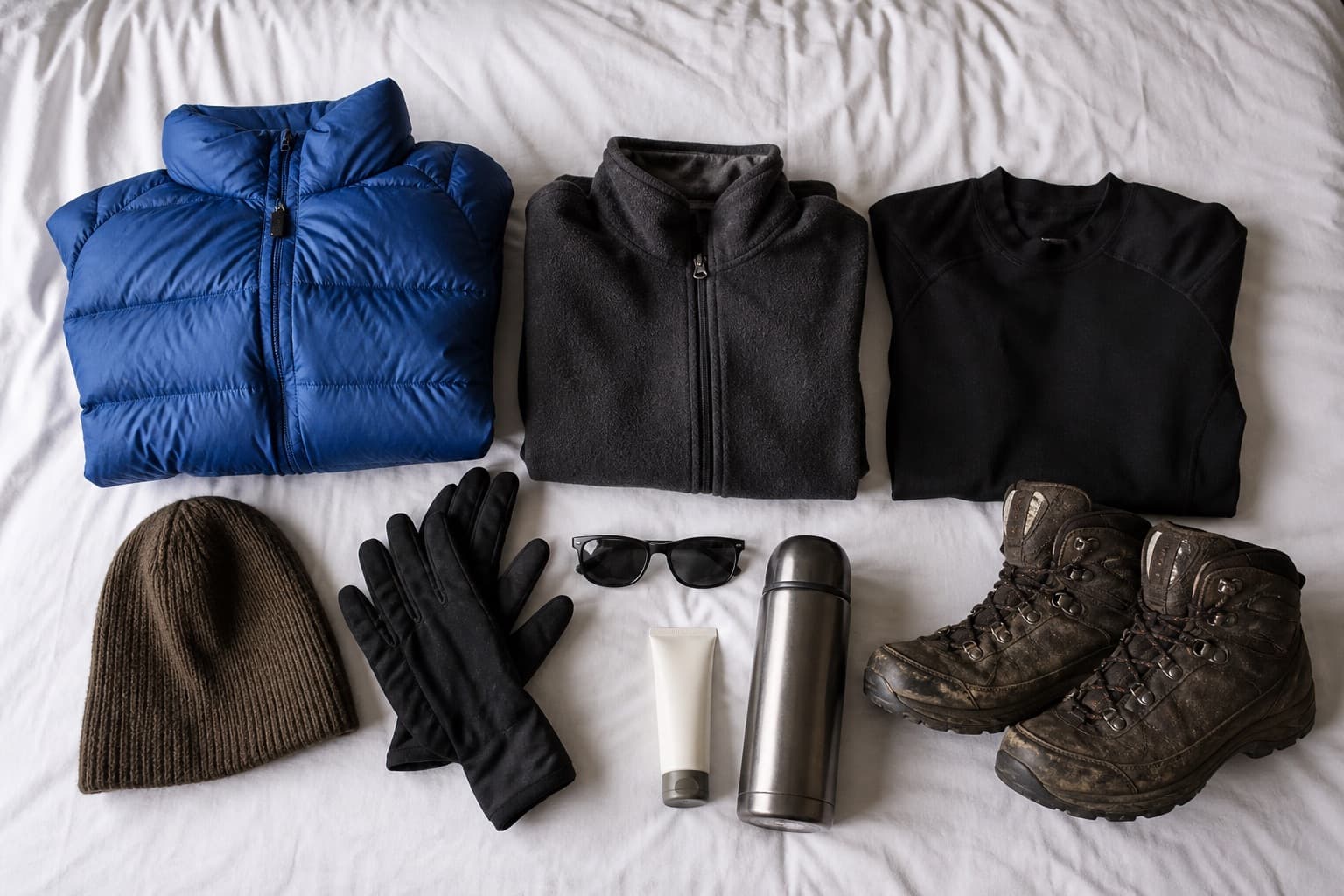
Olvídate de hacer la maleta para una sola temperatura. La clave del Tíbet es un sistema de capas que puedas añadir y quitar a lo largo del día:
- Capa base: camisetas y mallas térmicas que evacuan la humedad. Te mantienen caliente sin volumen y manejan bien el aire seco.
- Capa intermedia: un forro polar o un jersey de lana ligero como aislamiento. Lleva dos si eres friolero.
- Capa exterior: una chaqueta cortavientos e impermeable. El viento en la meseta abierta y los pasos altos atraviesa todo lo demás.
- Chaqueta aislante: una chaqueta de plumas o sintética que se pueda comprimir. Lleva una incluso en verano si tu viaje incluye sitios de gran altitud como el Campo Base del Everest, donde las noches son gélidas durante todo el año.
Este sistema cubre una tarde cálida en Lhasa y un amanecer helado en un mirador a 5.000 metros desde la misma maleta.
La protección solar no es opcional
En altitud, la atmósfera filtra mucha menos luz ultravioleta, así que el sol es genuinamente feroz incluso cuando el aire se siente fresco. Trata la protección solar como equipo esencial, no como una idea de última hora:
- Protector solar de alto SPF (SPF 50+), aplicado con generosidad y a menudo.
- Gafas de sol con fuerte protección UV. El reflejo de la nieve y los cielos brillantes es intenso; los modelos envolventes son los mejores.
- Bálsamo labial con SPF. Los labios se agrietan rápido en el aire seco y soleado.
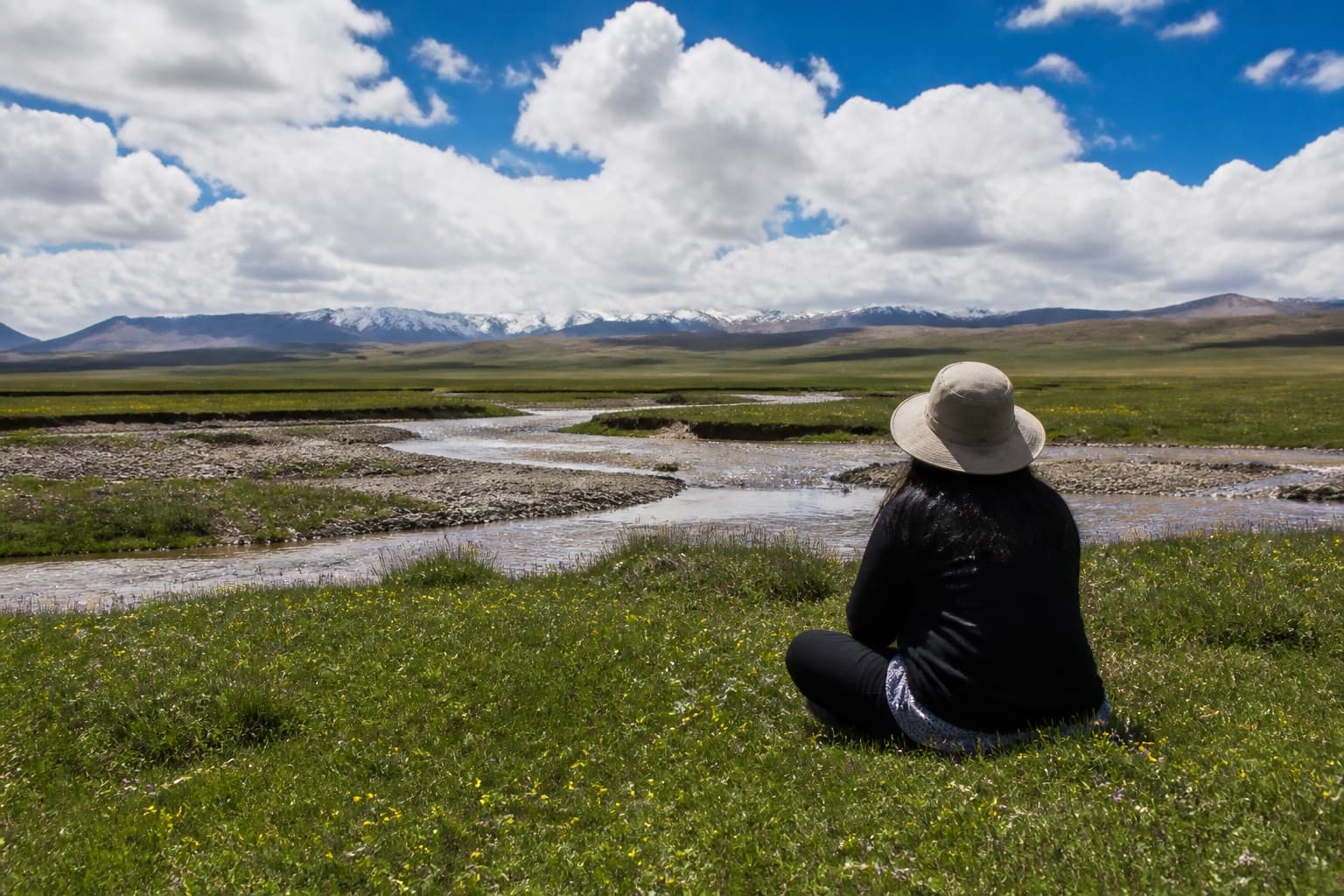
- Un sombrero de ala ancha o gorra para dar sombra.
Lista de ropa
| Artículo | Notas |
|---|---|
| Capas base térmicas (camisetas y mallas) | 1 a 2 conjuntos |
| Capas intermedias de forro polar o lana | 1 a 2 |
| Chaqueta cortavientos e impermeable | Esencial |
| Chaqueta de plumas o sintética comprimible | Esencial en elevaciones altas, inteligente en cualquier lugar |
| Pantalones cómodos / pantalones de senderismo | 2 pares; preferiblemente de secado rápido |
| Camisetas y camisas de manga larga | Las mangas largas sirven también de protección solar |
| Gorro abrigado y guantes | Para las mañanas frías y los pasos altos |
| Sombrero para el sol | Para el día |
| Ropa interior y calcetines abrigados | Lleva calcetines de más |
| Calzado cómodo ya domado para caminar o botas de senderismo | Suelos de monasterio y terreno irregular |
| Ropa de dormir | Algún alojamiento económico es fresco de noche |
Una nota sobre el vestir respetuoso: los monasterios son lugares de culto activos. La ropa modesta que cubre hombros y rodillas se agradece, y quitarse el sombrero en interiores es de buena educación.
Kit de salud y altitud
La meseta es seca y elevada, así que un pequeño kit de salud importa:
- Tus medicamentos con receta personales, en tu equipaje de mano, en su envase original, con suficiente para todo el viaje.
- Medicación para la altitud si tu médico lo aconseja. La acetazolamida (Diamox) es la opción con mejor respaldo de evidencia; coméntala antes de viajar y tráela de casa. Consulta nuestra guía sobre el mal de altura.
- Analgésicos básicos (para los dolores de cabeza de la altitud), pastillas contra las náuseas, sales de rehidratación.
- Crema hidratante y crema de manos para el aire seco.
- Una botella de agua reutilizable. Mantenerse hidratado ayuda genuinamente con la altitud.
- Gel desinfectante y pañuelos / toallitas húmedas. Algunas instalaciones son básicas.
- Cualquier remedio habitual para los trastornos estomacales, los resfriados o las ampollas.
Documentos y dinero
- Pasaporte (válido 6+ meses, con páginas en blanco) y copias guardadas por separado.
- Tu visado de China o, si entras desde Nepal, tu Visado Turístico de Grupo.
- Datos de tu seguro de viaje, idealmente una póliza que cubra la gran altitud.
- Copias impresas y digitales de tu confirmación del tour. Tu guía lleva el Permiso de Viaje al Tíbet, pero ten tus propios registros a mano.
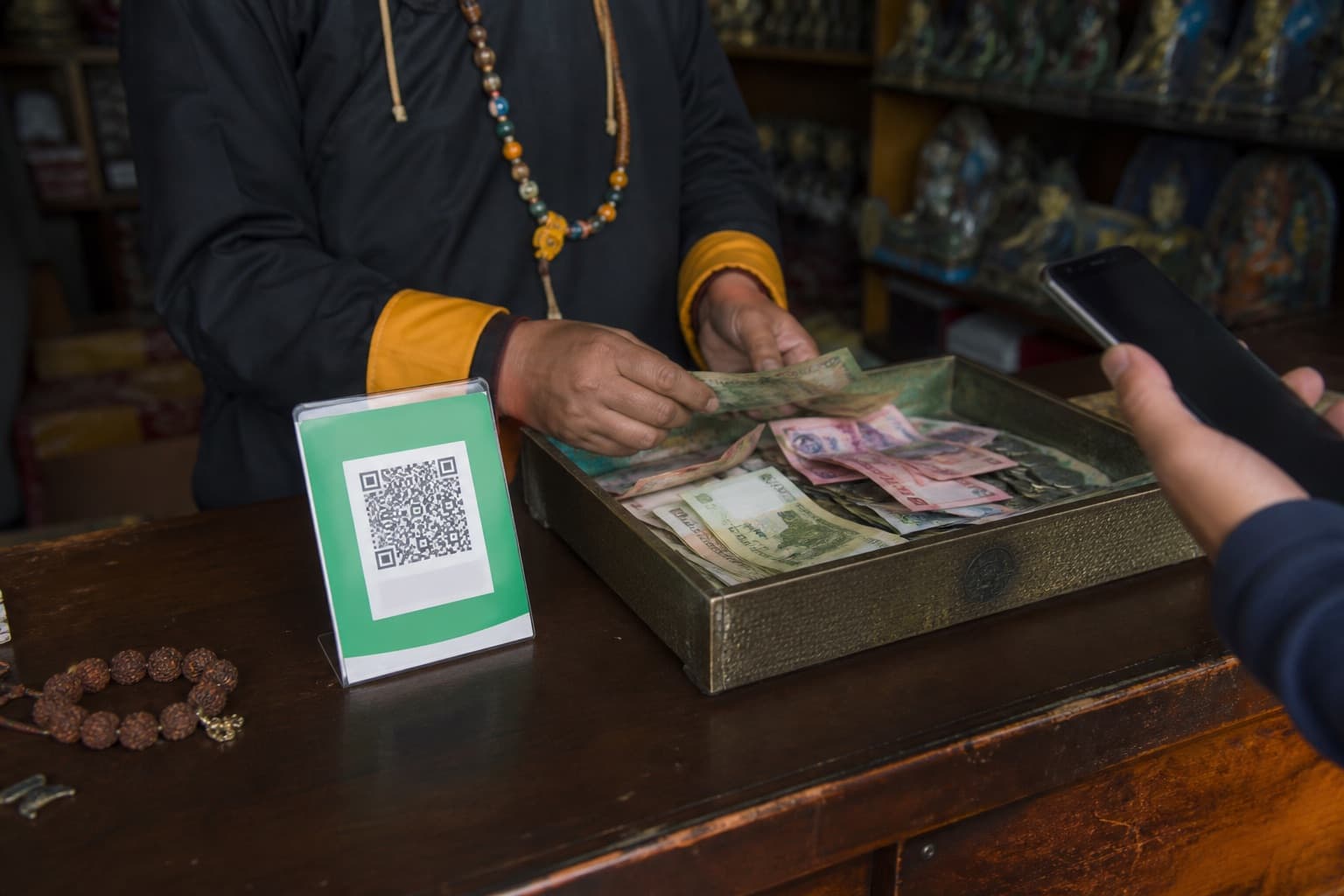
- Efectivo en yuanes chinos para comidas, propinas y compras pequeñas; la aceptación de tarjetas y pagos móviles es irregular fuera de las ciudades.
Electrónica y extras útiles
- Batería externa. Los largos trayectos y viajes en tren implican carga limitada.
- Adaptador de enchufe para los enchufes chinos.
- Cámara con baterías de repuesto; el frío las agota más rápido.
- Linterna frontal o pequeña linterna para las salidas tempranas y el alojamiento básico.
- Aperitivos que te gusten; las barritas energéticas y los caprichos familiares se agradecen en las jornadas largas.
- Una mochila pequeña de día para las visitas turísticas diarias.
- Tapones para los oídos y un antifaz, especialmente si tomas el tren.
Ajustes estación por estación
- Primavera y otoño (abr a may, sep a oct): la lista de capas básica de arriba; espera noches frías.
- Verano (jun a ago): añade una capa ligera para la lluvia y un paraguas compacto para los chubascos vespertinos, pero conserva las capas abrigadas para las elevaciones altas. Consulta el clima mes a mes.
- Invierno (nov a feb): aislamiento más pesado, guantes y gorro más abrigados, y calcetines más gruesos. Los días pueden ser soleados y agradables, pero las noches y los pasos altos son seriamente fríos.
Unas palabras sobre el equipaje y la colada
Mantén tu bolsa principal manejable. Una maleta mediana o un petate funcionan bien para el vehículo, combinados con la mochila de día que llevas en las jornadas de visitas. En los viajes por carretera más largos no tendrás acceso fiable a la colada entre ciudades, así que planifica la cantidad de ropa en torno a esos huecos, y recuerda que el clima seco significa que las capas base y las camisas se airean y pueden lavarse a mano y secarse de la noche a la mañana más fácilmente que en los destinos húmedos. Unas cuantas bolsas de plástico con cierre ayudan a separar las botas polvorientas, los artículos húmedos y la electrónica.
Hábitos favorables a la aclimatación que conviene llevar
Algunas de las cosas más útiles que puedes llevar son hábitos en lugar de objetos. Planifica empezar despacio, beber mucha más agua de la que parece necesaria y resistir la tentación de sobrecargar tu itinerario el primer día. Lleva aperitivos que de verdad disfrutes, porque el apetito a menudo baja en altitud y la comida familiar ayuda. Lleva entretenimiento para los largos trayectos y el tren, ya que las distancias entre puntos destacados son reales. Nada de esto añade peso, y todo ello hace el viaje más cómodo. Para el razonamiento de fondo, consulta nuestra guía sobre el mal de altura.
Qué puedes dejar en casa
No necesitas equipo de acampada ni de escalada técnica para un tour de visitas estándar, ya que viajas en vehículo privado y te alojas en hoteles o casas de huéspedes, incluso en Lhasa, donde los mejores hoteles son genuinamente cómodos. La ropa formal pesada también es innecesaria. Haz la maleta de forma práctica y mantenla manejable.
Consejo final
Pon todo a prueba con una sola pregunta: ¿puedo afrontar una tarde calurosa y soleada y una noche helada y ventosa el mismo día, protegiéndome a la vez del sol fuerte y el aire seco? Si la respuesta es sí, estás listo. Para una orientación de equipaje específica de tu itinerario, simplemente contáctanos o explora nuestros tours por el Tíbet para ver qué implica tu ruta.
Planifica tu viaje al Tíbet con nosotros
Permisos gestionados, guías locales y precios transparentes. Cuéntanos tus fechas y te enviaremos un itinerario a medida.
Preguntas frecuentes
Un sistema de capas flexible más una protección solar seria. Las temperaturas oscilan del sol caluroso a la congelación en un solo día, así que necesitas capas base, un forro polar, una chaqueta cortavientos e impermeable y una chaqueta aislante. Combínalo con protector solar SPF 50+, gafas de sol con UV, bálsamo labial con SPF y un sombrero para el sol.