Del té con mantequilla y la tsampa a los momos y el thukpa, aquí tienes una guía honesta sobre la comida tibetana: cuáles son los alimentos básicos de la meseta, a qué saben y cómo comer bien en altura como visitante.
La cocina tibetana está moldeada por la altitud. En una meseta elevada donde el aire es escaso, la temporada de cultivo corta y los inviernos largos, la comida evolucionó para ser reconfortante, densa en energía y construida en torno a lo que la tierra realmente ofrece: cebada, lácteos de yaks y otro ganado, y abundantes platos de carne y fideos. Es una comida honesta y práctica, y probarla forma parte genuina de comprender el Tíbet.
Aquí tienes qué esperar, qué buscar y cómo comer con comodidad como visitante.
Los alimentos básicos que encontrarás en todas partes
Tsampa
La tsampa —harina de cebada tostada— es la piedra angular de la dieta tibetana tradicional. A menudo se mezcla con té con mantequilla hasta lograr una consistencia parecida a la masa y se come con la mano, o se disuelve en el té como unas gachas. Es saciante, fácil de transportar y ha sostenido la vida en la meseta durante siglos. Muchos tibetanos la comen a diario, y los viajeros históricamente la llevaban consigo como comida ya preparada.
Té con mantequilla (po cha)
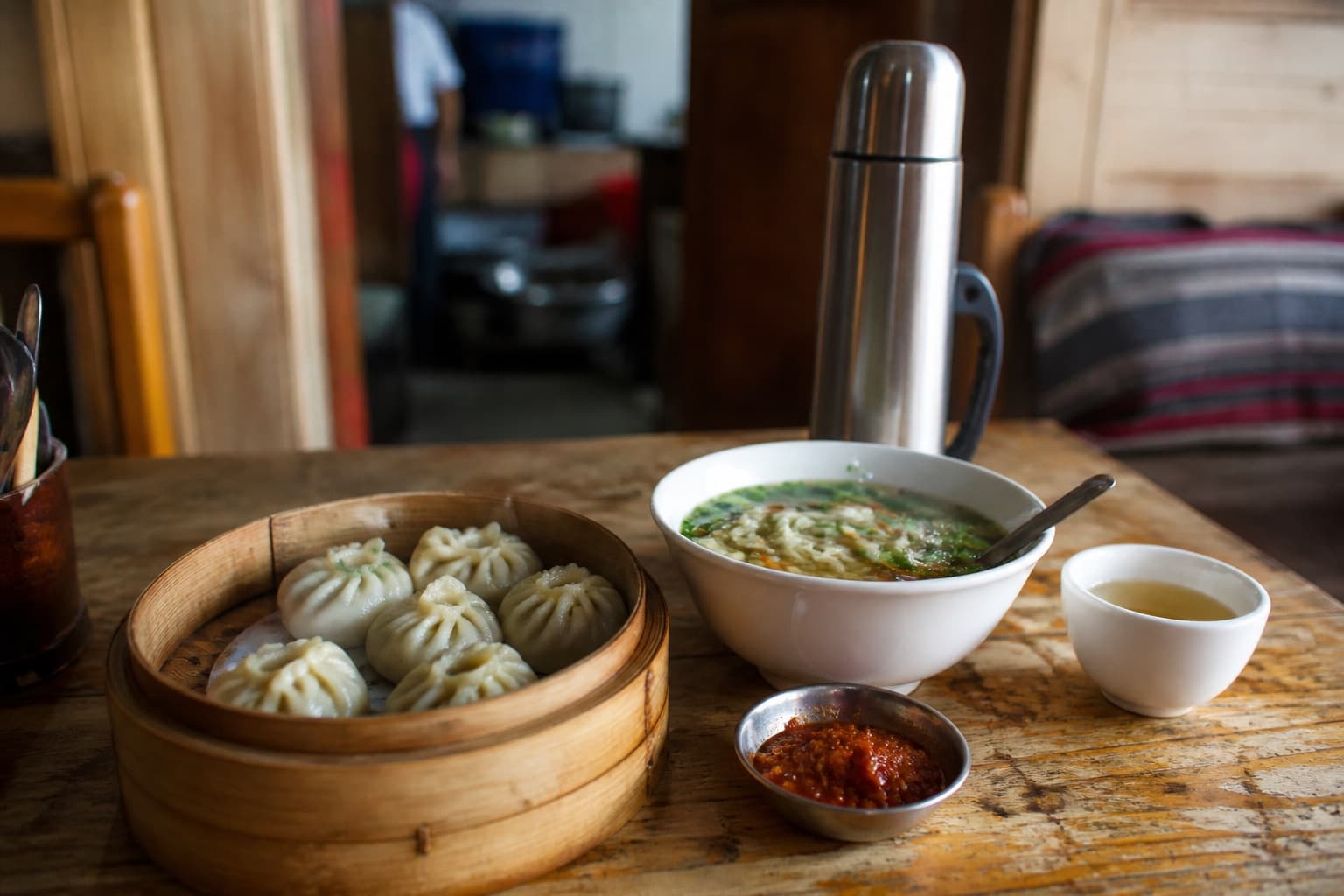
El té con mantequilla es la bebida del Tíbet. Se elabora batiendo té fuerte junto con mantequilla de yak y sal hasta obtener una bebida cálida, salada y ligeramente espesa. A veces los visitantes primerizos se sorprenden: sabe más a un caldo ligero que a un té dulce. Dale unos cuantos sorbos antes de decidir; muchos viajeros le acaban tomando aprecio, y de verdad ayuda contra el frío y el aire seco. Ofrecer y rellenar el té con mantequilla es además un gesto de hospitalidad, así que aceptar una taza es algo cortés.
Si el té con mantequilla no es para ti, el té dulce con leche está ampliamente disponible y se acerca mucho más a lo que la mayoría de los visitantes esperan.
Momos
Los momos son las empanadillas tibetanas: paquetitos al vapor (o a veces fritos) rellenos de carne o verduras. Son casi un favorito universal entre los visitantes: reconfortantes, de formato familiar y presentes en casi todas partes. Los rellenos van desde yak o cordero picado con cebolla y jengibre hasta patata, queso o verduras. Constituyen una comida fiable y satisfactoria.
Thukpa
El thukpa es una contundente sopa de fideos con verduras y, a menudo, carne en caldo. Cálido y reconstituyente, es ideal para las frescas tardes de la meseta y una opción de confianza cuando quieres algo suave para el estómago.
Carne, lácteos y platos más contundentes
El yak ocupa un lugar destacado en la cocina tibetana: la carne de yak aparece en guisos, empanadillas y en forma seca, y los lácteos de yak son la base de la mantequilla y el queso. La carne seca es un alimento básico tradicional, históricamente una forma de conservar las proteínas durante los largos inviernos.
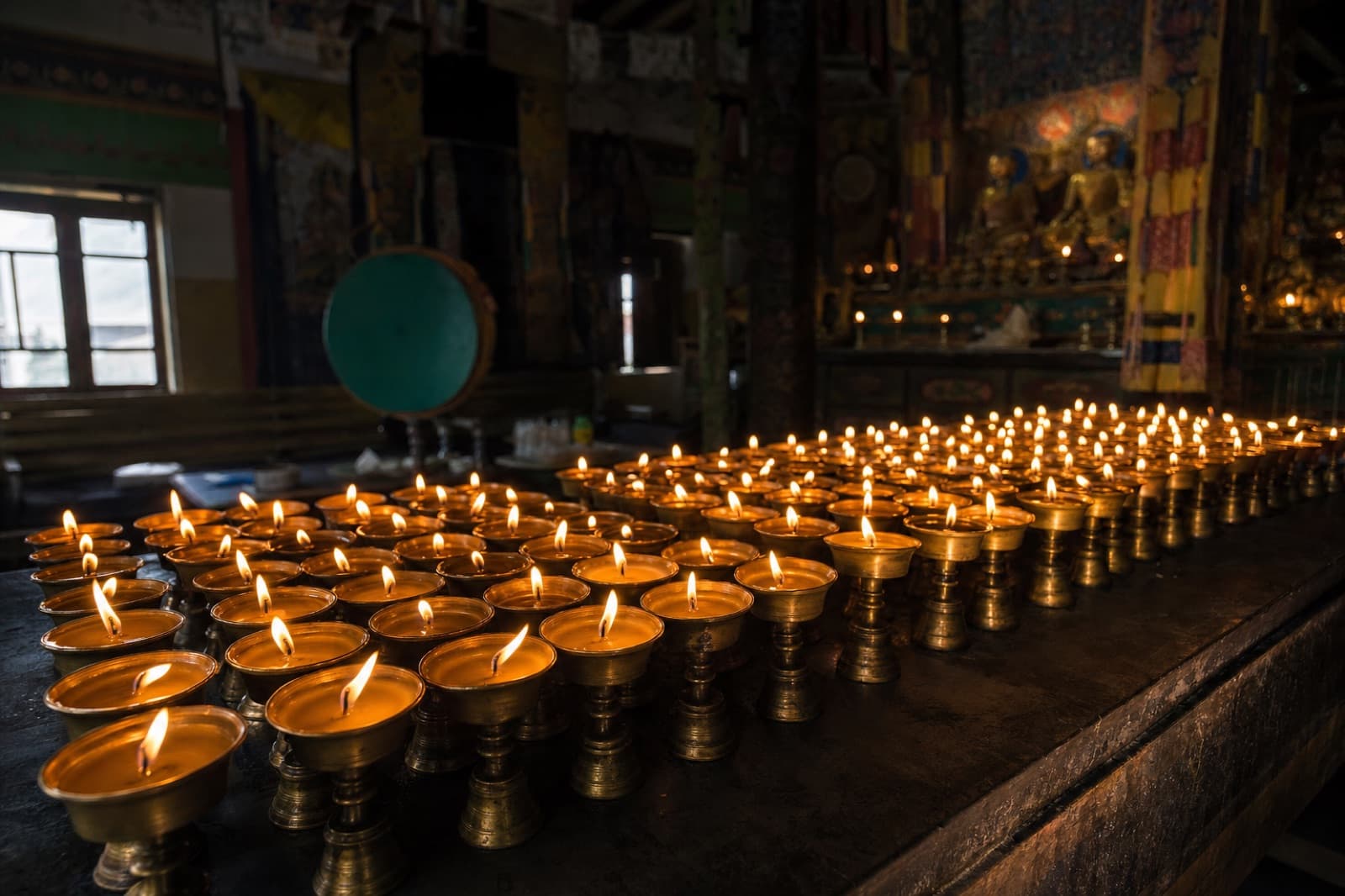
Los lácteos aparecen por toda la cocina: yogur (el protagonista del festival Shoton), queso duro y seco que se come como tentempié y, por supuesto, mantequilla en el té y la tsampa. Si te gustan los lácteos, encontrarás mucho que disfrutar.
| Plato | Qué es | Bueno saberlo |
|---|---|---|
| Tsampa | Harina de cebada tostada | Se mezcla con té con mantequilla; el alimento básico tradicional |
| Té con mantequilla (po cha) | Té batido con mantequilla y sal | Salado, reconfortante; una costumbre de hospitalidad |
| Momos | Empanadillas al vapor o fritas | De carne o verdura; un favorito de los visitantes |
| Thukpa | Sopa de fideos | Reconfortante y suave para el estómago |
| Platos de carne de yak | Guisos, carne seca, rellenos | Magra y sabrosa |
| Yogur tibetano | Yogur espeso y cuajado | Honrado en el festival Shoton |
Qué esperar como visitante
Seamos honestos y prácticos:
- La variedad es mayor en las ciudades. En Lhasa y Shigatse encontrarás comida tibetana, china, nepalí y de estilo occidental, además de opciones aptas para vegetarianos. Cuanto más remota sea tu ruta, más sencillos se vuelven los menús.
- Las zonas remotas implican comidas básicas. En los largos trayectos por carretera o en las rutas hacia el Campo Base del Everest y el Monte Kailash, espera platos sencillos: sopas de fideos, platos de arroz, momos, huevos y té. Es prudente llevar algunos tentempiés propios.
- Los vegetarianos pueden arreglárselas. Los momos de verdura, el thukpa, el arroz y los platos de las cocinas nepalí y china hacen viable el viaje vegetariano, sobre todo en los pueblos. Informa a tu guía de tus necesidades dietéticas con antelación para que puedan organizar las comidas.
- Comer en altura es diferente. El apetito suele disminuir a gran altitud, y las comidas copiosas pueden sentar mal. Muchos viajeros se sienten mejor comiendo de forma más ligera y frecuente, dando prioridad a los carbohidratos y manteniéndose bien hidratados.
Comer bien a gran altitud
Unos pocos hábitos sencillos ayudan:
- Mantente hidratado. El aire seco de gran altitud te deshidrata rápidamente. Bebe mucha agua; las bebidas calientes son reconfortantes y también cuentan.
- Modera la comida pesada y grasienta durante tus primeros días, mientras tu cuerpo se adapta.
- Apóyate en los carbohidratos como el arroz, los fideos y la cebada: son energía fácil en altura.
- Sé prudente con el alcohol, que golpea con más fuerza a gran altura y puede empeorar cómo te sientes. Muchos viajeros lo evitan o lo limitan, sobre todo al principio del viaje.
- Cuida la higiene alimentaria como lo harías en cualquier lugar mientras viajas: prioriza los platos recién cocinados y calientes.
Hospitalidad y etiqueta en la mesa
La comida y la bebida están entretejidas en la hospitalidad tibetana. Si te ofrecen té con mantequilla o una comida, aceptar con amabilidad se agradece. Un anfitrión puede rellenarte la taza de té repetidamente: eso es normal y amable. Como ocurre con los monasterios y las interacciones diarias, un poco de conciencia cultural marca una gran diferencia; consulta nuestra guía de etiqueta para viajar al Tíbet para saber más.
Comer durante un viaje. En nuestro tour en grupo de 8 días por Lhasa y el Everest, el almuerzo del día del lago Yamdrok es un pequeño hot pot con vistas al lago, y uno de los días en Lhasa incluye una comida de especialidades tibetanas o nepalíes.
En conclusión
La comida tibetana no se parecerá necesariamente a la cocina a la que estás acostumbrado, y los tramos más remotos de un viaje sirven comidas sencillas. Pero los alimentos básicos —momos, thukpa, tsampa y té con mantequilla— forman parte de la textura de la meseta, y compartirlos es parte de estar allí. Ven con curiosidad, come de forma ligera mientras te aclimatas y deja que tu guía te oriente hacia los buenos sitios locales.
¿Listo para planificar? Explora nuestros tours por el Tíbet o ponte en contacto con cualquier necesidad dietética y nos aseguraremos de incorporarla a tu viaje.
De la lectura al altiplano
Conozca el Tíbet con alguien que pueda explicárselo
Nuestros viajes los guían guías tibetanos locales con licencia, que le explican lo que está viendo en un monasterio, en un circuito de peregrinos o en la pradera. Estos son los dos viajes con los que empieza la mayoría de los viajeros.
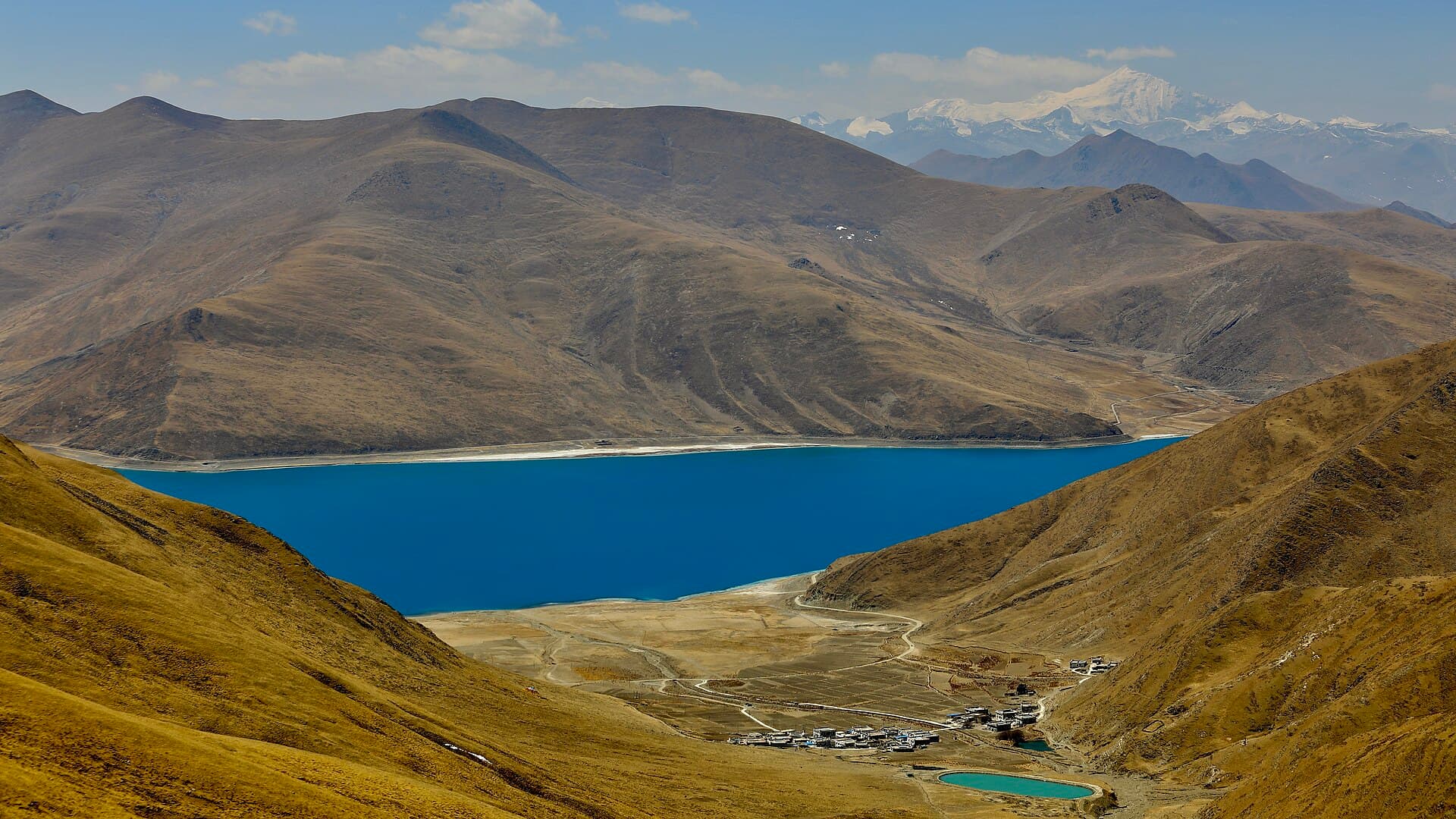
Lhasa y Yamdrok (5 días)
Lhasa · Lago Yamdrok · Templo de Xiazhulin · Lhasa
Cinco días con base en Lhasa: una mañana práctica de artesanía tibetana, los monjes que debaten en Sera, el Palacio del Potala y el Jokhang, y luego una jornada por el Kamba La hasta el lago Yamdrok y el templo de Xiazhulin. Nuestro viaje más corto al Tíbet, en grupo compartido y en fechas fijas.
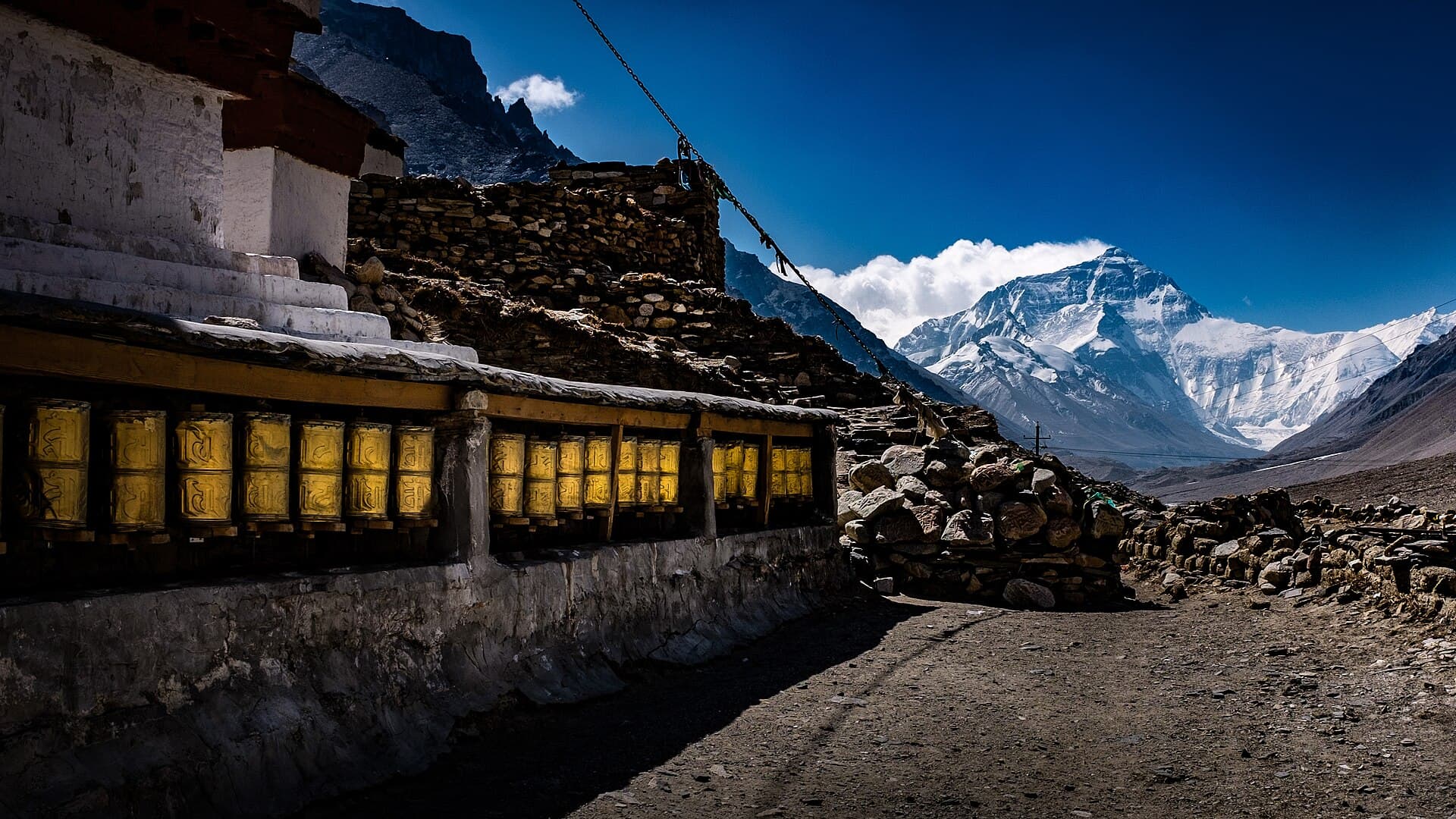
Everest y Namtso (9 días)
Lhasa · Lago Yamdrok · Glaciar Karola · Shigatse · Rongbuk · Campo Base del Everest · Shigatse · Lhasa · Namtso · Lhasa
Nueve días que suman Namtso a la ruta hacia el Everest: los monjes que debaten en Sera, el Potala y el Jokhang en Lhasa; el lago Yamdrok y, más allá, el glaciar Karola camino del oeste; una noche en el Campo Base del Everest; Tashilhunpo; y una excursión final de un día a Namtso cuando ya te has aclimatado. Grupo compartido, salidas en fechas fijas.
Preguntas frecuentes
La tsampa, o harina de cebada tostada, es el alimento básico tradicional. A menudo se mezcla con té con mantequilla hasta formar una masa o unas gachas y se come con la mano. La cebada crece bien a gran altitud, razón por la cual ha anclado la dieta tibetana durante siglos.