Wie man Tibet bedacht bereist: Etikette in Klöstern und auf der Kora, heilige Stätten, das Fotografieren von Menschen, der Schutz einer empfindlichen Höhenumwelt und die Unterstützung des lokalen Lebens.
Tibet ist eine lebendige religiöse Landschaft, kein Museum. Die Klöster, die Sie besuchen, sind tätige Orte der Andacht, die Seen und Berge sind heilig, und die Menschen, denen Sie begegnen, gehen einem andächtigen Leben nach, das seit Jahrhunderten fortbesteht. Respektvoll zu reisen bedeutet nicht, Regeln auswendig zu lernen, sondern Menschen, Glauben und Natur dieselbe Höflichkeit entgegenzubringen, die man sich im Gegenzug erhoffen würde. Gut gemacht, öffnet es zudem die Tür zu wärmeren, echteren Begegnungen.
So machen Sie es richtig.
In Klöstern und Tempeln
Klöster sind das Herz des tibetischen Kulturlebens, und ein wenig Achtsamkeit bringt viel.
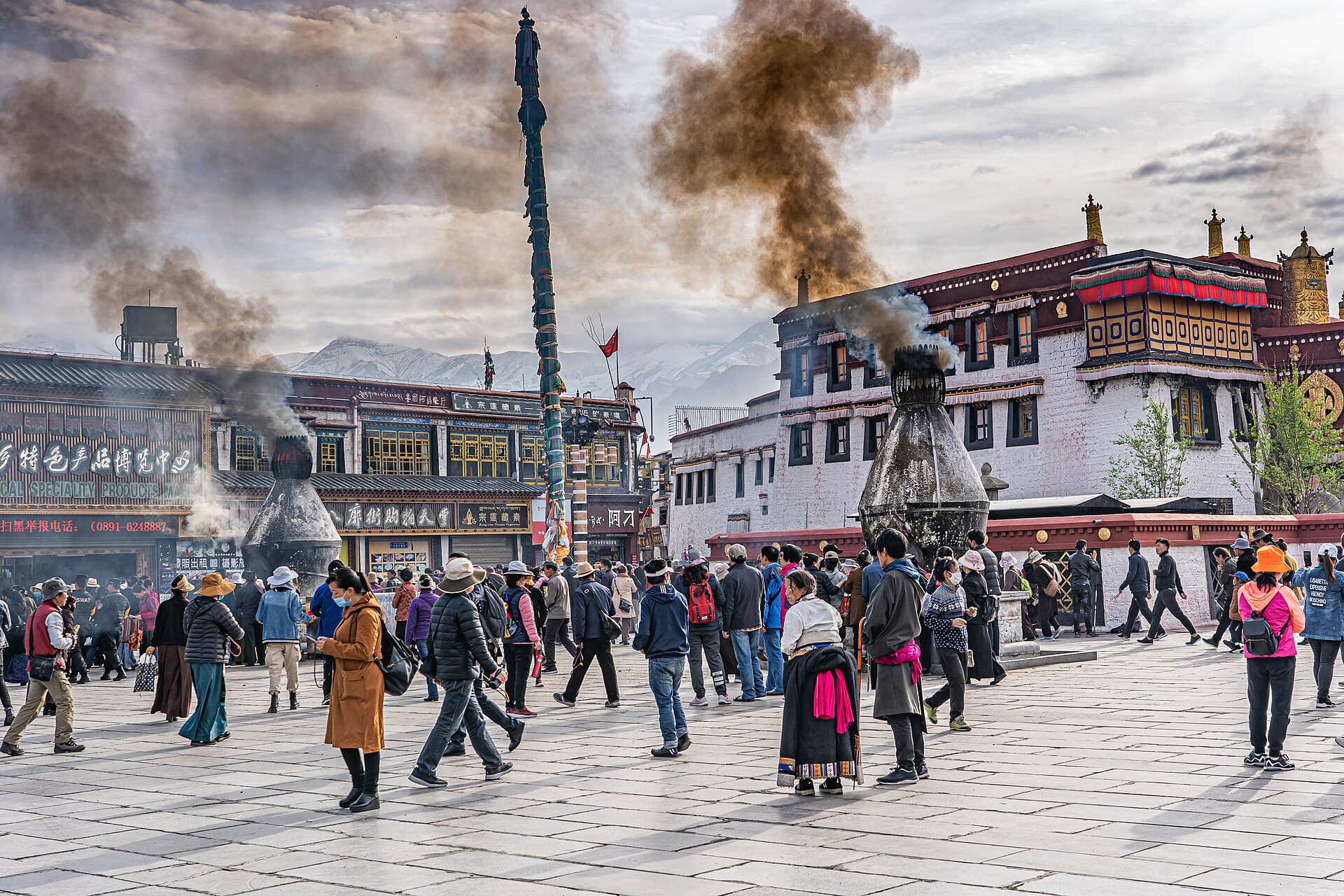
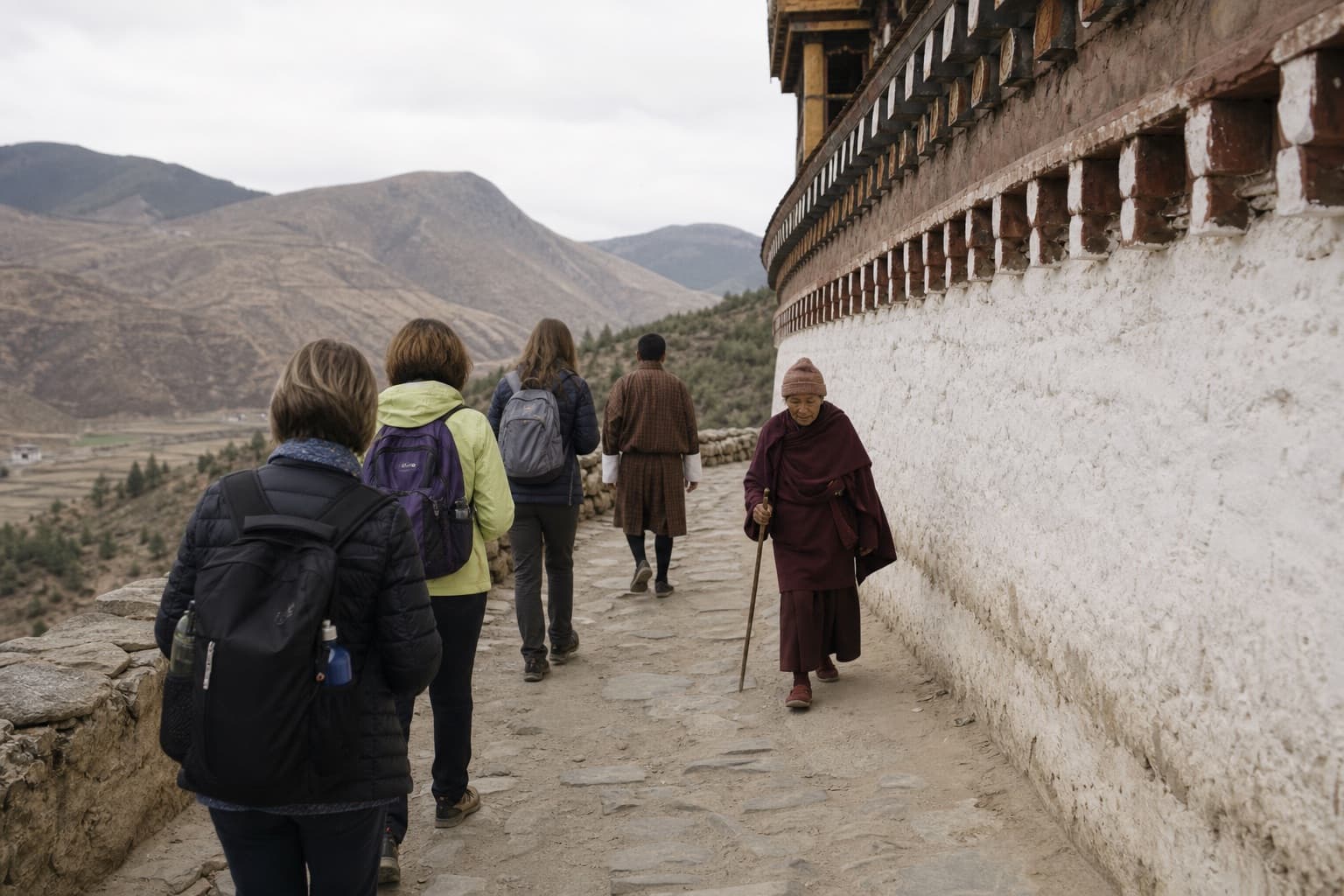
- Gehen Sie im Uhrzeigersinn. Wenn Sie eine Kora (die Umrundung eines Tempels oder einer heiligen Stätte) gehen, bewegen Sie sich im Uhrzeigersinn, in dieselbe Richtung wie Pilger und Gebetsmühlen. (Die Bön-Tradition umrundet gegen den Uhrzeigersinn; Ihr Guide sagt Ihnen, wann das gilt.)
- Achten Sie auf Ihre Fotografie. Als Regel: Fotografieren Sie nicht in Tempelhallen und Kapellen; Außenbereiche und Höfe sind meist in Ordnung. Achten Sie auf Schilder und folgen Sie Ihrem Guide.
- Kleiden Sie sich bescheiden. Bedecken Sie Schultern und Knie. Nehmen Sie Mütze und Sonnenbrille ab, bevor Sie eine Kapelle betreten.
- Seien Sie still und zurückhaltend. Halten Sie Ihre Stimme gedämpft, unterbrechen Sie Gebet oder Rituale nicht und geben Sie Mönchen und Gläubigen Raum.
- Berühren Sie nichts. Berühren Sie niemals Mönche, heilige Gegenstände, Statuen oder Texte, es sei denn, Sie werden ausdrücklich dazu eingeladen.
Unser vollständiger Etikette-Leitfaden und unser Grundlagentext zu tibetischem Buddhismus und Klöstern liefern nützliches Hintergrundwissen.
Gebetsfahnen, Mani-Steine und heilige Gegenstände
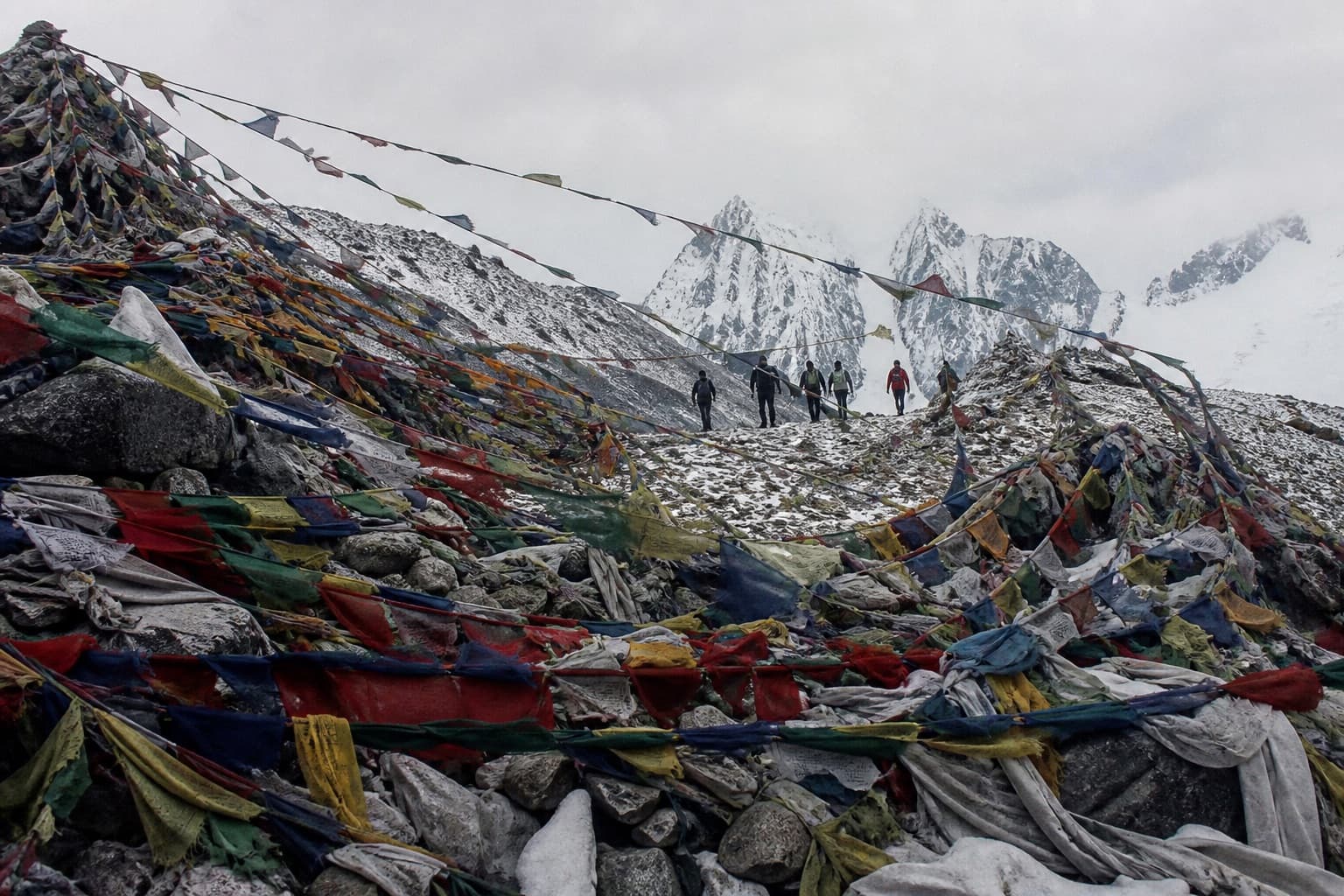
Die bunten Gebetsfahnen, die über Pässe gespannt sind, tragen aufgedruckte Mantras, und es gibt den Glauben, dass jedes Mal, wenn sich eine Fahne im Wind bewegt, das Gebet rezitiert wird. Daher:
- Zerren, ziehen oder nehmen Sie keine Gebetsfahnen. Lassen Sie sie, wie Sie sie vorfinden.
- Treten oder setzen Sie sich niemals über Gebetsfahnen, religiöse Texte oder andere heilige Gegenstände.
- Umrunden Sie Mani-Steinhaufen, klettern Sie nicht darauf und entfernen Sie keine Steine.
Diese Gegenstände sind keine Dekoration; sie sind in Materie gegossene Hingabe. Sie achtlos zu behandeln, ist der schnellste Weg, Anstoß zu erregen.
Menschen fotografieren
Die Menschen Tibets sind wunderbar fotogen, und genau deshalb kommt es auf Zurückhaltung an.
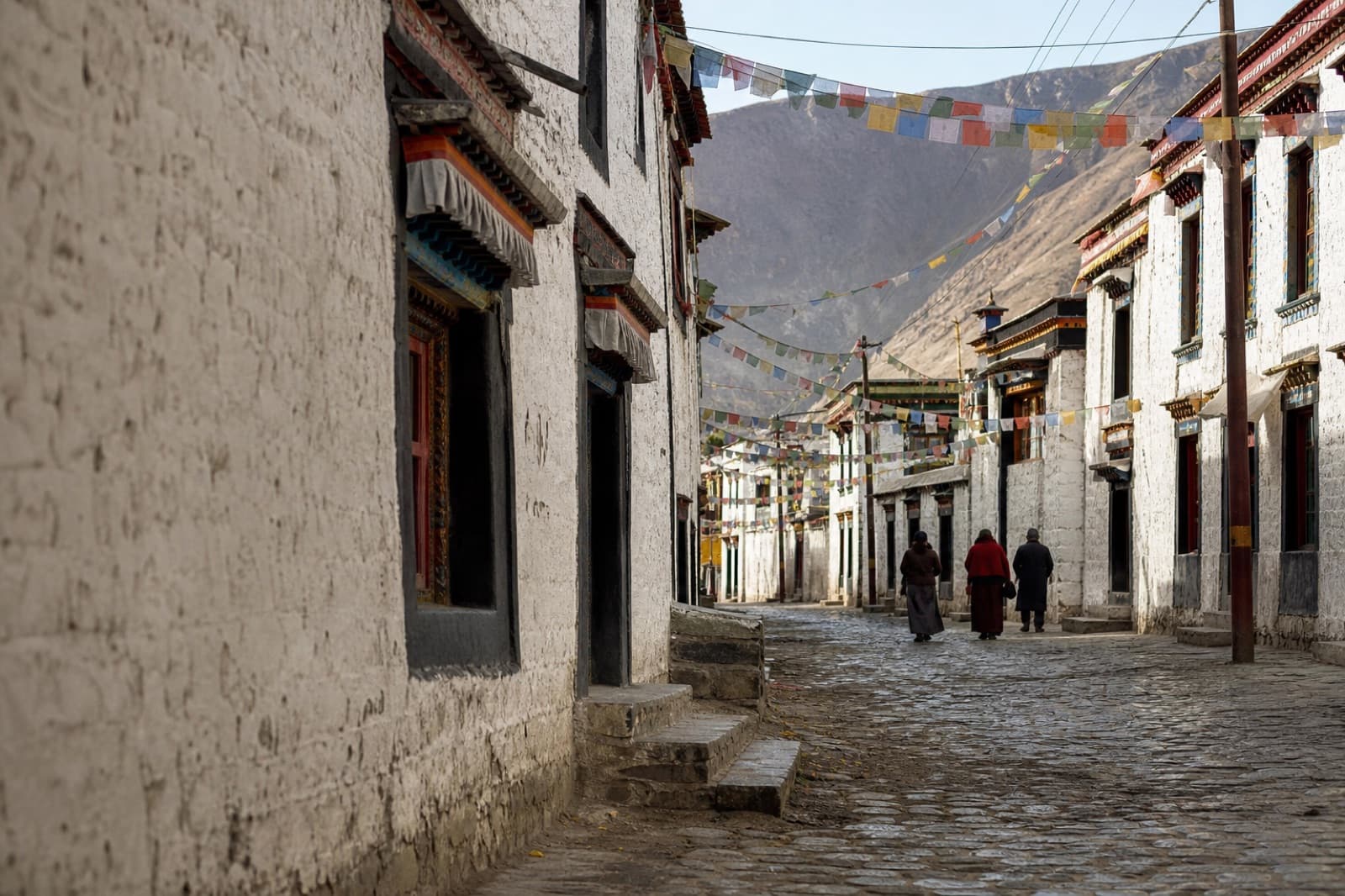
- Fragen Sie immer zuerst. Eine Kamera, mit fragendem Lächeln gehoben, genügt oft; viele Menschen stimmen herzlich zu.
- Nehmen Sie ein Nein anmutig hin. Wenn jemand ablehnt, senken Sie die Kamera und gehen Sie ohne Aufhebens weiter.
- Seien Sie besonders behutsam bei Mönchen, Nonnen und allen, die im Gebet sind. Ein andächtiger Moment ist nicht von vornherein eine Fotogelegenheit.
Die besten Tibet-Porträts entstehen aus einem Moment der Verbindung, nicht aus einem aus der Ferne eingesetzten Teleobjektiv. Unser Fotografie-Leitfaden behandelt die praktische Seite, einschließlich des grellen Höhenlichts.
Heilige Seen und Naturstätten
Viele von Tibets Seen, darunter Yamdrok, Namtso und Manasarovar, sind heilig, mit Gottheiten und Pilgerfahrt verbunden. Behandeln Sie sie als die heiligen Orte, die sie sind:
- Schwimmen oder baden Sie nicht in heiligen Seen. Das gilt weithin als respektlos.
- Werfen Sie nichts hinein und stören Sie keine Schreine oder Steinhaufen am Ufer.
- Halten Sie respektvollen Abstand zu Pilgern, die Rituale oder Niederwerfungen vollziehen.
Mehr zu diesen Seen gibt es in unserem Leitfaden zu den heiligen Seen.
Eine empfindliche Umwelt schützen
Das Hochplateau ist ein raues, sich nur langsam erholendes Ökosystem. In der Höhe bleibt Abfall lange liegen, und Schäden heilen langsam. Hinterlasse-keine-Spuren-Gewohnheiten zählen hier mehr als fast irgendwo sonst.
- Tragen Sie alles wieder hinaus, was Sie hineintragen. Nehmen Sie sämtlichen Müll mit, einschließlich organischer Abfälle und Taschentücher, besonders an abgelegenen Stätten wie dem Everest-Basislager.
- Verwenden Sie eine wiederbefüllbare Wasserflasche, um Plastik zu reduzieren; verbinden Sie das mit der reichlichen Flüssigkeitszufuhr, die die Höhe erfordert.
- Bleiben Sie auf etablierten Wegen und Straßen. Fahren und Gehen abseits der Spur hinterlässt Narben im empfindlichen Boden.
- Füttern oder jagen Sie keine Wildtiere und halten Sie Abstand zu weidenden Herden und Nomadenlagern, sofern Sie nicht eingeladen sind.
- Gehen Sie sparsam mit knappen Ressourcen um. Heißes Wasser, Heizung und Strom sind außerhalb der Städte begrenzt.
Das lokale Leben unterstützen
Verantwortungsvolles Reisen hat auch damit zu tun, wohin Ihr Geld und Ihre Aufmerksamkeit fließen.
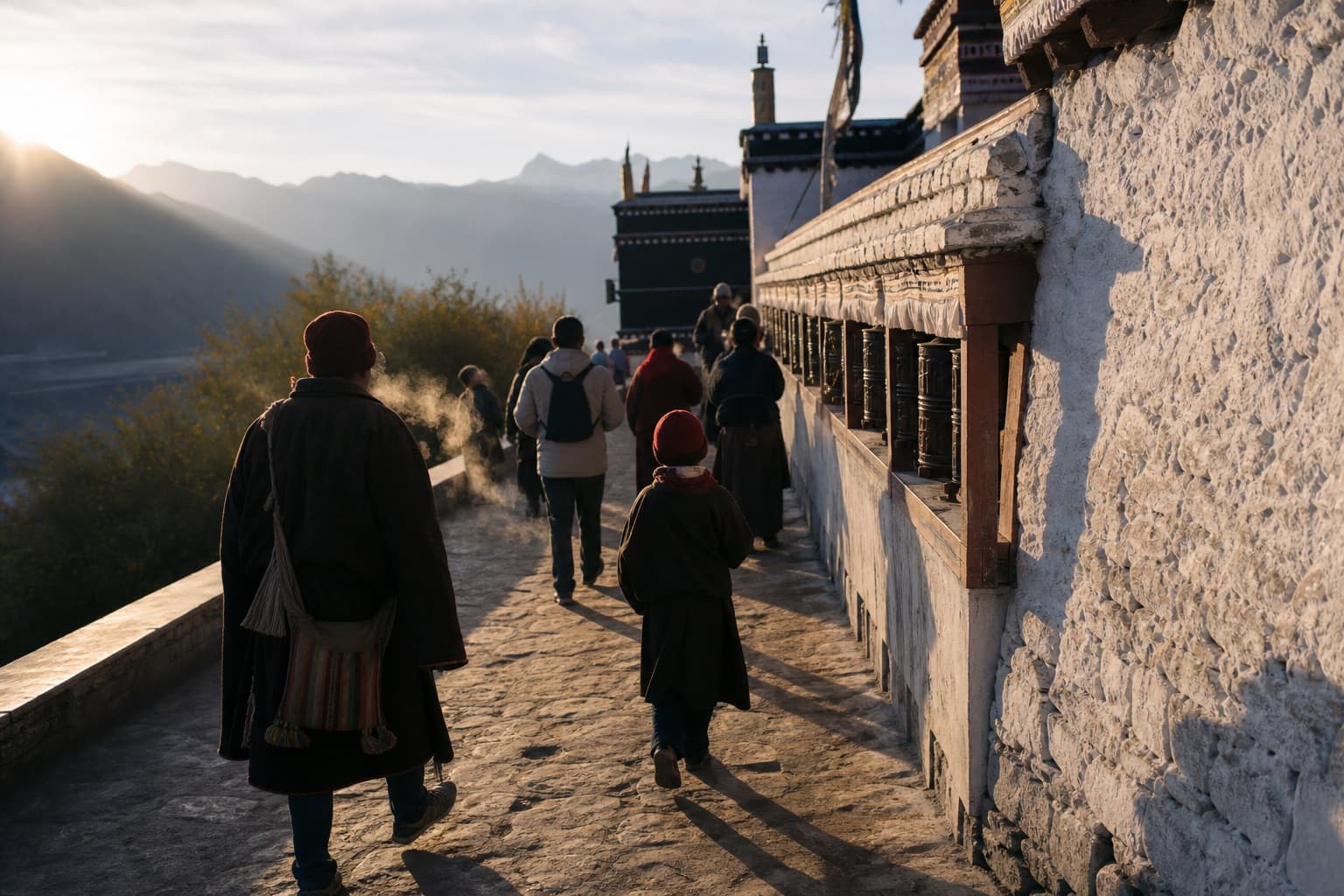
- Kaufen Sie lokales Kunsthandwerk an tibetischen Ständen und von Kunsthandwerkern – der Barkhor in Lhasa ist ein guter Ort – statt nur importierter Souvenirs.
- Feilschen Sie sanft und fair. Eine kleine Ersparnis ist es nicht wert, einen Austausch zu vergällen.
- Essen Sie tibetisches Essen und besuchen Sie lokale Teehäuser und familiengeführte Küchen.
- Fragen Sie, bevor Sie Häuser oder Nomadenzelte betreten, und nehmen Sie Gastfreundschaft (etwa Buttertee) anmutig an, idealerweise mit beiden Händen nehmend und gebend.
Über das Geben, Geschenke und Kinder
Reisende möchten oft etwas zurückgeben, was großzügig ist, doch ein wenig Bedacht macht es wirklich hilfreich statt schädlich.
- Vermeiden Sie es, Süßigkeiten, Geld oder Stifte an Kinder zu verteilen. So gut gemeint es auch ist, es kann Betteln fördern und Kinder eher zu Touristen als zur Schule ziehen. Wenn Sie beitragen möchten, fragen Sie Ihren Guide nach seriösen lokalen Wegen zu helfen.
- Wenn Sie in ein Haus oder Zelt eingeladen werden, ist ein kleines, nützliches Geschenk an den Gastgeber angemessener, als Gegenstände zu verteilen.
- Fotografieren Sie Menschen, „sammeln“ Sie sie nicht. Zeigen Sie ein Foto auf Ihrem Bildschirm zurück, wo Sie können; das macht aus einer Transaktion einen Austausch.
Ihr Guide kennt den lokalen Kontext weit besser als jeder Reiseführer – folgen Sie seinem Hinweis dazu, was angemessen ist.
Ihren Fußabdruck praktisch verringern
Einige konkrete Gewohnheiten summieren sich über eine Reise:
- Nachfüllen statt kaufen. Eine wiederverwendbare Flasche plus der Rat Ihres Guides zu sicheren Wasserquellen spart eine überraschende Menge Einwegplastik.
- Tragen Sie an Fahrtagen und Aussichtspunkten einen kleinen Beutel für Ihren eigenen Müll, damit an Pässen oder Seeufern nichts zurückbleibt.
- Halten Sie den Lärm gering in Dörfern und an heiligen Stätten; Schall trägt weit auf dem offenen Hochland.
- Respektieren Sie Sperrungen und abgesperrte Bereiche – sie dienen meist dem Schutz empfindlichen Bodens oder heiligen Raums.
Ein Hinweis zu Verhalten und Gespräch
Seien Sie ein bedachter Gast. Halten Sie Gespräche freundlich und persönlich, fragen Sie Menschen nach ihrem Leben, ihren Familien und ihren Pilgerfahrten, statt in heikles Gebiet zu steuern. Folgen Sie der Führung Ihres Guides, beachten Sie örtliche Beschilderung und Anweisungen an den Stätten, und halten Sie sich im Zweifel zurück und beobachten Sie, wie sich Tibeter selbst verhalten. Stille Beobachtung ist selten verkehrt.
Der Kern der Sache
Alles oben Genannte lässt sich auf eine Idee reduzieren: Begegnen Sie Tibet als respektvoller Gast an einem Ort, der den dort lebenden Menschen heilig ist. Gehen Sie im Uhrzeigersinn, fragen Sie, bevor Sie fotografieren, lassen Sie die Fahnen und Steine in Ruhe, nehmen Sie Ihren Müll mit und begegnen Sie Menschen mit Wärme. Sie werden keinen Anstoß erregen, ein empfindliches Land schonen und mit ziemlicher Sicherheit mit reicheren Erinnerungen heimkehren. Bereit, eine Reise in diesem Geist zu planen? Nehmen Sie Kontakt auf oder durchstöbern Sie unsere Tibet-Touren.
Vom Lesen aufs Hochland
Tibet mit jemandem erleben, der es erklären kann
Unsere Reisen werden von lizenzierten tibetischen Guides vor Ort geführt, die Ihnen erklären, was Sie sehen – im Kloster, auf dem Pilgerweg oder im Grasland. Mit diesen beiden Reisen beginnen die meisten Gäste.
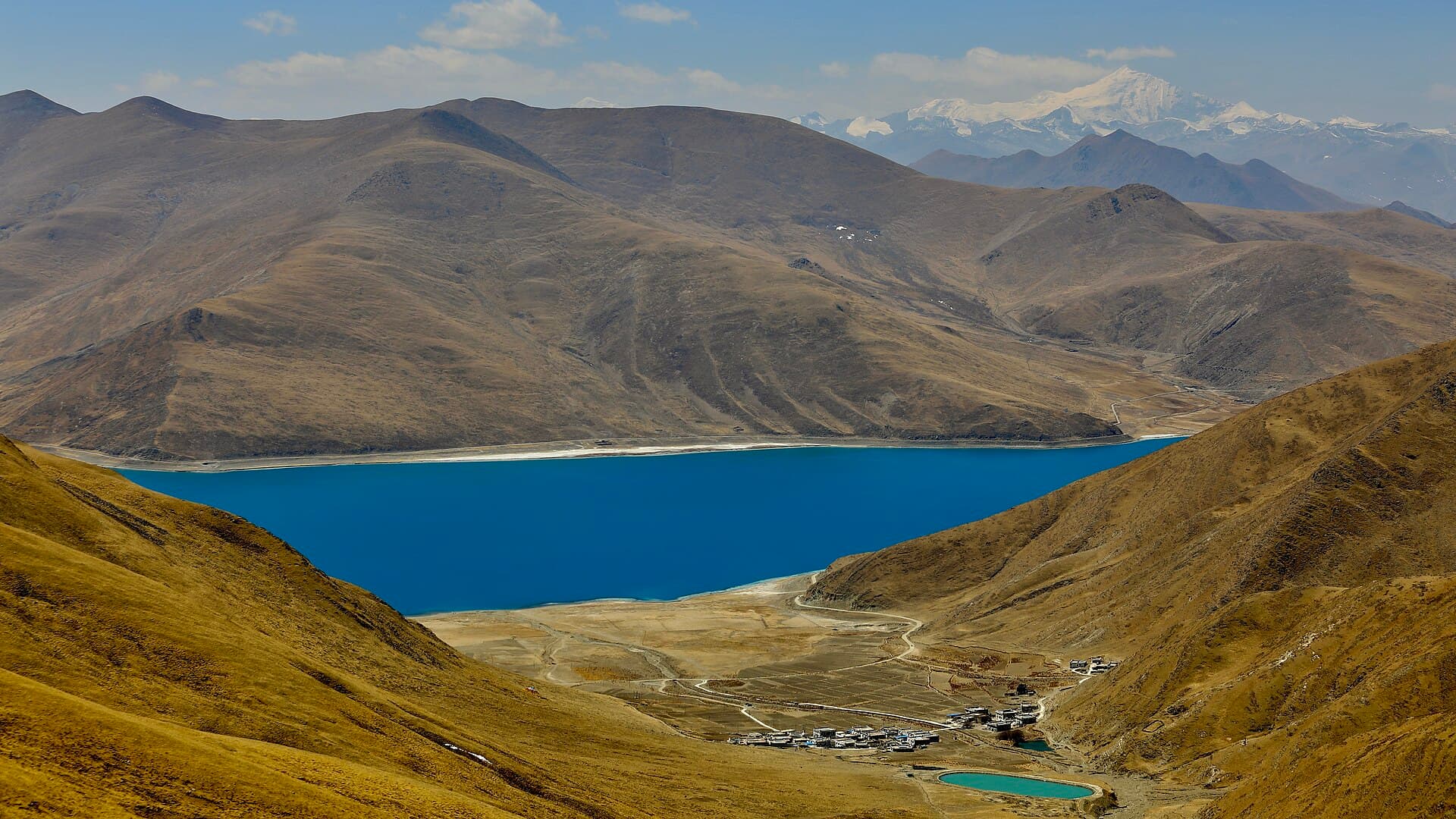
Lhasa & Yamdrok (5 Tage)
Lhasa · Yamdrok-See · Xiazhulin-Tempel · Lhasa
Fünf Tage mit Standort Lhasa: ein Vormittag mit tibetischem Handwerk zum Mitmachen, die debattierenden Mönche von Sera, der Potala-Palast und der Jokhang, dann ein Ausflug über den Kamba La zum Yamdrok-See und zum Xiazhulin-Tempel. Unsere kürzeste Tibet-Reise, als geteilte Gruppe zu festen Terminen.
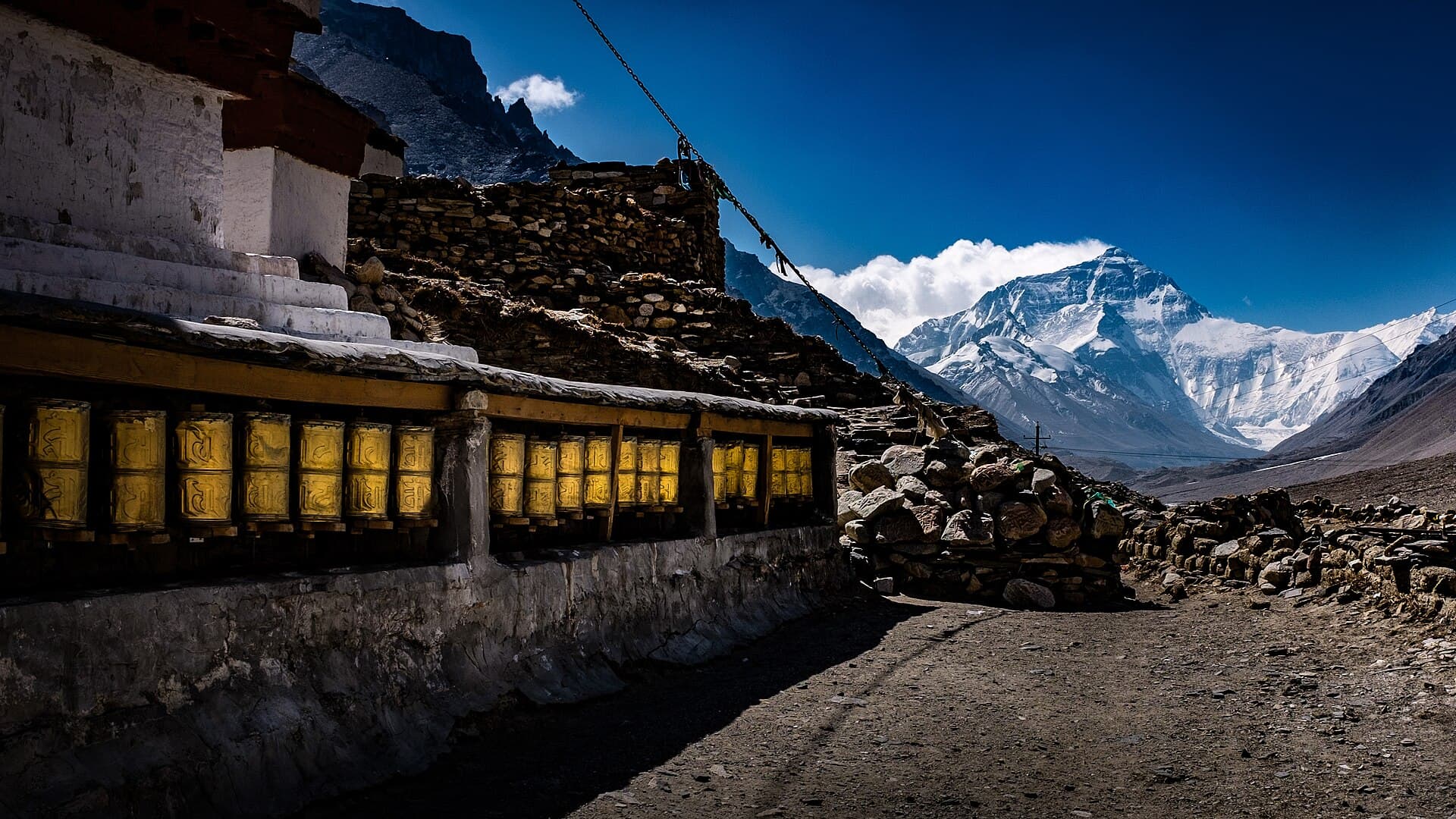
Everest & Namtso (9 Tage)
Lhasa · Yamdrok-See · Karola-Gletscher · Shigatse · Rongbuk · Everest-Basislager · Shigatse · Lhasa · Namtso · Lhasa
Neun Tage auf der Straße zum Everest, ergänzt um den Namtso: die debattierenden Mönche von Sera, Potala und Jokhang in Lhasa; der Yamdrok-See und dahinter der Karola-Gletscher auf der Fahrt nach Westen; eine Nacht am Everest-Basislager; Tashilhunpo; und zum Schluss ein Tagesausflug zum Namtso, wenn Sie akklimatisiert sind. Geteilte Gruppe, feste Abreisetermine.
Häufige Fragen
Im Inneren von Tempelhallen und Kapellen in der Regel nicht, wobei Außenbereiche und Höfe meist in Ordnung sind. Achten Sie auf Schilder und folgen Sie Ihrem Guide. Fragen Sie stets um Erlaubnis, bevor Sie Mönche, Nonnen oder jemanden im Gebet fotografieren, und nehmen Sie eine Ablehnung anmutig hin.