„Danke“ heißt auf Tibetisch thuk je che (tuk-dschä-tschä), „Hallo“ ist tashi delek. Die tibetischen Wörter und Grüße, die sich zu lernen lohnen, mit einfacher Aussprache.
Kurze Antwort: „Danke“ heißt auf Tibetisch thuk je che (sprich tuk-dschä-tschä), wörtlich „großes Mitgefühl“; mit der höflichen Partikel la (thuk je che la) klingt es respektvoller. Der allgemeine Gruß ist tashi delek (tah-schih deh-lek), „ja“ heißt la ong, „nein“ men. Zum Abschied sagt man gale phe zu jemandem, der geht, und gale shu zu jemandem, der bleibt.
Eine einzige Redewendung, mit einem Lächeln dargeboten, kann den ganzen Ton einer Begegnung in Tibet verändern. Sie werden bei einer kurzen Reise nicht fließend werden, und das müssen Sie auch nicht, doch ein paar warme Wörter zu lernen ist eines der freundlichsten Dinge, die ein Reisender tun kann.
Dies ist eine kleine, praktische Auswahl für den Anfang, mit ungefährer Aussprache, die Ihnen hilft, sie laut zu sprechen.
Ein Hinweis zur Aussprache
Zunächst eine sanfte Erdung. Tibetisch ist eine eigene Sprache, mit Lauten und Tönen, die sich nicht sauber auf das Deutsche übertragen lassen, und es hat mehrere Dialekte. Die folgenden Schreibweisen sind romanisierte Annäherungen, gedacht, um Sie nahe genug heranzubringen, um verstanden und geschätzt zu werden, nicht um vollkommen zu sein.
Sprechen Sie sie sanft, mit einem Lächeln, und machen Sie sich keine Sorgen, die Töne ganz genau zu treffen. Die Mühe selbst ist es, worauf Einheimische ansprechen. Beachten Sie zudem, dass Ihnen vor Ort sowohl Tibetisch als auch Mandarin begegnen wird, und Ihr Reiseleiter überbrückt alles, was über diese Grundlagen hinausgeht.
Die eine Redewendung, die man zuerst lernt
Wenn Sie sich nichts anderes merken, merken Sie sich dies:
- Tashi delek (ungefähr: tah-schih deh-lek) – ein warmer, allgemeintauglicher Gruß und guter Wunsch. Er trägt einen Sinn von Glückverheißung, Segen und gutem Geschick und passt in unzählige Situationen: jemanden treffen, ihm Gutes wünschen, einen Anlass begehen.
Es ist mehr als ein flaches „Hallo“. „Tashi delek“ darzubieten ist eine kleine Geste des Wohlwollens, und sie wird fast immer mit Freude erwidert.
Alltägliche Höflichkeiten
Ein paar höfliche Wörter decken die meisten freundlichen Austausche ab:
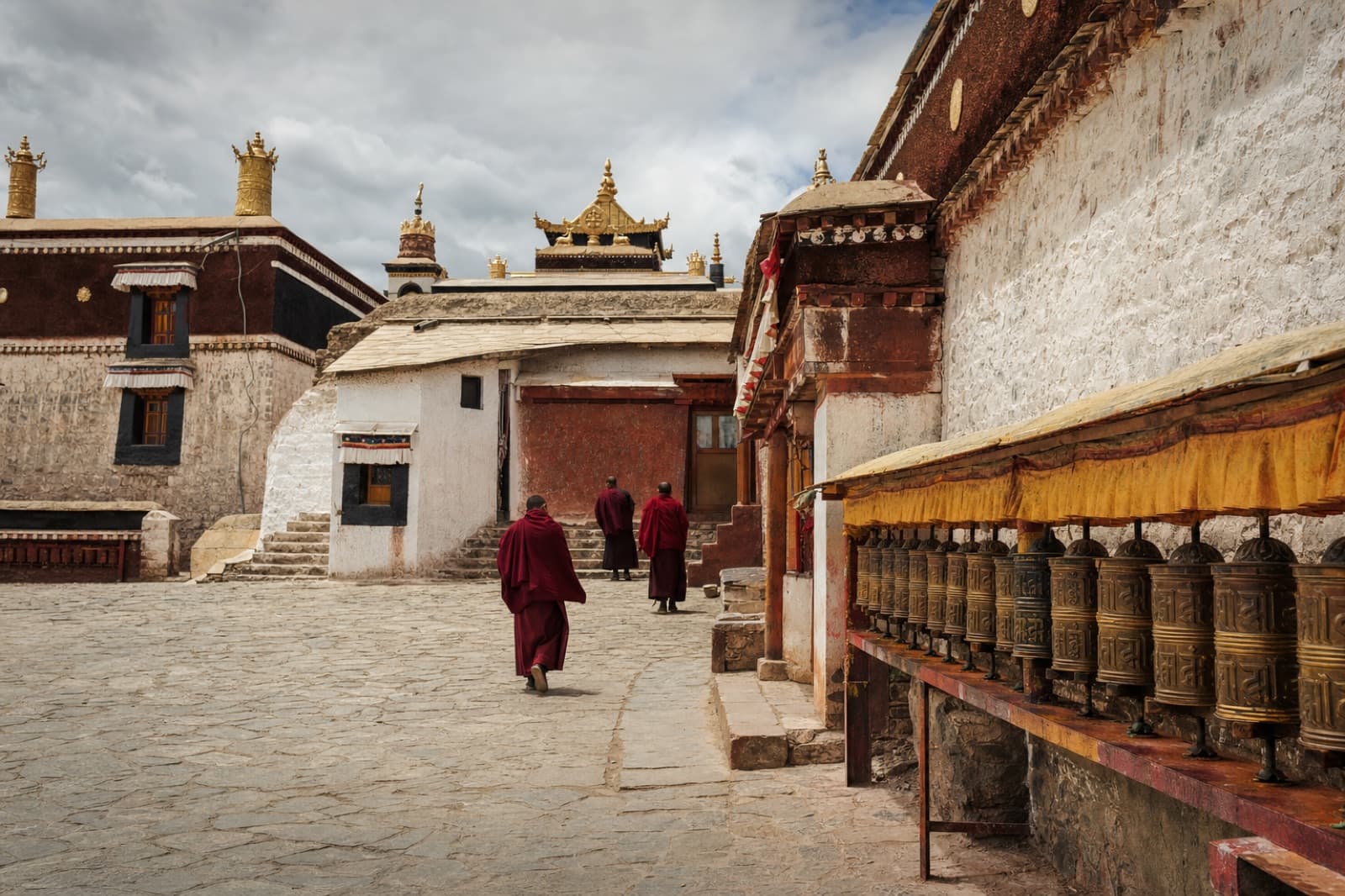
- Thuk je che (ungefähr: tuk-dschä-tschä) – danke. Wörtlich „großes Mitgefühl“. Ergänzen Sie la — thuk je che la —, um es etwas höflicher zu machen. Wirklich nützlich und warm aufgenommen.
- La – ein respektvolles Anhängsel, an Wörter oder Namen gefügt, um Höflichkeit zu zeigen, ein wenig wie ein gesprochenes Zeichen des Respekts.
- Ong / la ong – ja / eine Bejahung.
- Men – nein.
Ein einfaches „Thuk je che“ nach einer Schale Buttertee, einer freundlich gestatteten Fotografie oder einer kleinen Freundlichkeit auf dem Weg bewirkt erstaunlich viel.
Begrüßungen und Verabschiedungen
Über den allgemeintauglichen Gruß hinaus helfen ein paar weitere, eine Begegnung abzurunden:
- Für ein zwangloses Hallo mögen Sie auch freundliche Grüße hören, die unter Einheimischen gebräuchlich sind; Tashi delek bleibt Ihre sicherste und willkommenste Wahl.
- Gale phe (ungefähr: gah-läh peh) – ein Abschiedsgruß, der zu jemandem gesagt wird, der geht, ungefähr „geh langsam / gute Reise“.
- Gale shu (ungefähr: gah-läh schuh) – ein Abschiedsgruß, der zu jemandem gesagt wird, der bleibt, ungefähr „bleib wohl“.
Die beiden Abschiede spiegeln einander sauber: einer für die Person, die geht, einer für die Person, die bleibt. Den richtigen zu gebrauchen ist eine kleine Feinheit, die Einheimische bemerken und schätzen.
Ein paar Wörter, die unterwegs helfen
Diese können einfache Augenblicke glätten, selbst wenn Sie sie nur halb aussprechen:
- Dik gi re – ungefähr „es ist in Ordnung / okay“, nützlich zur Beruhigung.
- Kheran kusug debo yinpe – ein vollständigeres, höfliches „wie geht es Ihnen?“. Etwas zungenbrecherisch; machen Sie sich keine Sorgen, wenn Sie stattdessen nur ein freundliches „Tashi delek“ zustande bringen.
- Zahlen, Ortsnamen und Richtungen sind dort, wo Ihr Reiseleiter unschätzbar ist, also stützen Sie sich auf ihn, statt lange Listen auswendig zu lernen.
Überfordern Sie sich nicht. Zwei oder drei warm gesprochene Redewendungen schlagen ein Dutzend verstümmelte.
Wörter, die Sie hören und sehen werden
Auch wenn Sie sie nie sagen, lohnt es sich, ein paar Begriffe wiederzuerkennen, weil sie im tibetischen Leben und auf Reisen ständig vorkommen:
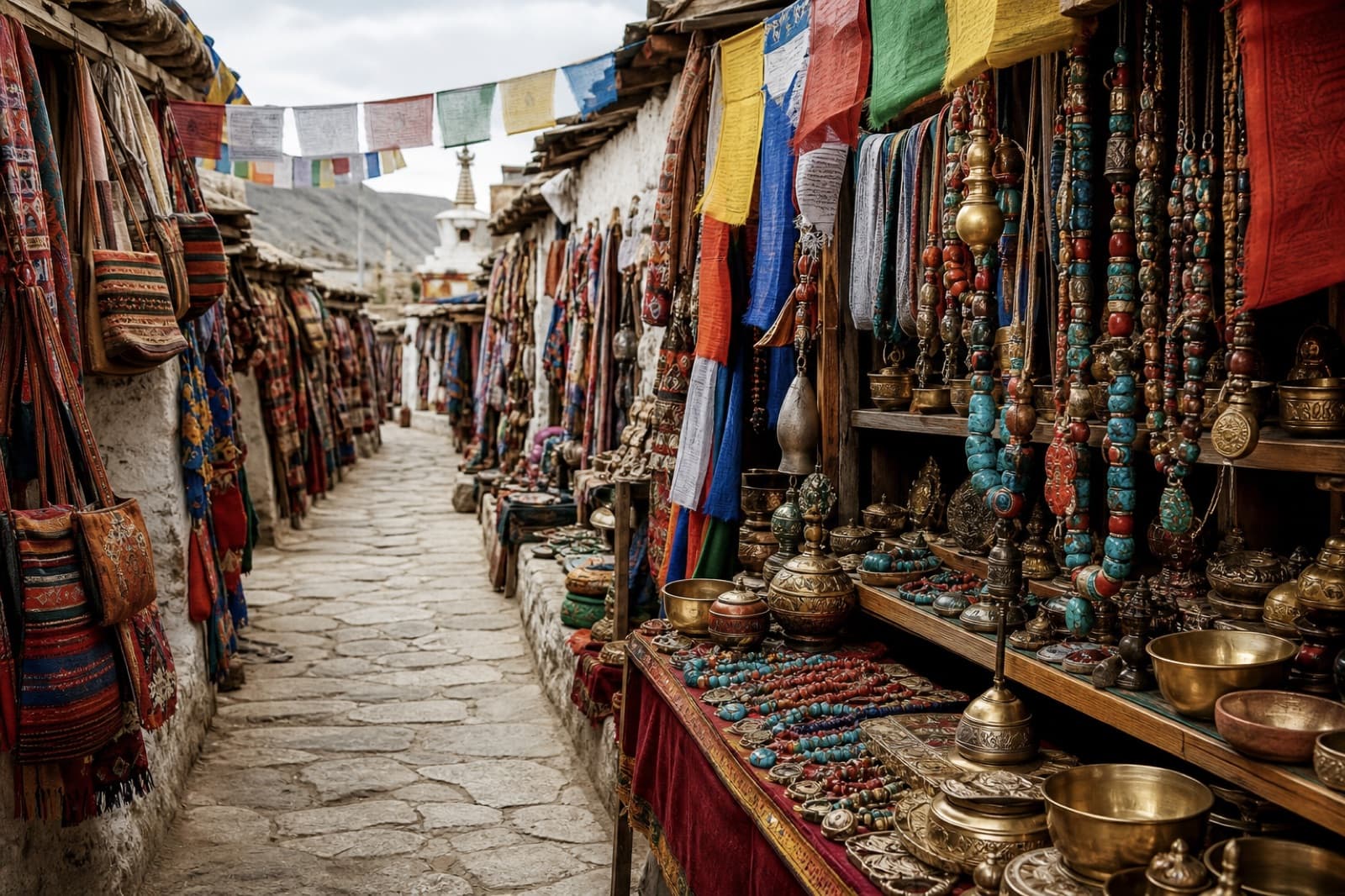
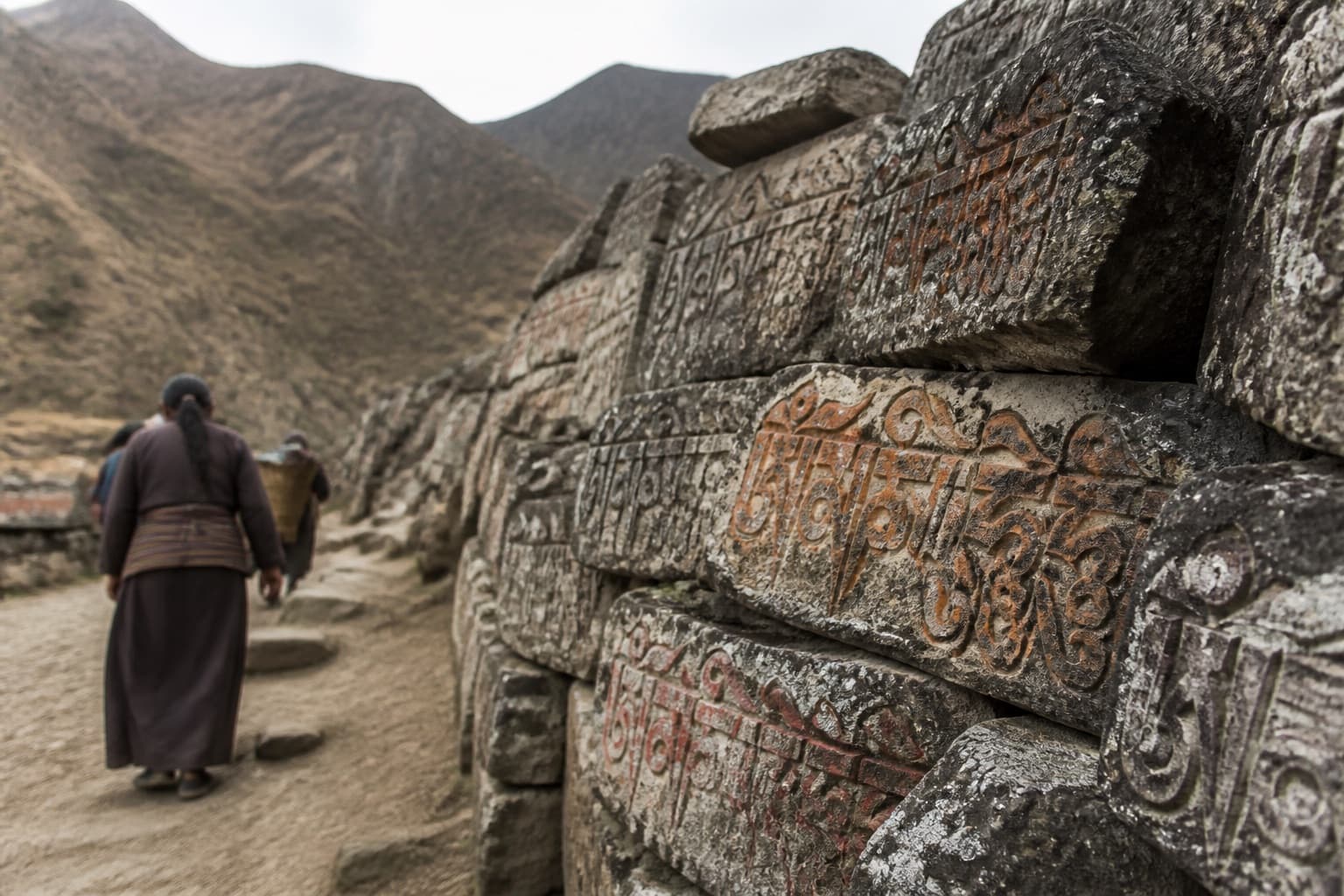
- Kora – der Akt, einen Andachtsumgang um eine heilige Stätte, einen Tempel oder einen Berg zu gehen, gewöhnlich im Uhrzeigersinn. Sie werden überall Pilger Kora gehen sehen.
- Chö / Chu und La – Ihnen wird auffallen, dass La viele Ortsnamen beendet; und hohe Bergpässe werden auf Schildern und im Gespräch oft ebenfalls als La bezeichnet.
- Tsampa – geröstetes Gerstenmehl, ein tibetisches Grundnahrungsmittel, das Ihnen durchaus angeboten werden kann.
- Po cha – Buttertee, das warme, salzige Grundgetränk; eine Schale anzunehmen ist eine freundliche Geste.
- Khata – der weiße Zeremonialschal, dargeboten als Gruß, Segen oder Abschied. Wird Ihnen einer um den Hals gelegt, ist es eine freundliche Ehre; nehmen Sie ihn anmutig entgegen.
Diese zu kennen verwandelt rätselhafte Augenblicke in vertraute und zeigt echtes Interesse an der Kultur um Sie herum.
Wenn Ihnen die Worte fehlen
Es wird Augenblicke geben, in denen die Sprache schlicht an ihre Grenzen kommt, und das ist vollkommen in Ordnung. Ein warmes Lächeln, eine Hand auf dem Herzen, ein gemeinsames Lachen über eine falsche Aussprache: diese tragen überall Bedeutung. Gestikulieren Sie geduldig, deuten Sie sanft auf eine Speisekarte oder Karte und lassen Sie Ihren Reiseleiter für alles Wichtige einspringen. Verständigung auf dem Hochland ist ebenso sehr eine Sache des Wohlwollens wie des Wortschatzes.
Etikette zählt ebenso viel wie Wörter
Wie Sie sich geben, vermittelt oft mehr als Wortschatz. Ein paar sanfte Bräuche:
- Begrüßen Sie Ältere und Mönche mit besonderer Wärme und besonderem Respekt.
- Fragen Sie, bevor Sie Menschen fotografieren, und nehmen Sie ein „Nein“ anmutig an.
- Nehmen Sie Dinge entgegen, reichen Sie sie und gestikulieren Sie mit offener Hand, statt zu deuten.
- An Klöstern folgen Sie der örtlichen Übung, etwa dem Gehen im Uhrzeigersinn um heilige Stätten und Schreine.
- Eine leichte Verbeugung oder ein respektvolles Nicken passt natürlich zu Ihren Worten.
Sprache ist nur ein Teil davon. Wärme, Geduld und Respekt übersetzen sich überall, und auf dem Hochland werden sie augenblicklich verstanden.
Halten Sie es leicht und echt
Das Ziel ist Verbindung, nicht Vorführung. Tibeter sind den Sprachversuchen von Besuchern gegenüber im Allgemeinen gnädig und gut gelaunt, und ein aufrichtiges, etwas ungeschicktes „Tashi delek“ wird weit mehr Wohlwollen einbringen, als Schweigen es je könnte.
Sie in der Praxis anwenden. Lhasa ist der einfachste Ort, um anzufangen. Auf unserer 5-tägigen Lhasa- & Yamdrok-See-Reise empfängt Sie Ihr Reiseleiter mit einem weißen Khata, und die Barkhor-Kora bietet Ihnen reichlich Gelegenheit für ein tashi delek und ein thuk je che la. Sie läuft als geteilte Gruppe, und unsere kommenden Abreisen nennen die buchbaren Termine.
Lernen Sie eine Handvoll, gebrauchen Sie sie freimütig und lassen Sie Ihren Reiseleiter den Rest tragen. Jene kleinen Wörter sind oft das, woran sich Reisende am liebsten erinnern. Um sie unter den Klöstern und Märkten des Hochlands einzusetzen, sehen Sie unsere Tibet-Reisen oder nehmen Sie Kontakt auf.
Vom Lesen aufs Hochland
Probieren Sie sie laut aus
Tashi delek sagt man am besten zu jemandem. Auf beiden Reisen führt Ihr Guide Sie über den Barkhor mit seinen Teehäusern – probieren Sie thuk je che bei der Person, die Ihnen dort den süßen Tee einschenkt.
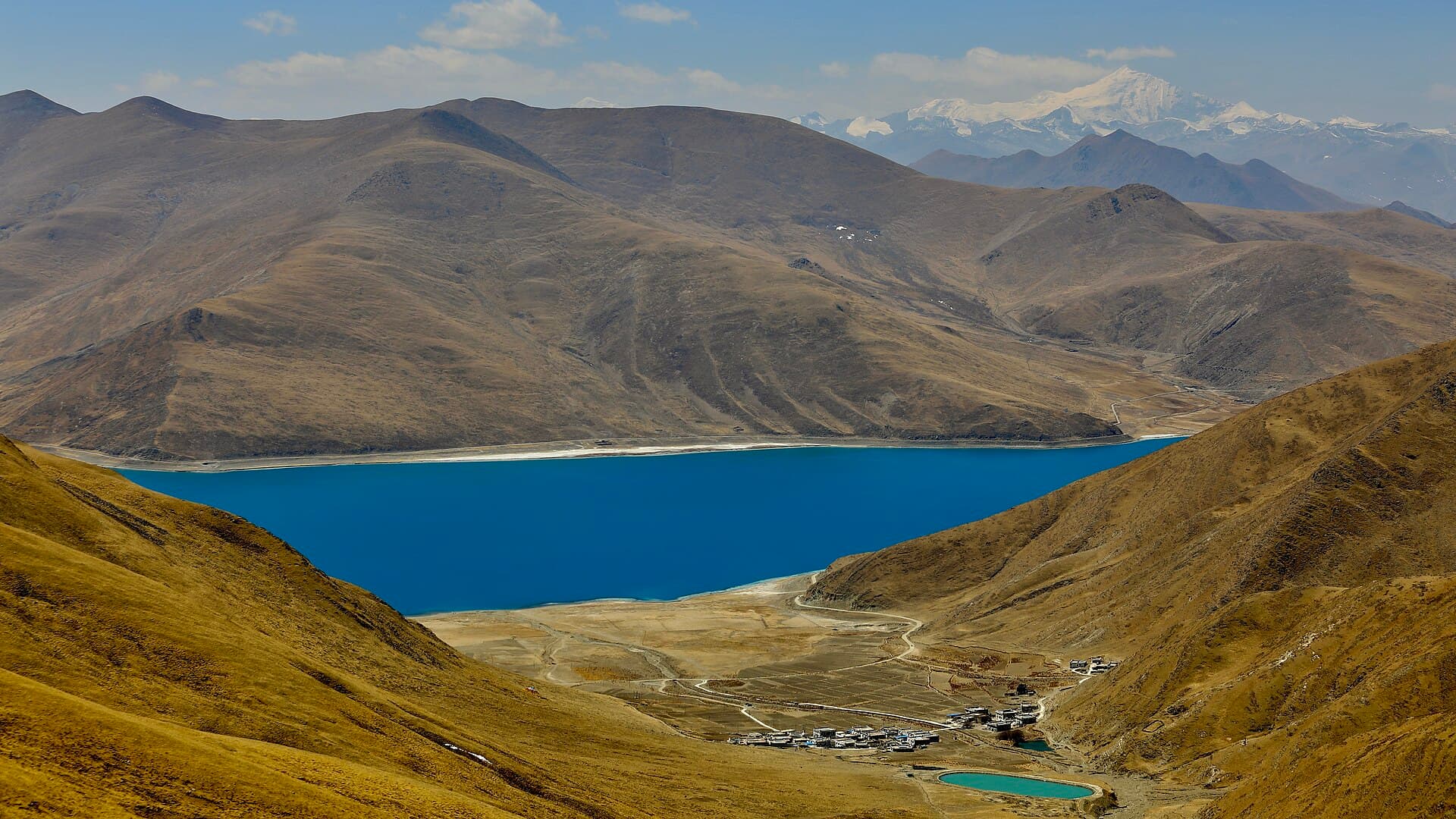
Lhasa & Yamdrok (5 Tage)
Lhasa · Yamdrok-See · Xiazhulin-Tempel · Lhasa
Fünf Tage mit Standort Lhasa: ein Vormittag mit tibetischem Handwerk zum Mitmachen, die debattierenden Mönche von Sera, der Potala-Palast und der Jokhang, dann ein Ausflug über den Kamba La zum Yamdrok-See und zum Xiazhulin-Tempel. Unsere kürzeste Tibet-Reise, als geteilte Gruppe zu festen Terminen.
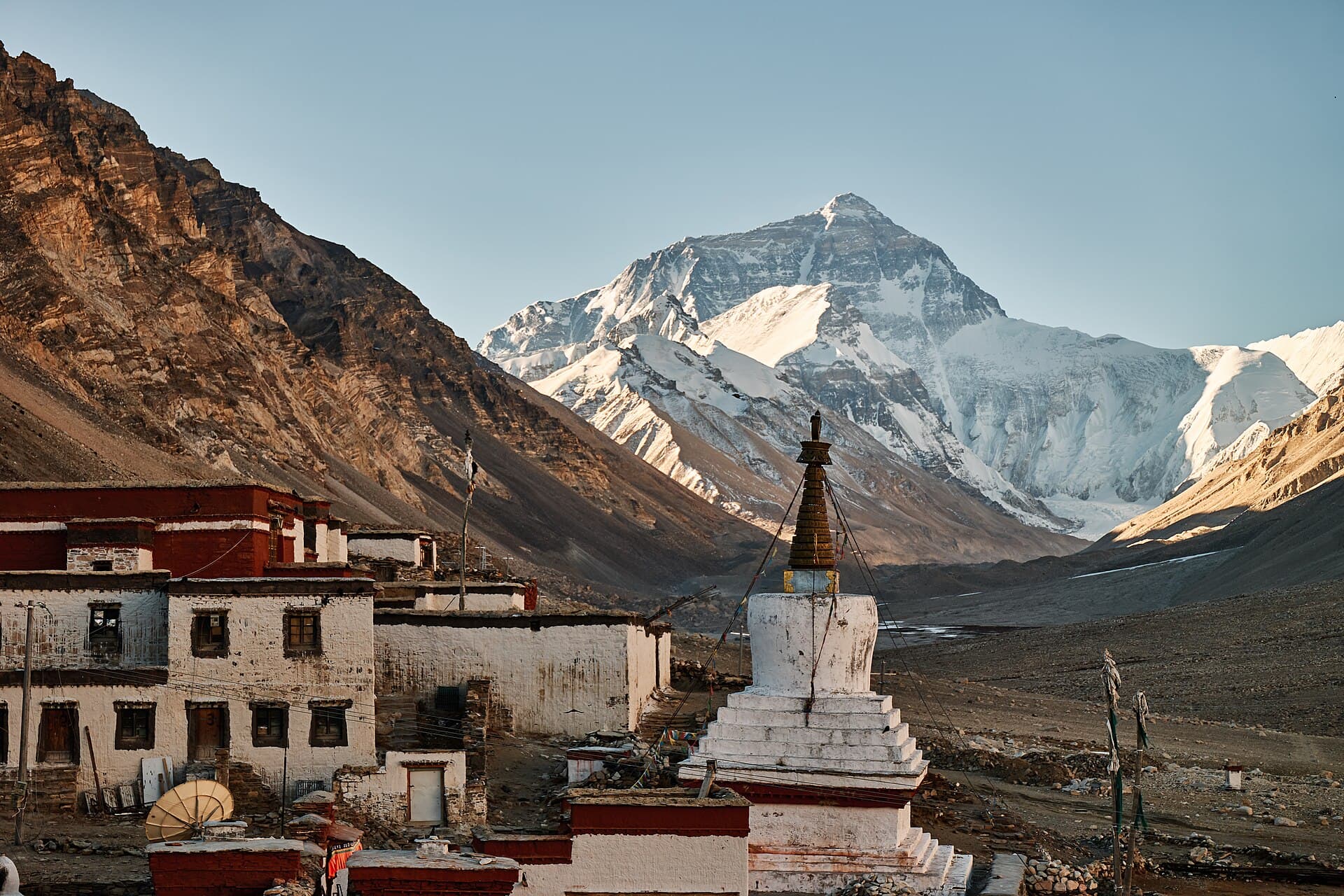
Lhasa & Everest (7 Tage)
Lhasa · Yamdrok-See · Karola-Gletscher · Shigatse · Rongbuk · Everest-Basislager · Shigatse · Lhasa
Von Lhasa an den Fuß des Everest in einer Woche: zwei Tage in Lhasa, um sich an die Höhe zu gewöhnen, der Yamdrok-See und der Karola-Gletscher auf dem Weg nach Westen, eine Nacht unter der Nordwand und Tashilhunpo auf dem Rückweg. Eine geteilte Gruppe mit festen Terminen.
Häufige Fragen
Es ist ein warmer, allgemeintauglicher tibetischer Gruß und guter Wunsch, der einen Sinn von Glückverheißung, Segen und gutem Geschick trägt. Sie können ihn gebrauchen, wenn Sie jemanden treffen, ihm Gutes wünschen oder einen Anlass begehen. Er ist bedeutungsvoller als ein flaches Hallo, und ihn darzubieten ist eine kleine Geste des Wohlwollens, die Einheimische fast immer mit Freude willkommen heißen.